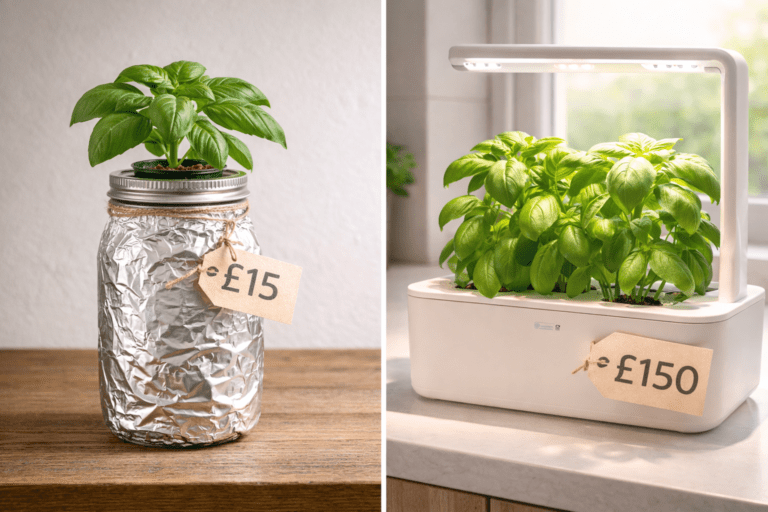
A first hydroponic grow does not need to be expensive. A simple passive setup can use containers you already own, while a small powered system adds costs for a reservoir, air pump, lighting and meters. Budget for the system you actually need rather than buying every accessory at once.
Three sensible starter budgets
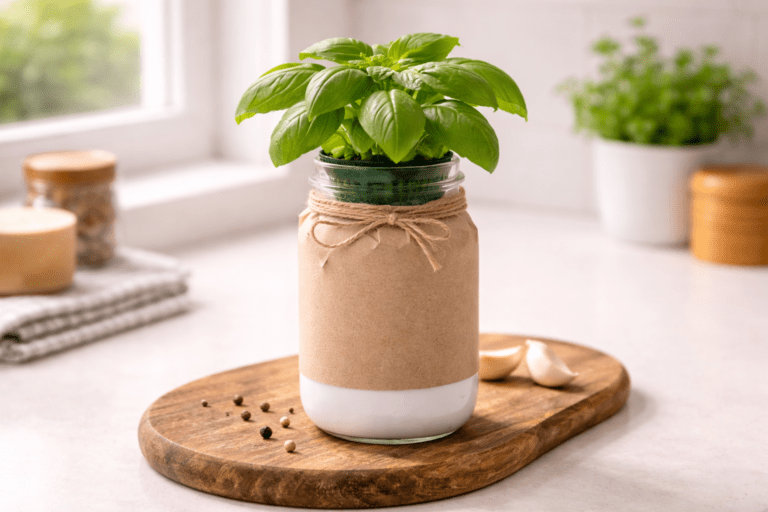
Low-cost passive grow: reuse an opaque container or jar cover and start with a leafy crop. Small DIY system: add a reservoir, net pots and aeration where the design requires it. Indoor year-round grow: allow extra budget for a suitable grow light and its electricity use.
Prices vary by retailer and equipment quality, so treat any shopping total as a moving budget rather than a fixed promise.
What is actually essential?
You need a suitable container or system, hydroponic nutrients, a way to support the plant, water and adequate light. A pH test method is highly useful. EC measurement becomes more valuable as you grow demanding crops or want tighter control.
Ongoing costs
Nutrients, replacement growing media, electricity for lights or pumps and occasional replacement parts are the main recurring costs. Lighting is often the largest electricity cost for an indoor setup, so choose efficient equipment sized to the growing area.
How to save without making the system unreliable
Start with lettuce or herbs, reuse safe containers, keep the system small and learn the basics before expanding. Avoid buying several meters or additives that duplicate the same job.
FAQ
Is hydroponics cheaper than buying vegetables?
Not automatically. Home hydroponics can provide freshness and control, but equipment and electricity mean financial payback depends on what you grow and how efficiently you operate.
What should I buy first?
Choose the system and crop first. Then buy only what that combination requires.