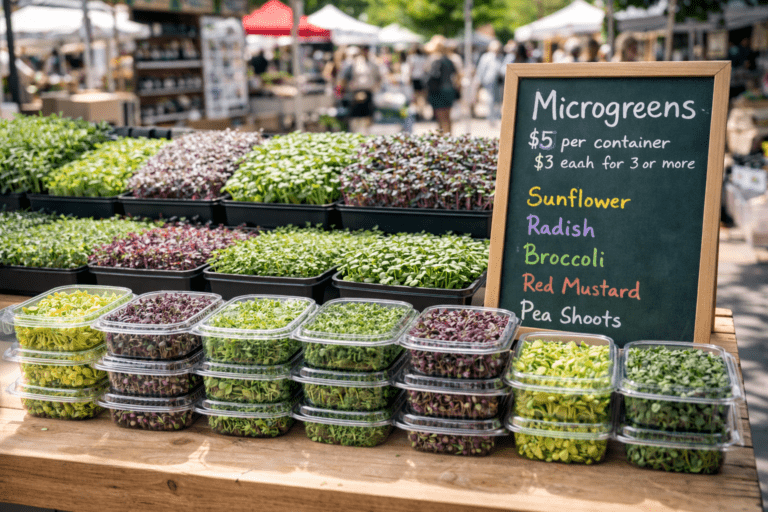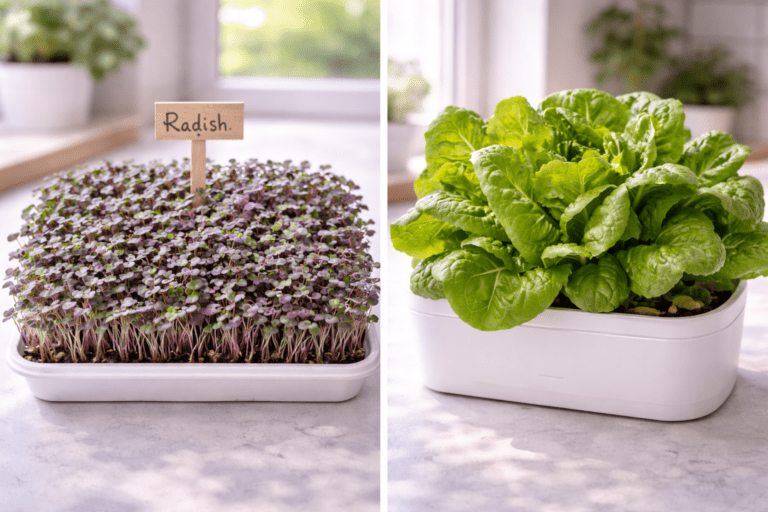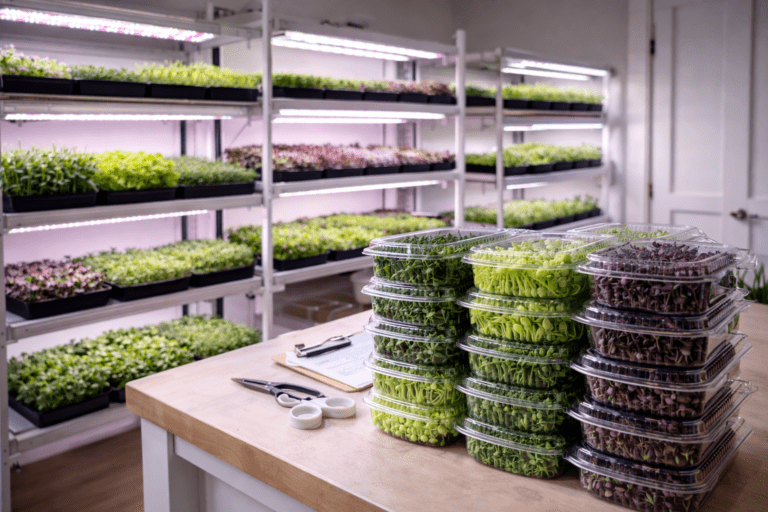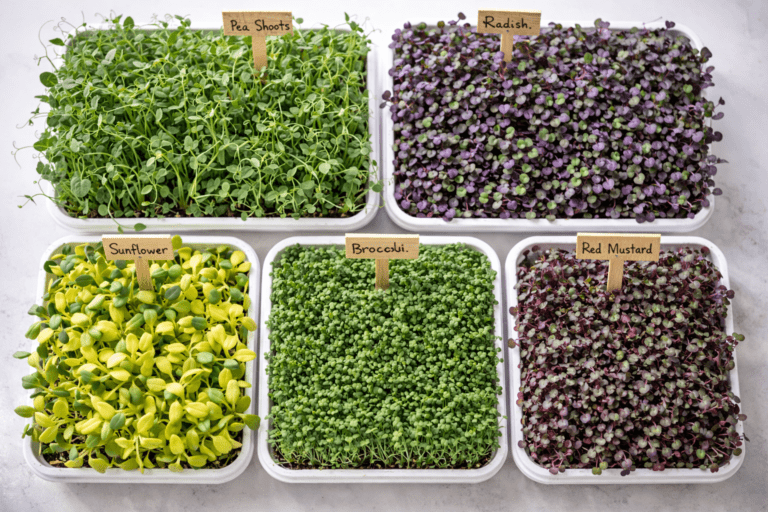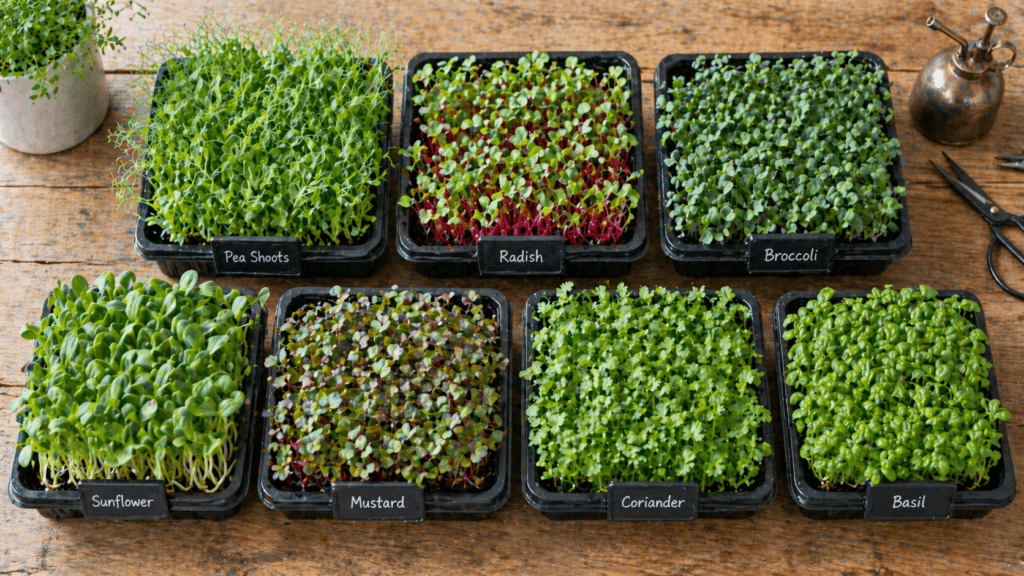
Microgreens can be a compact crop for local sales, but profitability depends on repeat demand, consistent quality, waste control and realistic pricing—not simply choosing the highest-priced seed.
Choosing crops
Start with a small, repeatable setup and keep notes on seed quantity, germination, harvest weight, time and losses. This gives you useful evidence for improving the next grow instead of relying on generic yield claims.
What affects profit
Compare the whole process rather than one headline number. Seed, growing media, electricity, packaging, failed trays, labour and unsold produce can all affect the real result.
Selling safely
Use clean trays and equipment, avoid standing water, provide airflow and inspect crops regularly. For anything sold as food, check current local food-business and hygiene requirements before trading.
Planning a small test
Run a small trial first. Choose one or two straightforward varieties, record the results, then expand only when the growing routine and demand are consistent.
FAQ
Do microgreens need strong nutrients?
Many microgreens rely substantially on energy stored in the seed during their short crop cycle. Requirements vary by method and crop, so avoid automatically using a strong nutrient solution.
What matters most for beginners?
Clean equipment, suitable seed, even moisture, airflow, adequate light after germination and keeping simple records are more useful than adding complexity too early.