
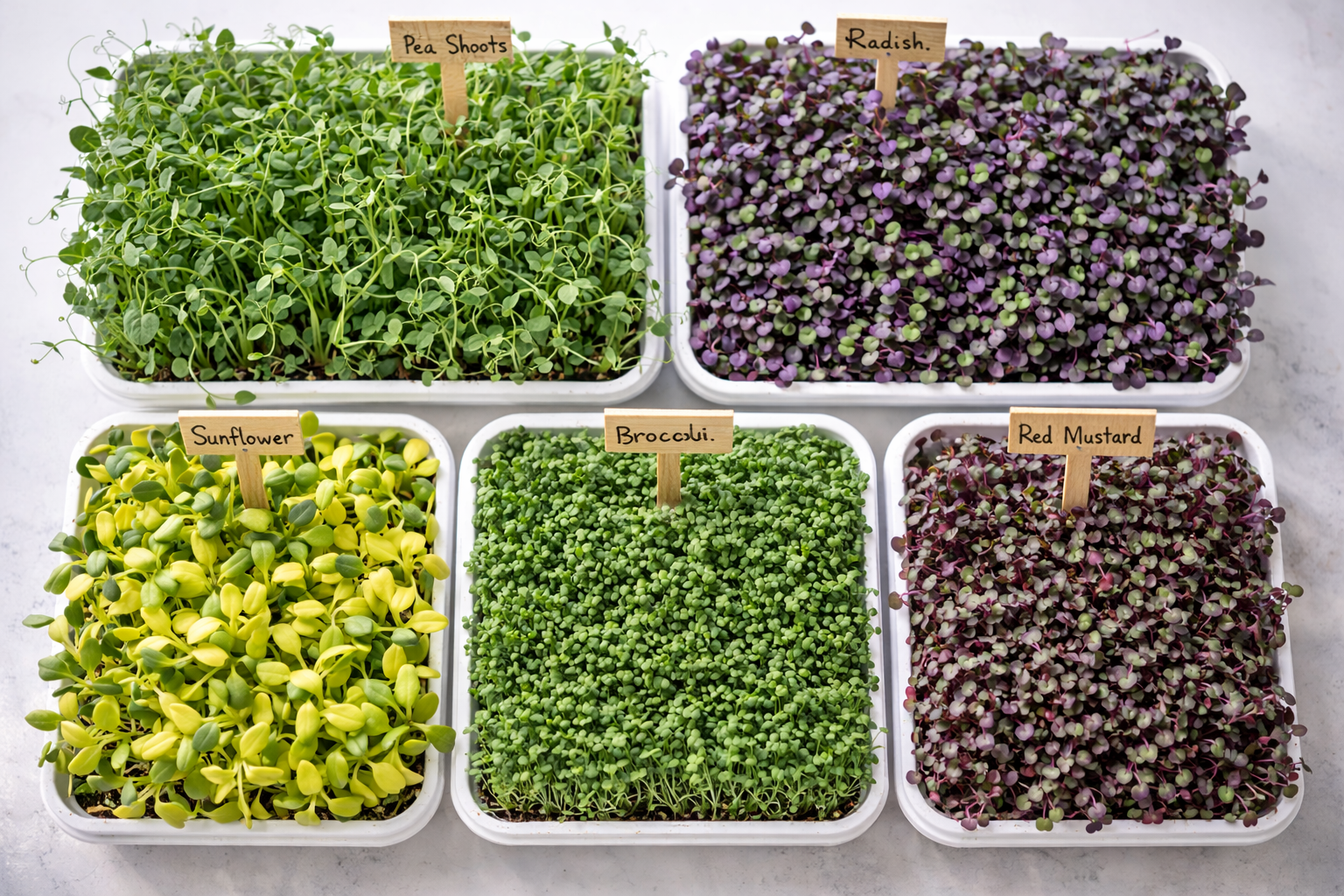
Choosing the best microgreen varieties to start with can make the difference between exciting success and frustrating failure. Some microgreens are virtually impossible to mess up, germinating reliably and growing uniformly even for absolute beginners. Others are tricky, slow, or prone to mould. This guide ranks the 10 best microgreen varieties for hydroponic growing based on ease of growing, speed to harvest, flavour appeal, and reliability.
Whether you want spicy, sweet, mild, or peppery flavours, there is a perfect starter variety on this list. By the end, you will know exactly which seeds to buy for your first successful microgreens harvest.
🏆 Quick Pick
If you only buy one variety to start, choose radish microgreens. They are the fastest, easiest, and most forgiving of the best microgreen varieties available. Ready in 5-7 days with a 95%+ success rate even for absolute beginners.
How did we rank the best microgreen varieties?
Each variety on this list was evaluated against 5 factors that matter most for beginners. These criteria came from testing dozens of varieties over multiple growing cycles in standard home conditions.
| Factor | Why It Matters |
|---|---|
| Germination rate | Higher rates mean fewer wasted seeds and more uniform trays |
| Speed to harvest | Faster crops give beginners quick wins and motivation |
| Mould resistance | Some varieties are prone to fungal problems in humid conditions |
| Flavour appeal | Beginners need varieties they will actually want to eat |
| Seed cost | Cheap seeds mean cheap experimentation |
Which is the number 1 best microgreen variety for beginners?
#1Radish — The undisputed champion
Radish wins the best microgreen varieties category because it does everything right. Germination rates are typically 95%+, harvest is ready in just 5-7 days, mould problems are extremely rare, and the spicy peppery flavour adds zing to salads, sandwiches, and tacos. Available varieties include Daikon (mild), Cherry Belle (medium), and Sango (purple, spicy).
📊 Radish Stats
Germination: 24-48 hours
Harvest: 5-7 days
Difficulty: ⭐ Easiest
Yield per tray: 80-150g
#2Broccoli — The nutritional powerhouse
Broccoli microgreens are second on the list because they combine impressive nutritional density with relatively easy growing. They contain high levels of sulforaphane, a compound studied extensively for its potential health benefits. Mild cabbagey flavour works in nearly every dish.
#3Pea shoots — The crowd-pleaser
Pea shoots are the best microgreen varieties for picky eaters because their sweet, fresh flavour appeals to almost everyone, including children. They grow taller than most microgreens (4-6 inches) and produce a generous harvest from each tray. Pea shoots also have the unusual ability to produce a small second harvest if cut above the base node.
#4Sunflower — The crunchy snack
Sunflower microgreens stand out for their thick, crunchy texture and nutty flavour. They make excellent snacks straight from the tray and add substantial body to salads. The seeds need a longer 8-12 hour pre-soak before sowing, which is the only complexity that prevents them from ranking higher.
#5Mustard — The spicy kick
Mustard microgreens deliver intense heat that fans of horseradish and wasabi love. They are among the easiest to grow, with high germination rates and fast 7-10 day harvest times. Red Garnet mustard adds beautiful purple colour as well as flavour.
#6Kale — The trendy superfood
Kale microgreens offer the same nutritional benefits as mature kale in tiny, tender form. They have a milder, sweeter flavour than full-grown kale and grow reliably for beginners. Available varieties include Red Russian (purple stems) and Lacinato (dark green).
#7Cabbage — The mild winner
Red cabbage microgreens are some of the most beautiful of the best microgreen varieties, with bright purple stems and green leaves. The flavour is mild and slightly sweet, making them an excellent gateway variety for people unfamiliar with microgreens.
#8Beetroot — The earthy classic
Beetroot microgreens have a distinctive earthy flavour and stunning red and pink colouring. They grow more slowly than the top entries on this list (10-14 days) but produce some of the most visually striking trays. Bull’s Blood and Detroit Dark Red are popular varieties.
#9Coriander — The herbaceous favourite
Coriander microgreens deliver intense fresh herb flavour perfect for Mexican, Thai, and Indian cuisines. They are among the slower varieties (12-21 days) and require more patience, but the flavour reward is significant for cooks who use coriander regularly.
#10Amaranth — The exotic colour
Amaranth microgreens add dramatic magenta colour and mild spinach-like flavour to dishes. They are the slowest on this list (14-21 days) and slightly trickier to grow, but they are worth the effort for the visual impact alone.
Where should you buy microgreen seeds?
Seed quality matters more than most beginners realise. Cheap supermarket vegetable seeds work but often have lower germination rates than seeds specifically labelled for microgreens. For UK buyers, quality microgreen seeds are available from specialist suppliers:
🛒 Where to Source Microgreen Seeds (UK)
- Amazon UK: Widest variety, fast delivery, convenient for testing multiple varieties
- Suttons Seeds: Reputable UK brand with microgreen-specific packs
- Thompson & Morgan: Quality seeds with good germination rates
- Chilli Mash Company: Specialist UK microgreen seed supplier
- eBay: Bulk packs often significantly cheaper per gram for common varieties like radish and broccoli
Intermediate level: combining varieties into salad mixes
Once you have grown several individual varieties from this best microgreen varieties list, mixing them in single trays opens up new possibilities. “Salad mix” trays combine 3-5 varieties with similar growing times for a colourful, multi-flavour harvest from one tray.
Easy starter mix
Combine equal parts radish, broccoli, and mustard in one tray. All three germinate within 24-48 hours, harvest at 7 days, and produce contrasting colours and flavours that work well together in salads.
Spicy mix
Combine radish, mustard, and red cabbage for a colourful, peppery blend that adds serious flavour kick to sandwiches and wraps.
Mild salad mix
Combine pea shoots, broccoli, and sunflower for a sweet, mild blend that appeals to children and microgreen newcomers. This mix is particularly popular for families — see our teaching kids hydroponics guide for age-appropriate growing activities.
What next? Beyond the best microgreen varieties for beginners
After mastering the entries on this list, here are the natural next steps for adventurous growers:
- Try unusual varieties like wasabi, fennel, fenugreek, or borage
- Experiment with herb microgreens like basil, dill, and shiso (slower growing but intensely flavoured)
- Learn the full setup process with our microgreens hydroponics first harvest guide
- Compare with full-size growing in our microgreens vs full size plants guide
- Turn it into income with our microgreens business from home startup guide
- Sell at farmers markets using our 7 proven tips for success
- Connect with the growing community through resources like Epic Gardening for advanced techniques
Frequently asked questions about the best microgreen varieties
Which microgreen variety has the most nutrients?
Broccoli microgreens are widely considered the most nutritionally dense of the best microgreen varieties due to their high sulforaphane content. Red cabbage microgreens are also exceptionally nutrient-rich. Research published by the USDA shows both varieties contain significantly more concentrated nutrients than their mature counterparts.
Can I grow all microgreen varieties using the same method?
Most varieties grow with the same basic hydroponic method, but a few have specific requirements. Sunflower and pea shoots benefit from pre-soaking seeds for 8-12 hours before sowing. Beetroot and chard grow more slowly and need slightly more patience. Radish, broccoli, and mustard work with the standard method without modification.
How much do microgreen seeds cost compared to vegetable seeds?
Microgreen seeds typically cost more per gram than vegetable seeds because they are sold in bulk quantities and tested for higher germination rates. However, you use far more seeds per tray (5-15 grams) than you would in vegetable growing, so per-tray cost is what matters. Expect to pay £0.50-£2.00 per tray in seeds depending on variety.
Which variety produces the heaviest harvest?
Sunflower and pea shoots produce the heaviest harvests by weight among the best microgreen varieties. A standard 1020 tray of sunflower can yield 200-400 grams of harvested microgreens, while pea shoots typically yield 250-350 grams. Lighter varieties like radish yield 80-150 grams per tray.
Are some microgreen varieties dangerous to eat raw?
All varieties on this list are safe to eat raw. Avoid microgreens from the nightshade family (tomato, potato, pepper, eggplant) which contain toxic alkaloids in their leaves. Stick with proven culinary varieties from reputable seed suppliers and you will be safe.
Why do my microgreens taste different from store-bought?
Home-grown microgreens almost always taste more intense and fresh than store-bought versions because they are eaten immediately after harvest. Store-bought microgreens may be 5-10 days old by the time you eat them, losing flavour and texture in the process. This freshness advantage is the main reason many growers start with microgreens hydroponics.
Related posts you might find useful
- Microgreens Hydroponics: Your First Harvest in 7 Days — Complete beginner setup guide
- Microgreens vs Full Size Plants — Which should beginners grow first?
- Microgreens Business from Home — Turn your hobby into income
- Selling Microgreens at Farmers Markets — 7 proven tips for success
- Fastest Hydroponic Crops: Top 8 Plants Under 30 Days — Compare microgreens to other quick crops
- 10 Easy Hydroponic Plants Almost Impossible to Kill — Best beginner crops beyond microgreens
- Teaching Kids Hydroponics — Microgreens are perfect for family STEM projects
Turn Microgreens Into a Side Income
Our 23-page ebook Microgreens: Hobby to Side Income includes detailed grow guides for 20+ varieties, complete business startup plan, pricing strategies, and everything you need to sell to restaurants and farmers markets.
✓ 20+ variety grow guides · ✓ Pricing strategies · ✓ Restaurant pitch scripts · ✓ Instant PDF download