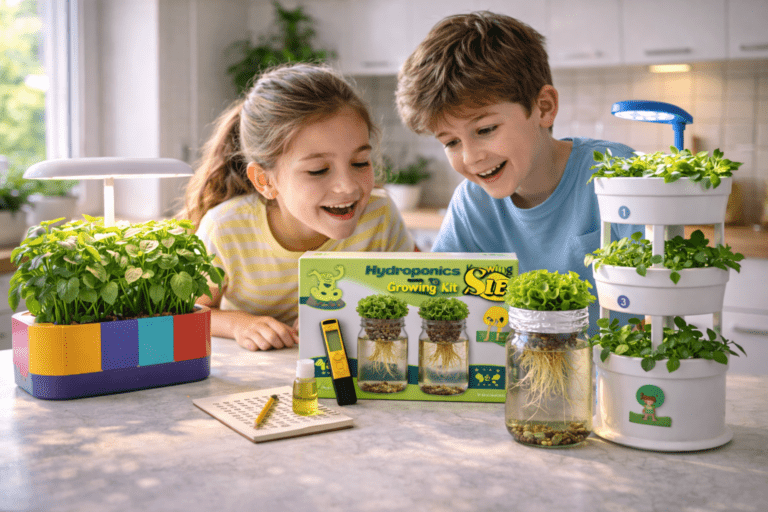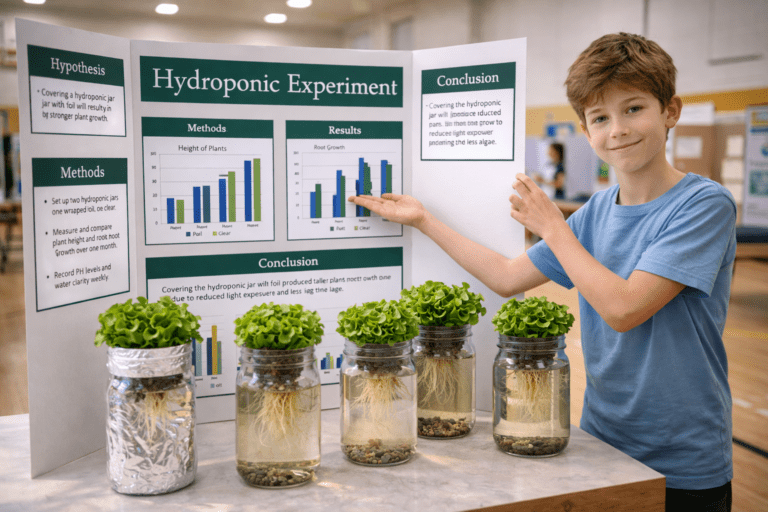
Good hydroponic experiments for children change one simple factor at a time and record what happens. Comparing light levels, observing root growth or tracking plant height can turn a small hydroponic setup into a practical science lesson. Adults should handle nutrients, electrical equipment and any pH-adjusting chemicals.
Change one thing at a time
Start with plants of similar size and keep most conditions the same. Change only the factor being investigated. Label each plant and write down the starting conditions so the observations mean something.
Experiment 1: observe root development
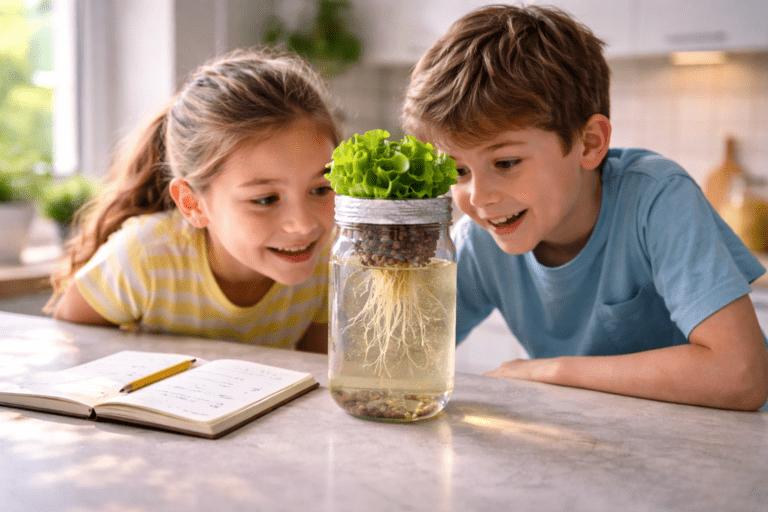
Use a suitable container that allows supervised viewing of roots for short periods, then keep the nutrient solution protected from light during normal growth. Record root length, colour and branching over time without repeatedly disturbing the plant.
Experiment 2: compare light conditions
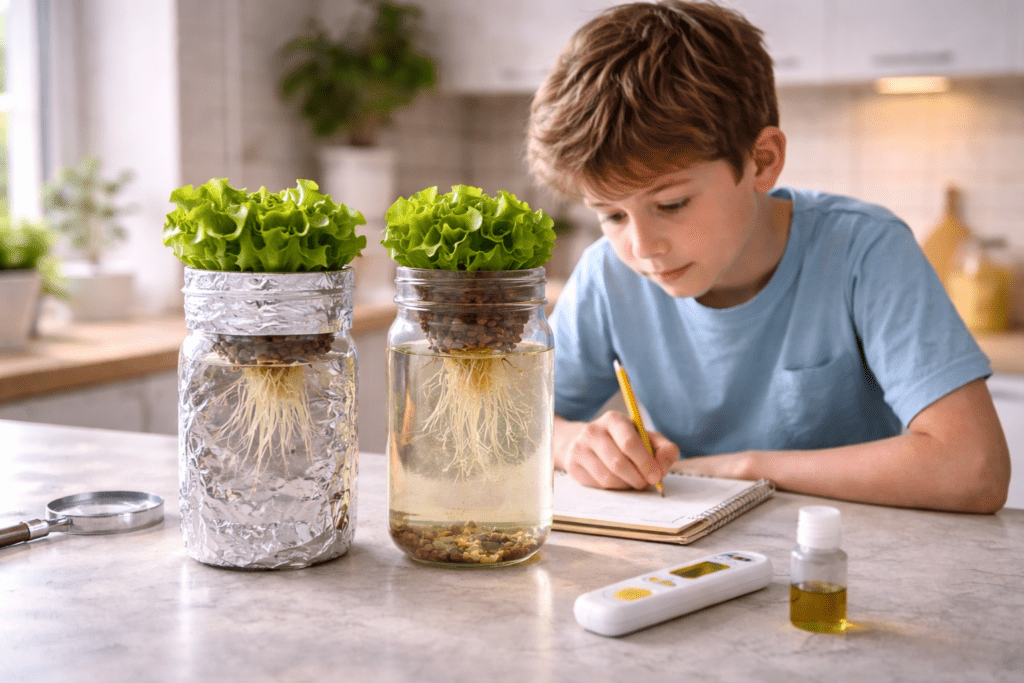
Grow similar seedlings under two clearly defined light conditions while keeping water, nutrients and temperature as consistent as possible. Record plant height, leaf number and general appearance. Do not interpret taller growth automatically as healthier growth.
Experiment 3: create a growth diary
Measure the same feature on the same days each week. A simple table for date, height, leaf count and observations teaches consistent measurement and produces data that can be graphed later.
Keep the activity age-appropriate
Adults should mix nutrients and handle pH Up/Down products. Keep electricity away from spills, supervise cutting tools and wash hands after handling nutrient solution or plant material. Do not taste experimental plants unless an adult has confirmed that the crop and growing conditions are appropriate for food.
FAQ
What plant is easiest for a classroom-style experiment?
Fast-growing leafy plants can make changes easier to observe, but the best choice depends on the experiment and available light.
How long should an experiment run?
Long enough to collect several consistent observations. Define the measurement schedule before starting rather than stopping when a preferred result appears.