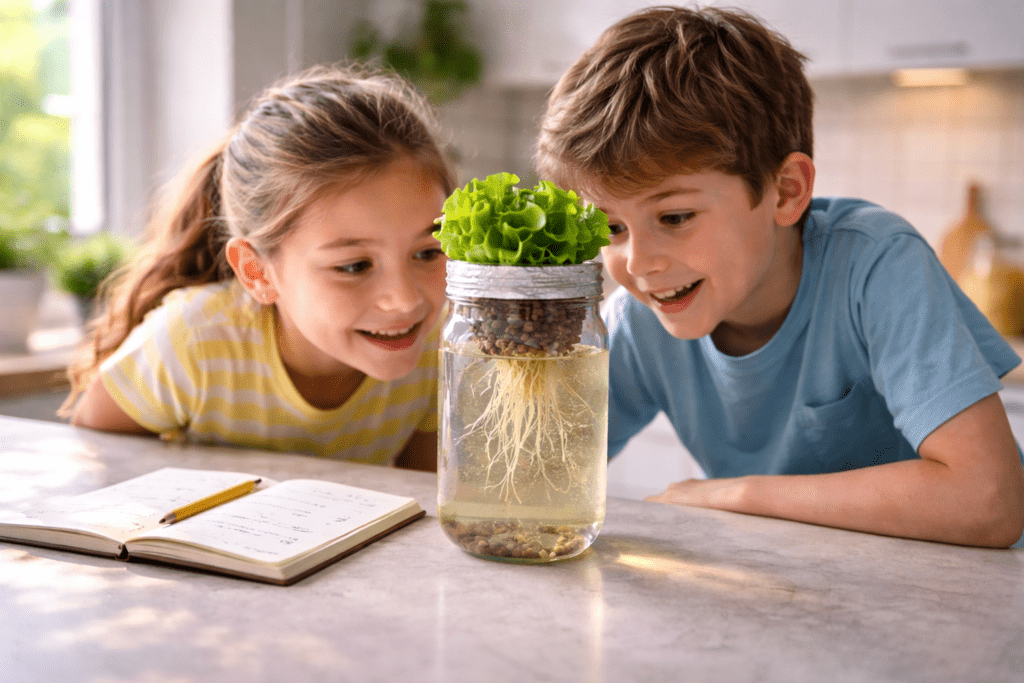
Hydroponics can be a useful way to teach children about roots, water, nutrients, light and scientific observation because much of the growing process can be made visible. Keep the project simple, let the child measure and record changes, and have an adult handle nutrient concentrates, pH chemicals, cutting tools and electrical equipment.
What hydroponics can teach
A small hydroponic grow provides a practical introduction to plant biology. Children can see that roots need water, mineral nutrients and oxygen, while leaves need light and air. It also creates opportunities to practise measurement, record keeping and comparing observations over time.
Keep explanations age-appropriate. A useful starting point is that soil normally stores water and mineral nutrients and supports roots; hydroponics provides those needs in other ways.
Start with one simple plant
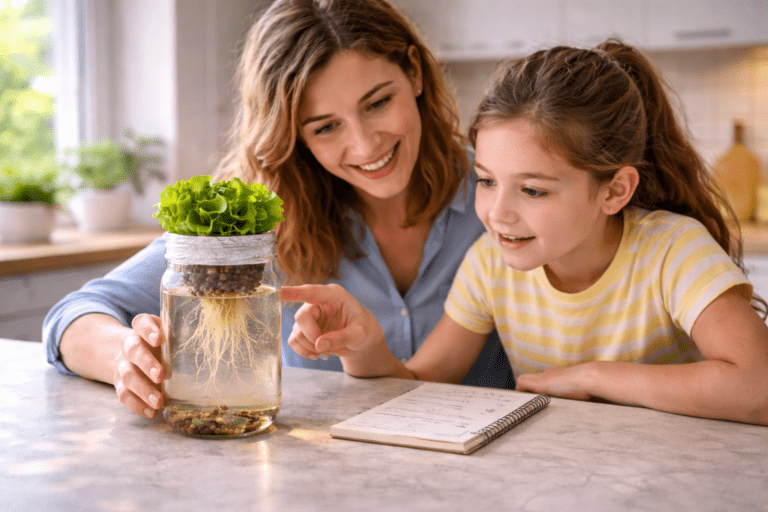
A small leafy green or herb is easier to manage than a fruiting crop. An adult can prepare a simple Kratky container, while the child helps label the plant, observes the roots and records growth. Keep the reservoir opaque during normal use to reduce algae.
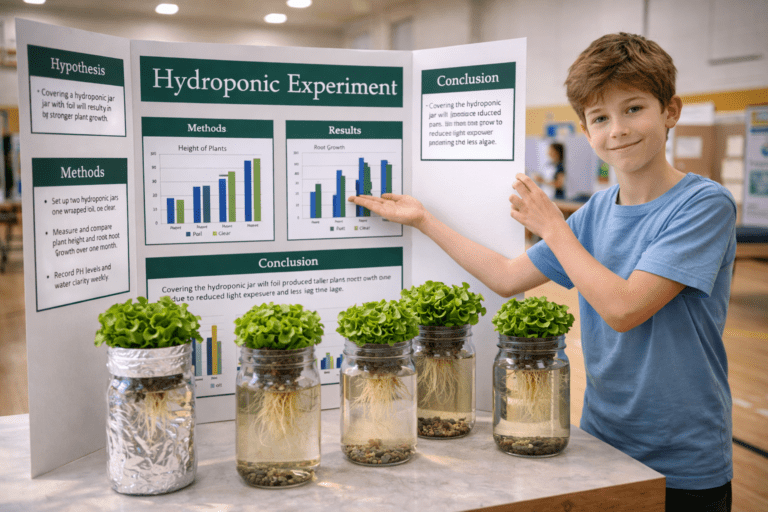
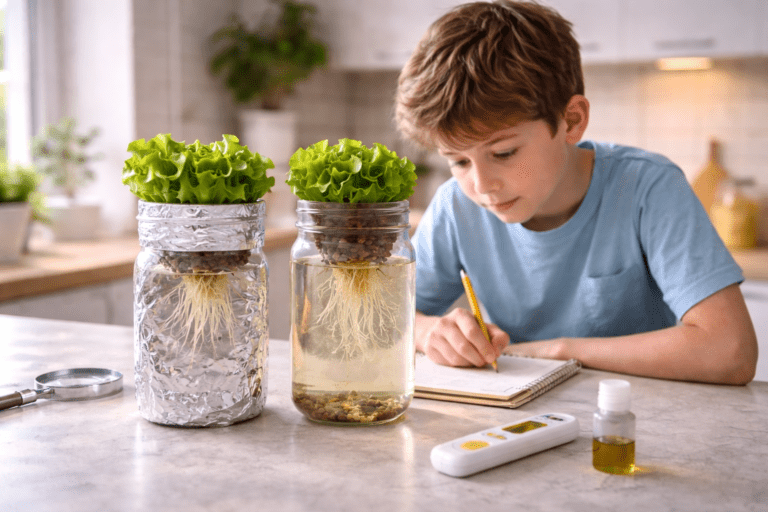
For the basic setup, follow the Kratky jar guide. If the aim is a formal experiment rather than a demonstration, use the science fair project guide so only one variable is deliberately changed at a time.
Create a weekly observation journal
| Observation | What to record |
|---|---|
| Plant height | Measure from the same point each time. |
| Leaves | Count leaves or note new growth. |
| Roots | Describe colour, length and visible changes without disturbing them unnecessarily. |
| Water level | Mark or measure the level and watch how it changes. |
| Light | Record the approximate daily lighting routine. |
Photos taken from a similar position each week can make progress easy to compare.
Turn observations into questions
Ask questions that encourage the child to explain what they see: Why might the water level fall? Where are the new roots appearing? What changed after a new leaf opened? What does the plant need from the light? Avoid telling them the expected result before they make their own observation.
Keep the practical work safe
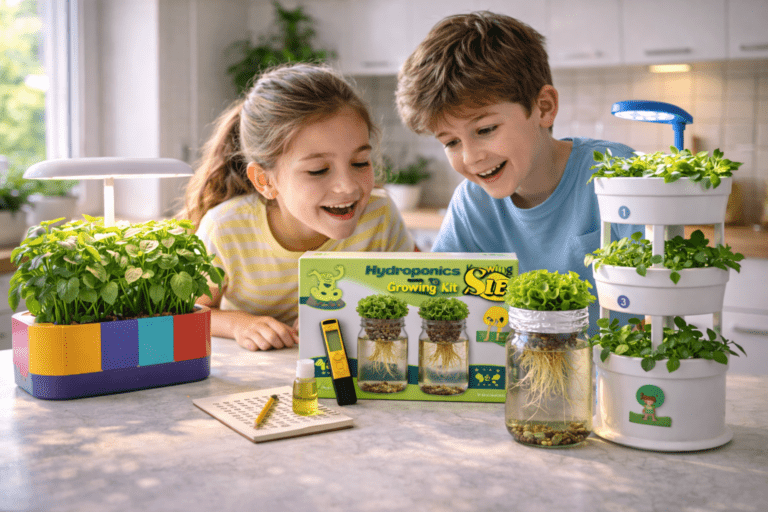
An adult should prepare nutrient solution and handle concentrated nutrients, pH Up/Down products, sharp cutting tools and mains-powered equipment. Keep chemicals in their original labelled containers and out of children's reach. Wash hands after handling growing solutions and follow product instructions.
For younger children, observation, measuring, drawing and photographing the plant are enough to make the project hands-on without giving them responsibility for chemicals or electrical equipment.
Teaching hydroponics FAQs
What is the easiest hydroponic lesson for children?
A single fast-growing leafy plant in a simple system works well because the child can observe roots and leaves changing over time without managing a complicated setup.
Can children mix hydroponic nutrients?
Concentrated nutrients and pH-adjusting chemicals should be handled by an adult. Children can take part in safer activities such as measuring plant growth and recording observations.
How can I make it educational rather than just growing a plant?
Use a dated observation journal, ask the child to make a prediction, measure consistently and discuss what the observations suggest.