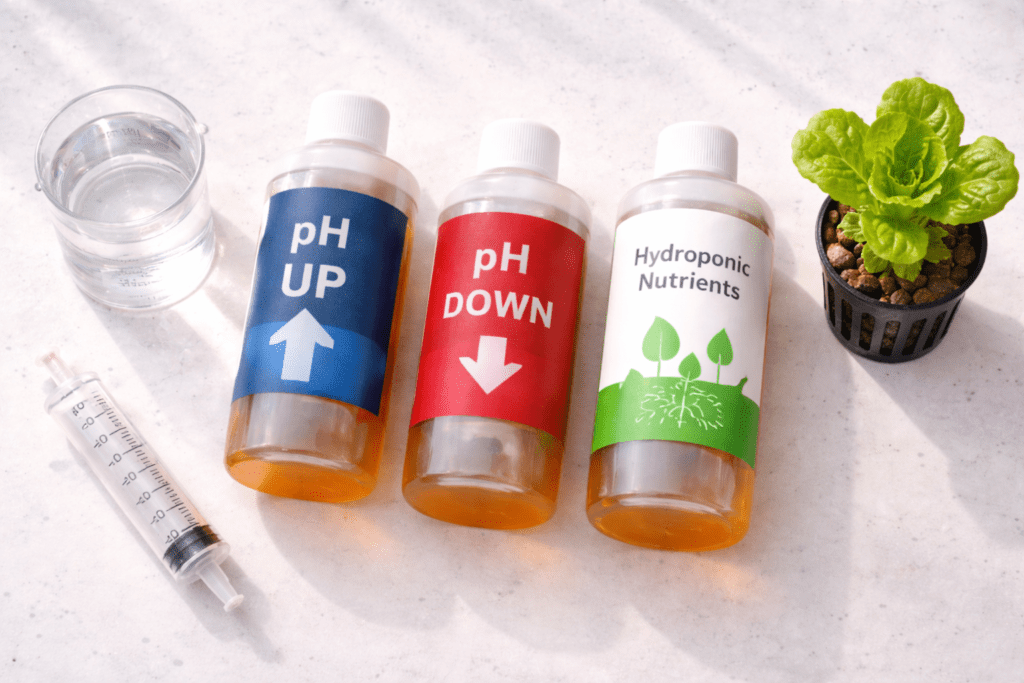
Hydroponic nutrients replace the mineral supply plants would normally obtain from soil. For a first grow, you do not need a complicated feeding programme: use a complete nutrient formulated for hydroponics, follow its label, mix it into water correctly, then use pH and—when useful—EC to understand the solution.
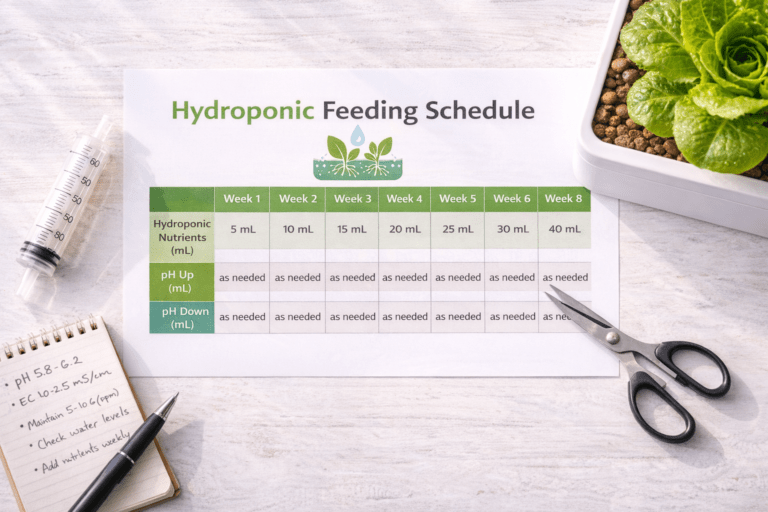
Choose a complete hydroponic nutrient appropriate for your crop. Add it to water at the manufacturer’s recommended rate, mix thoroughly, then measure pH. Start young plants gently rather than assuming full strength is always best.
What Do Hydroponic Nutrients Do?
Plants need mineral elements including nitrogen, phosphorus, potassium, calcium, magnesium and sulphur, plus smaller quantities of micronutrients. In soil, those elements come from the soil solution and fertilisers. In hydroponics, the grower supplies them in water.
A product intended for hydroponics is designed to provide soluble mineral nutrition without relying on soil. This is why ordinary houseplant feed should not automatically be treated as equivalent to a complete hydroponic formula.
NPK and Essential Elements
| Element | Main role | Useful beginner note |
|---|---|---|
| Nitrogen (N) | Leaves, proteins and chlorophyll | Deficiency often begins as general paling, especially on older leaves |
| Phosphorus (P) | Energy transfer and development | Availability is affected by root-zone conditions and pH |
| Potassium (K) | Water regulation and many plant processes | Demand can be important in fruiting crops |
| Calcium & magnesium | Cell structure, enzymes and chlorophyll | Do not add supplements blindly; check the base nutrient and water first |
| Micronutrients | Required in small quantities | A complete hydroponic nutrient should account for these too |
One-Part vs Multi-Part Nutrients
A one-part nutrient is convenient for simple leafy crops and beginners. Multi-part systems keep certain concentrated ingredients separate and can offer more control for different growth stages. Neither format is automatically “better” for every grow.
Choose a reputable hydroponic product, read the label, and avoid combining products simply because an online recipe recommends them.
How to Mix Hydroponic Nutrients
- Fill a clean reservoir with the required volume of water.
- If you use an EC meter, note the starting-water EC.
- Add each nutrient component separately according to its label.
- Mix thoroughly between components.
- Measure the final EC if you are using EC as part of your routine.
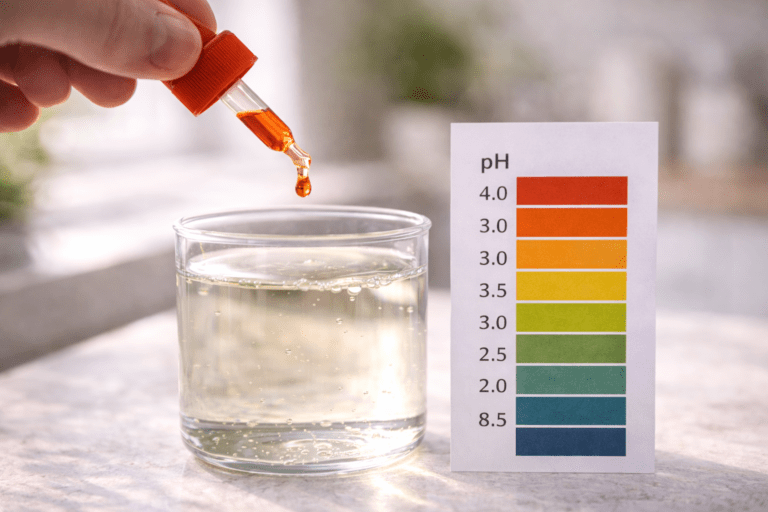
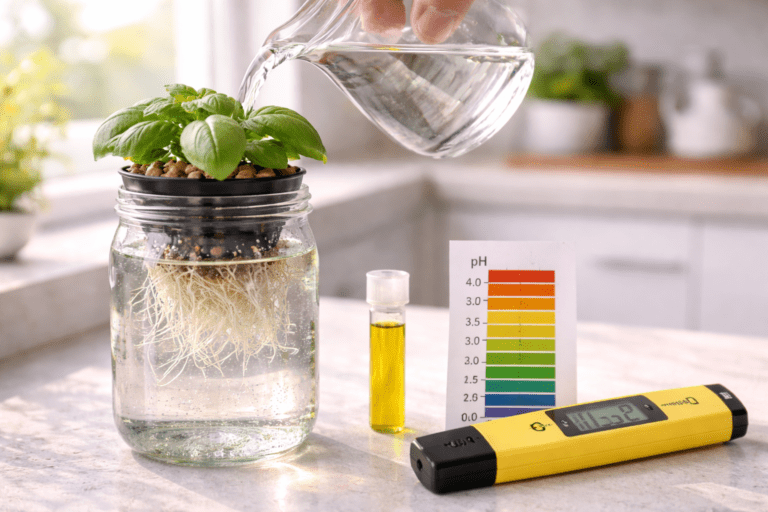
- Measure pH after the nutrients are mixed.
- Adjust pH cautiously if required.
- Record the result so you can repeat a successful mix.
Never mix concentrated Part A and Part B together before dilution unless the manufacturer explicitly instructs you to do so.
Understanding EC and pH
EC indicates the overall concentration of dissolved ions. It does not tell you the amount of each individual nutrient, but it is useful for detecting an over-strong or unusually weak solution. pH affects nutrient availability in the root zone.
Oklahoma State University notes that high nutrient-solution EC can contribute to osmotic stress and nutrient imbalance, while very low EC can accompany nutrient deficiency and reduced growth. Its crop table also shows that appropriate EC and pH ranges differ by crop.
Useful Tools
Common Beginner Nutrient Mistakes
- Assuming more nutrient means faster growth.
- Using a fixed internet dosage instead of checking the product label.
- Ignoring the EC of the starting water.
- Adjusting pH before nutrients are mixed and never rechecking it.
- Adding Cal-Mag or bloom boosters without a clear reason.
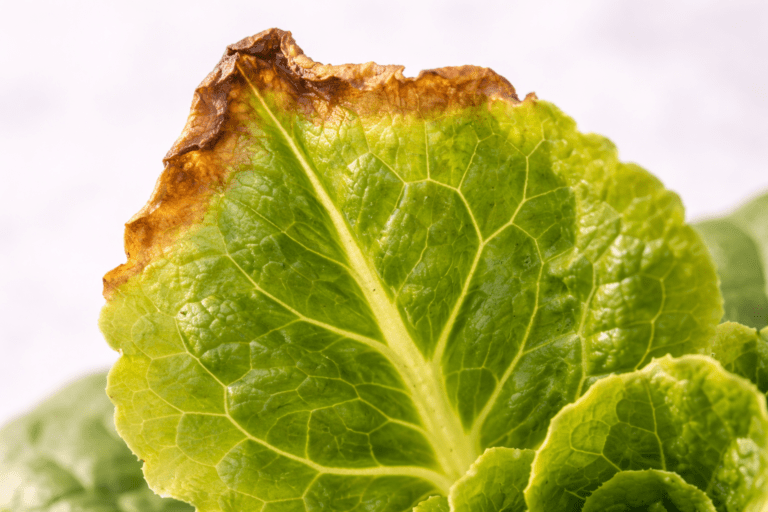
- Treating every yellow leaf as a nutrient deficiency.
Hydroponic Nutrient FAQ
Do beginners need an EC meter?
Not for every simple first grow, but it becomes very useful for troubleshooting and for crops where nutrient concentration matters more. A reliable label dosage and pH test can get a beginner started.
Can I use ordinary plant food?
Use a product specifically suitable for hydroponic growing unless its manufacturer clearly states otherwise. Hydroponic plants depend entirely on the nutrient solution for mineral nutrition.
Do all plants use the same nutrient strength?
No. Lettuce, basil and tomatoes, for example, have different published EC ranges. Growth stage also matters.