
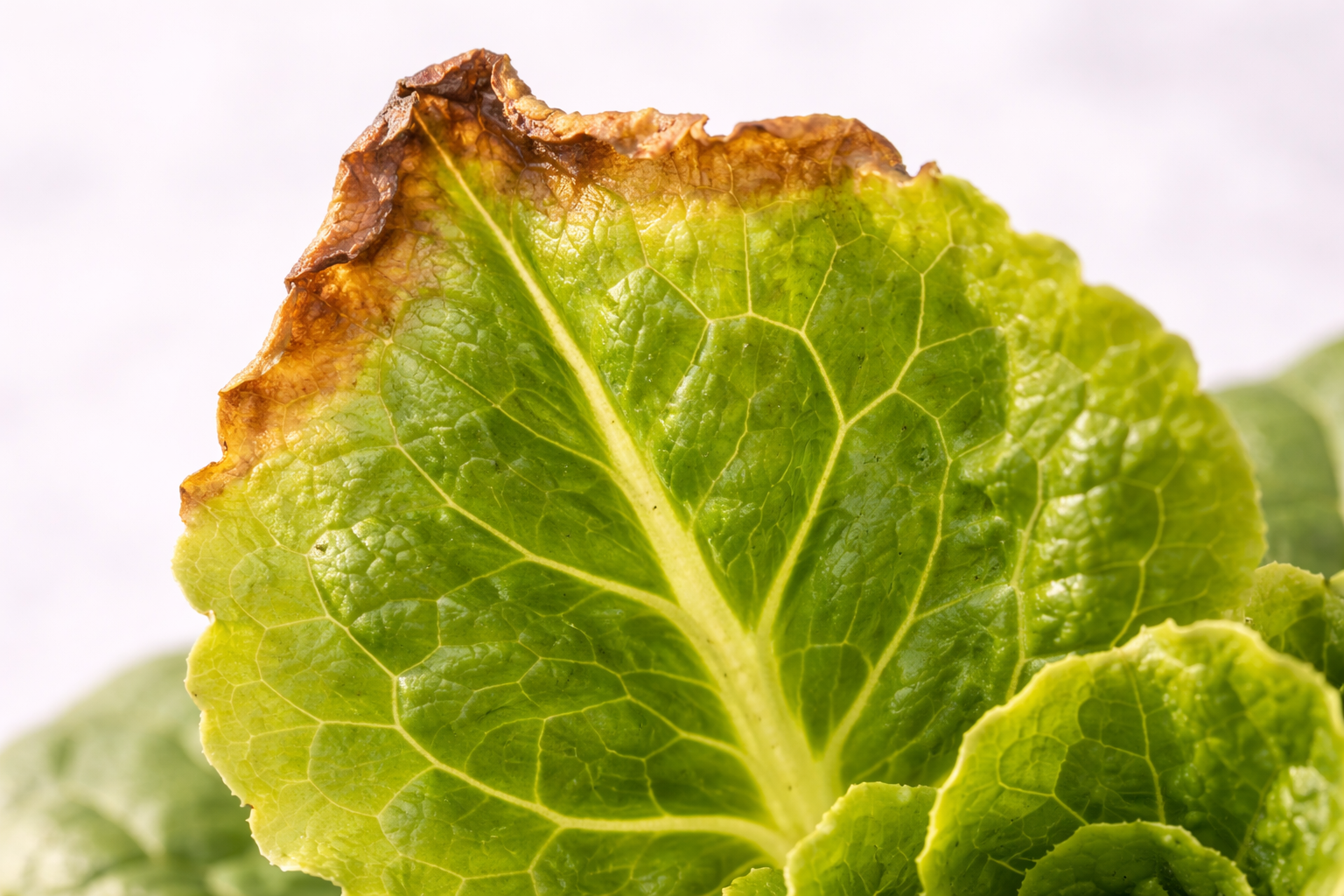
Hydroponic nutrient burn is one of the most common beginner mistakes and one of the easiest to identify. Brown crispy leaf tips, edges that look scorched, and progressive damage working inward from the leaf margins — these are the unmistakable signs that your nutrient solution is too strong. The good news is that nutrient burn is straightforward to fix if caught early and even easier to prevent in future grows.
This guide explains exactly what hydroponic nutrient burn looks like, why it happens, how to fix affected plants, and how to prevent it from ever returning. By the end, you will be able to spot the early warning signs before serious damage occurs.
🔥 The Quick Fix
If you spot hydroponic nutrient burn, immediately drain one-third of your reservoir and replace with plain pH-adjusted water. This dilutes the concentration. New growth will emerge healthy within 5-7 days, though already-burned tips do not recover.
What does hydroponic nutrient burn actually look like?
Hydroponic nutrient burn has a very specific visual signature that distinguishes it from other plant problems. Once you know what to look for, you cannot mistake it.
✓ Early stage symptoms (easy to fix)
- Very tip of leaves develops a slightly darker green colour
- Tips begin turning yellow, then light brown
- Lower, older leaves are affected first
- The damage starts at the absolute tip and works inward toward the leaf base
⚠️ Moderate stage symptoms (act immediately)
- Brown crispy edges extend further into the leaf
- Tips become dry, papery, and may curl downward
- Leaf margins develop a clearly visible burned border
- The centre of the leaf remains green, creating an obvious contrast
🚨 Severe stage symptoms (plant may not recover)
- Most of the leaf surface is brown and crispy
- Leaves may drop from the plant entirely
- New growth emerges deformed or stunted
- The plant stops growing altogether
The key distinguishing feature from other problems: nutrient burn always starts at the leaf tip and edges and works inward, while the centre remains green. If yellowing starts from the base or affects whole leaves uniformly, it’s likely a different problem — see our hydroponic plants turning yellow guide for full diagnostic help.
What causes hydroponic nutrient burn?
Hydroponic nutrient burn happens when the concentration of dissolved minerals in your nutrient solution exceeds what plant roots can safely absorb. Roots normally absorb water and nutrients in a controlled balance. When the solution is too concentrated, water actually moves OUT of the roots into the surrounding solution (a process called osmosis), dehydrating the plant from within and damaging tissue.
| Cause | How It Happens |
|---|---|
| Overdosing nutrients | Adding more than the recommended amount |
| Wrong measurement | Measuring in tablespoons instead of millilitres |
| Topping up wrong | Adding nutrients instead of plain water when topping up |
| Hard water plus nutrients | Hard tap water already contains minerals that add to the total (common in parts of the UK) |
| Sensitive seedlings | Using full strength on young plants that need half strength |
| Evaporation concentration | Water evaporates from the reservoir over weeks, leaving minerals behind and increasing concentration |
How do you fix hydroponic nutrient burn quickly?
Time matters with hydroponic nutrient burn. The longer concentrated solution remains in contact with roots, the more damage accumulates. Act within hours of spotting the first symptoms for the best recovery.
Step 1Test the concentration
If you have an EC meter (£8-15 on Amazon UK), test your current solution. Compare against the target range for your crop:
| Crop | Target EC |
|---|---|
| Lettuce | 0.8-1.2 mS/cm |
| Herbs (basil, mint, coriander) | 1.0-1.6 mS/cm |
| Tomatoes | 1.8-3.5 mS/cm (depending on stage) |
If your reading is significantly above the target for your crop, you have confirmed nutrient burn from over-concentration.
Step 2Dilute the solution
For DWC and recirculating systems: Pour out approximately one-third of your reservoir and replace with plain pH-adjusted water (no nutrients). Stir thoroughly and retest. Aim to bring the EC back to the recommended target for your crop.
For Kratky systems: This is more challenging because you cannot easily change the solution mid-grow. Carefully siphon out some of the existing solution and replace with plain pH-adjusted water. Be cautious not to disturb the air gap that has already formed. See our kratky method troubleshooting guide for kratky-specific solutions.
Step 3Lower future doses
Going forward, mix nutrients at 75% of the previous strength. If you were using 5ml per litre, drop to 3.75ml. Continue at this lower concentration until you observe healthy growth, then gradually increase if needed.
Step 4Trim damaged tissue (optional)
You can carefully trim the brown crispy tips with clean scissors. This improves appearance but is not strictly necessary — damaged tissue does not recover or “spread” the damage. Cutting it off mainly helps the plant look better while new healthy growth emerges.
How do you prevent hydroponic nutrient burn?
Prevention is much easier than treatment. These five practices eliminate hydroponic nutrient burn almost entirely.
✅ The 5 Prevention Rules
- Always measure precisely using a marked syringe, not eyeballing
- Start at half strength for seedlings and your first grow ever
- Top up with plain water only — never add more nutrients between mixes
- Test EC if possible — a £10 meter eliminates guesswork
- Follow the label — manufacturer doses are tested and reliable
Intermediate level: understanding crop sensitivity
Different crops have different tolerance for nutrient concentration. Knowing these tolerances helps you avoid hydroponic nutrient burn even when pushing for maximum growth.
| Sensitivity | Crops | Max Safe EC |
|---|---|---|
| Very sensitive | Lettuce, baby greens, microgreens | 1.5 mS/cm |
| Sensitive | Spinach, herbs, kale | 1.8 mS/cm |
| Moderate | Strawberries, peppers | 2.5 mS/cm |
| Tolerant | Tomatoes, cucumbers | 3.5 mS/cm |
Why is hydroponic nutrient burn worse for some plants than others?
Different crops have dramatically different tolerances for nutrient concentration, and understanding why helps you prevent hydroponic nutrient burn through smarter dosing. Plants that evolved in nutrient-poor environments (like most leafy greens) are highly sensitive to excess minerals. Plants that evolved in mineral-rich soils (like tomatoes from volcanic regions) tolerate much higher concentrations.
This is why a nutrient solution that grows healthy tomatoes will burn lettuce within days. Always use crop-appropriate concentrations rather than assuming “more is better” for any plant. The best approach is to start at half the manufacturer recommendation for any new crop you have not grown before, then gradually increase if the plant looks hungry rather than burned.
Are seedlings more vulnerable to nutrient burn?
Yes, dramatically so. Young seedlings have small, undeveloped root systems that cannot regulate water uptake as effectively as mature plants. Concentrations that mature plants tolerate easily can devastate seedlings within hours. Always use 25-50% strength nutrients during the first 2 weeks after transplanting to give roots time to develop before exposure to full-strength solutions.
What next? Building nutrient confidence
Once you understand hydroponic nutrient burn, here are the next steps for building confidence with nutrient management:
- Buy an EC meter (£8-15 from Amazon UK) to remove guesswork from concentration testing
- Track your nutrient use in a notebook to learn how each crop responds in your conditions
- Experiment with bloom additives on tomatoes once you have mastered base nutrients
- Try Cal-Mag supplements if growing in soft water areas
- Gradually push toward optimal EC for each crop rather than playing it safe forever
Frequently asked questions about hydroponic nutrient burn
Can plants recover from hydroponic nutrient burn?
Yes, if caught early. The plant continues growing and produces new healthy leaves once concentration is reduced. However, the already-burned tissue does not heal — those leaves remain damaged for the rest of their life. New growth that emerges after the fix is the indicator that the plant is recovering.
How quickly does nutrient burn appear?
Initial symptoms can appear within 24-48 hours of switching to an over-concentrated solution. Severe damage develops over 5-10 days if uncorrected. This is why testing nutrient strength immediately after mixing is so important.
Is nutrient burn the same as nutrient lockout?
No, they are different problems with different causes. Nutrient burn is caused by too much nutrient (excess concentration). Nutrient lockout is caused by pH being out of range, which prevents nutrient absorption even at the right concentration. Lockout symptoms look like deficiency (yellowing, pale leaves) rather than burn (brown crispy tips). For complete deficiency diagnostics, see our hydroponic nutrient deficiency chart.
Can hydroponic nutrient burn kill a plant?
Yes, in severe cases. If concentration is extremely high or burn is left untreated for weeks, the entire plant can collapse. Most cases caught within the first few days of symptoms appearing recover fully. Cases left for weeks may damage the plant beyond saving.
Why does my plant have burn even though I followed the dosage?
Several possible causes: hard water adding to total mineral content (London water is notoriously hard), evaporation concentrating the solution over time, topping up with nutrients instead of plain water, or measuring incorrectly. Test your EC if possible to confirm the actual concentration in your solution.
Should I flush my system if I have nutrient burn?
Not full flushing — partial dilution is usually enough. Pour out one-third of the solution and replace with plain pH-adjusted water. Full flushing (running plain water through for hours) is overkill for most cases of hydroponic nutrient burn and removes beneficial minerals along with the excess.
How do I tell burn from potassium deficiency? They both cause brown edges.
Key difference: nutrient burn affects all leaves at the same time and damage starts at the very tip. Potassium deficiency starts on the oldest leaves only and works inward from the edges. If every leaf including new growth has damaged tips, it’s burn. If only older lower leaves show damage, it’s potassium deficiency.
Related posts you might find useful
- Hydroponic Plants Turning Yellow: Every Cause Explained — Distinguish burn from other yellowing causes
- Hydroponic Nutrient Deficiency Chart — The opposite problem (too little, not too much)
- pH Keeps Dropping in Hydroponics — Over-concentration causes pH drops too
- Hydroponic Root Rot: Identify, Fix, Prevent — Another serious problem that looks similar
- Algae in Hydroponic System — Complete Troubleshooting cluster coverage
- Kratky Method Troubleshooting — Passive system-specific nutrient issues
- 10 Easy Hydroponic Plants Almost Impossible to Kill — Most burn-tolerant crops
Diagnose Every Hydroponic Problem
Our 22-page ebook Hydroponic Troubleshooting Guide covers nutrient burn, deficiencies, pH problems, root rot, algae, and every common issue with visual symptom charts, EC management guides, and step-by-step fixes.
✓ Visual symptom charts · ✓ EC management guides · ✓ Crop-specific feeding · ✓ Instant PDF download