
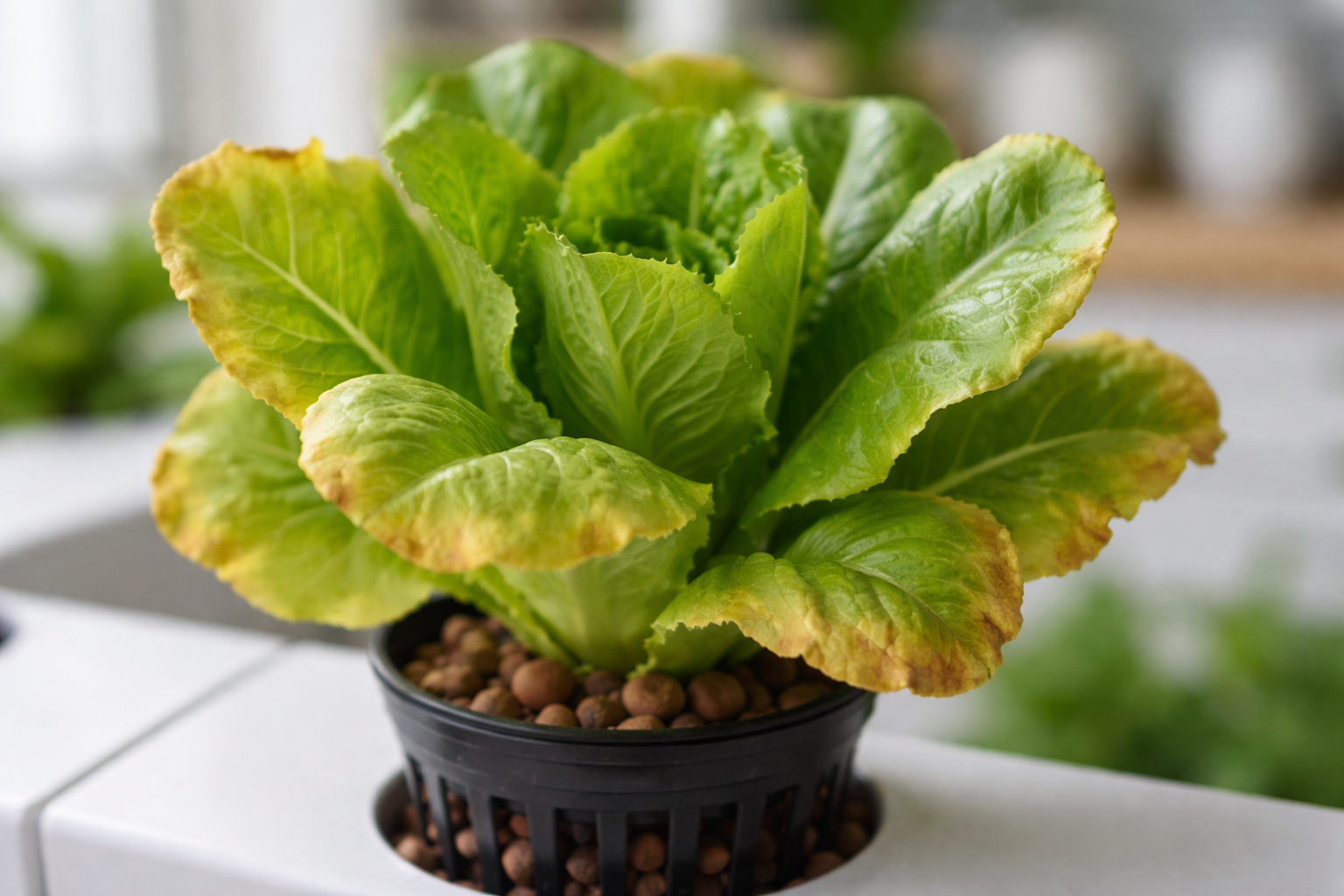
If your hydroponic plants are turning yellow, do not panic. Yellowing leaves are the single most common problem in hydroponics, and in the vast majority of cases, the cause is simple and the fix takes less than five minutes. The challenge is not fixing the problem — it is correctly diagnosing which type of yellowing you are dealing with, because different patterns point to different causes.
This guide covers every reason hydroponic plants turn yellow, how to identify the specific cause from the pattern of yellowing on your leaves, and the exact steps to fix each one. By the end, you will be able to look at any yellow leaf and know exactly what went wrong and what to do about it.
⚡ The 60-Second Answer
Check pH first. pH problems cause 60-70% of all yellowing in hydroponics. If pH is above 6.5 or below 5.5, fix that before investigating anything else. For most growers, this single check solves the problem without needing to diagnose a specific cause.
The number one cause: pH is out of range
If your hydroponic plants are turning yellow and you have not checked pH recently, start here. pH problems cause approximately 60-70 percent of all yellowing in hydroponic systems. This is not an exaggeration — pH is genuinely that important.
When pH drifts outside the 5.5-6.5 range, nutrients become chemically locked out. They are physically present in your nutrient solution, but the plant cannot absorb them because the chemistry of the water prevents it. This is called nutrient lockout, and it makes the plant look like it is starving even though it is surrounded by food.
Cause 1pH out of range (60-70% of all yellowing)
Once pH is corrected, the plant should begin recovering within 3-5 days. New growth will emerge green and healthy. The already-yellowed leaves may not fully recover their colour, but the plant will stop deteriorating and resume healthy growth. If your pH keeps drifting, see our pH keeps dropping in hydroponics guide.
Cause 2Nitrogen deficiency (lower leaves yellowing first)
If yellowing starts from the bottom leaves and works upward while top leaves remain green, nitrogen deficiency is the most likely cause. Nitrogen is a mobile nutrient, meaning the plant can move it from older leaves to feed new growth. When nitrogen runs low, the plant sacrifices its oldest leaves to keep the youngest ones growing.
Common causes in hydroponics:
- Nutrients too dilute: If you mixed at half strength and the plant has been growing vigorously for several weeks, the available nitrogen may be depleted.
- Old nutrient solution: In recirculating systems, plants selectively absorb nitrogen faster than other nutrients, depleting it first.
- Late-stage Kratky: Near the end of a Kratky grow cycle, the nutrient solution is mostly consumed and nitrogen is the first element to run out.
Cause 3Iron deficiency (yellow leaves with green veins)
This is one of the most visually distinctive patterns you will see. The leaf tissue between the veins turns yellow or pale while the veins themselves remain dark green. This creates a striking striped or netted pattern that is impossible to confuse with other deficiencies once you know what to look for.
Common causes in hydroponics:
- pH too high: Iron becomes increasingly unavailable above pH 6.5. At pH 7.0+, iron lockout is almost guaranteed. This is the most common cause of iron deficiency.
- Insufficient iron in the nutrient formula: Some budget nutrient brands contain less chelated iron than premium options.
- Cold root zone: Very cold nutrient solution (below 15°C) reduces iron uptake even when pH is correct.
Cause 4Light deficiency (pale, leggy, uniform yellowing)
When the entire plant appears pale and the stems are thin, elongated, and reaching toward the light source, insufficient light is the most likely cause. Plants need light to produce chlorophyll (the green pigment), so when light is limited, chlorophyll production drops and the plant fades to pale green or yellow.
The plant will begin producing more chlorophyll within days of receiving adequate light. New growth will emerge darker green and more compact. The already-pale growth will improve somewhat but may not fully recover its colour.
Cause 5Nutrient burn (yellow or brown crispy leaf tips)
Nutrient burn is the opposite of deficiency — too much nutrient concentration in the solution damages the leaf tips and edges. It is a common mistake when beginners add extra nutrients thinking more equals faster growth. When plants are yellowing specifically at the tips and edges while centres remain green, nutrient burn is usually the cause.
For future mixes, reduce your nutrient dosage. If you were using full strength, switch to three-quarter strength. For the full burn diagnosis and fix, see our hydroponic nutrient burn guide. The already-burned leaf tips will not recover (dead tissue cannot regenerate), but the damage will stop progressing once the concentration is corrected.
Cause 6Root rot (wilting and yellowing despite water present)
If plants are yellowing and wilting even though the reservoir still contains nutrient solution, root rot is the most likely explanation. Root rot occurs when roots are deprived of oxygen, typically from waterlogged conditions without adequate aeration.
Common causes:
- Kratky jar refilled to the top: Submerging the air gap roots eliminates their oxygen supply.
- DWC air pump failure: Without bubbles, dissolved oxygen depletes within hours.
- Water temperature too high: Above 24°C, water holds less oxygen and harmful bacteria multiply faster.
If the entire root system is brown and mushy, the plant is likely beyond recovery. Remove it, sterilise the container, and start fresh.
Cause 7Temperature stress (heat or cold)
Both high and low temperatures can cause yellowing, though the mechanisms are different.
| Temperature Range | Effect | Visible Symptoms |
|---|---|---|
| Above 28°C (heat stress) | Transpiration exceeds root supply, dehydration | Yellowing, leaves curl upward, dry feel |
| 15-24°C (ideal) | Optimal growth | Healthy green, compact growth |
| Below 15°C (cold stress) | Root metabolism slows, nutrient uptake drops | Slow growth, purple/reddish tinge, then yellowing |
The diagnostic flowchart: identify your yellowing in 60 seconds
When your plants are yellowing, work through these questions in order. Following this order catches the most common cause first (pH) and works through less likely causes systematically.
| Step | Question | If Yes |
|---|---|---|
| 1 | Is pH outside 5.5-6.5? | Fix pH first — this alone solves most cases |
| 2 | Are lower leaves yellowing first? | Nitrogen deficiency — replace nutrient solution |
| 3 | Are upper leaves yellow with green veins? | Iron deficiency — lower pH to 5.5-6.0 |
| 4 | Is the plant leggy and stretched? | Light deficiency — add a grow light |
| 5 | Are leaf tips/edges crispy and brown? | Nutrient burn — dilute solution immediately |
| 6 | Is the plant wilting despite water? | Check roots for rot |
| 7 | Is the room below 15°C or above 28°C? | Temperature stress — move to 18-24°C environment |
In most cases, you will have your answer by question 1 or 2.
Prevention: how to stop plants turning yellow
The best fix is prevention. These four habits eliminate 90 percent of yellowing before it starts:
| Habit | How Often | Why It Matters |
|---|---|---|
| Test pH | Every 2-3 days | Prevents nutrient lockout — the #1 cause of yellowing |
| Provide adequate light | 10-14 hours daily | Drives chlorophyll production and healthy colour |
| Use correct nutrient strength | Every mix | Prevents both deficiency and burn |
| Maintain water temperature | Ongoing (18-24°C) | Keeps oxygen levels high and pathogens low |
If your plants are yellowing despite following all four of these habits, the cause is likely root rot (check roots) or a specific micronutrient deficiency (try a fresh batch of full-strength nutrient solution).
Frequently asked questions about hydroponic plants turning yellow
Will yellow leaves recover their green colour after I fix the problem?
Usually not. Once a leaf has lost its chlorophyll, that specific tissue cannot regenerate the green pigment. What you should see instead is the plant stopping further yellowing and new growth emerging healthy green. Existing yellow leaves may eventually drop off, which is normal. Don’t judge recovery by the yellow leaves — judge it by whether new growth is green.
How long should I wait before taking action?
Don’t wait. Yellowing indicates an active problem that will worsen without intervention. The cost of action is low (5-minute pH test, quick leaf inspection) while the cost of inaction can be losing the entire plant. When you first notice yellowing, check pH the same day.
My whole plant suddenly turned yellow overnight — what happened?
Sudden overnight yellowing usually indicates either: pump failure in DWC (causing immediate oxygen crisis), severe temperature shock (cold snap near a window, heater turning on too close to the plant), or someone accidentally refilled a Kratky jar to the top (drowning air roots). Check these three possibilities first.
Do different plants yellow differently?
Yes. Lettuce and basil show yellowing earliest and most visibly. Tomatoes show yellowing of lower leaves as a normal part of fruiting (redirecting nutrients upward), which can be confusing. Mint and coriander tolerate pH swings better than most and yellow less readily. If you’re new to a specific crop, research its typical responses before diagnosing a problem.
Can I just add more nutrients to fix yellowing?
No — and this is a common mistake. Adding more nutrients when the real cause is pH lockout, root rot, or light deficiency will make things worse, not better. Over-concentration triggers nutrient burn (yet more yellowing). Always diagnose the cause first; only add nutrients if depletion is actually the issue.
My microgreens are yellowing — same rules?
Mostly no. Microgreens are harvested before true leaves develop, so they get all their nutrition from the seed itself — they don’t need added nutrients and pH management doesn’t apply the same way. Microgreen yellowing is usually light deficiency (stretched, pale stems) or overwatering (soggy growing mats). See our microgreens hydroponics guide for microgreen-specific troubleshooting.
Related posts you might find useful
- Hydroponic Nutrient Deficiency Chart — Visual guide to every deficiency pattern
- pH Keeps Dropping in Hydroponics — Fix the #1 cause of yellowing
- Hydroponic Nutrient Burn — The opposite problem (too much, not too little)
- Hydroponic Root Rot: Identify, Fix, Prevent — When roots can’t deliver nutrients
- Algae in Hydroponic System — Algae competes with plants for nutrients
- Kratky Method Troubleshooting — Passive system-specific yellowing causes
- 10 Easy Hydroponic Plants Almost Impossible to Kill — Forgiving crops for new growers
Diagnose Every Hydroponic Problem
Our 22-page ebook Hydroponic Troubleshooting Guide includes visual symptom charts, diagnostic flowcharts, and step-by-step fixes for every common problem.
✓ Visual symptom charts · ✓ Diagnostic flowcharts · ✓ Step-by-step fixes · ✓ Instant PDF download