
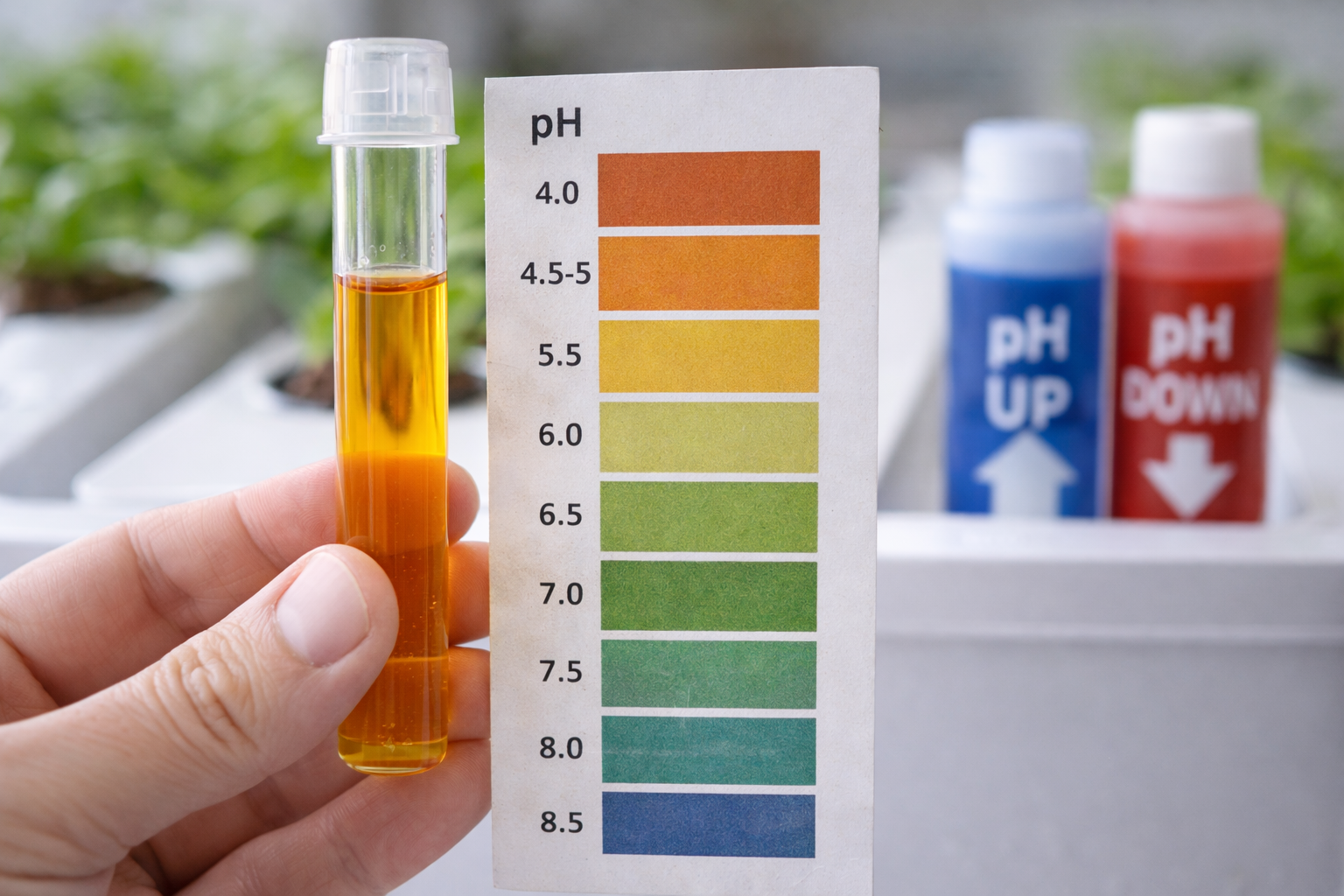
You adjust your pH to a perfect 5.8, walk away, and come back two days later to find it has dropped to 4.5. You correct it again, and within 48 hours it has dropped again. When pH keeps dropping in hydroponics, it is one of the most frustrating problems to deal with because it feels like you are fighting a losing battle. The good news is that every case of falling pH has a specific, identifiable cause, and once you fix the root cause, the pH stabilises permanently.
This guide explains every reason pH drops in hydroponic systems, how to diagnose which cause is affecting your system, and the permanent fix for each one.
⚠️ Interesting Twist — pH Usually Rises in Hydroponics
In most home hydroponic systems with UK tap water (naturally alkaline at pH 7.0-8.0), pH rises over time, not falls. If yours keeps dropping, you likely have one of 6 specific causes — active uptake, organic decay, bacterial activity, over-concentration, acidic medium, or CO2 buildup. Read on to identify which.
Why pH matters (and what happens when it drops too low)
The optimal pH range for most hydroponic crops is 5.5 to 6.5. Within this range, all essential nutrients are available to the plant in their most absorbable chemical forms. When pH keeps dropping in hydroponics below 5.5, several problems emerge:
| Problem | What Happens |
|---|---|
| Manganese & aluminium toxicity | These elements become excessively available and reach toxic levels, damaging roots |
| Calcium & magnesium lockout | Essential nutrients become less available below pH 5.0 even though they are present |
| Root damage | Very acidic solutions (below pH 4.5) directly damage root cell membranes |
| Beneficial bacteria die-off | Protective microorganisms die, leaving roots vulnerable to root rot |
When pH keeps dropping, it is not just an inconvenience — it creates a cascade of interconnected problems that progressively worsen plant health. For a deeper look at nutrient-related symptoms that mimic pH issues, see our hydroponic nutrient deficiency chart.
The 6 causes of dropping pH in hydroponics
Cause 1Active nutrient uptake by the plant (most common)
This is the most common cause when pH keeps dropping in hydroponics, and it is actually a sign that your plant is healthy and growing vigorously.
When plants absorb nutrient ions from the solution, they release hydrogen ions (H+) in exchange to maintain their internal electrical balance. The accumulation of these hydrogen ions in the solution lowers the pH. The more actively a plant is growing and feeding, the more hydrogen ions it releases, and the faster the pH drops.
If the pH drops very rapidly (more than 1.0 point per day), the nutrient solution may be too concentrated. Dilute with plain water to reduce the rate of uptake and slow the pH decline.
Cause 2Organic matter decomposition
Dead roots, decaying plant material, dead algae, and organic debris in the reservoir all decompose and release organic acids into the solution, driving pH downward. This is a particularly common cause when pH keeps dropping in systems that have not been cleaned recently.
Cause 3Bacterial activity
Certain bacteria in the nutrient solution produce acids as metabolic byproducts. These include both harmful bacteria (associated with root rot) and some beneficial bacteria. If bacterial populations are high, their combined acid output can drive pH down significantly.
Cause 4Nutrient concentration too high
When nutrient solution is mixed too strong, the high concentration of dissolved salts can create an acidic environment. Some nutrient formulations are inherently acidic (particularly those high in ammonium nitrogen), and at high concentrations this acidity overwhelms the solution’s buffering capacity.
Cause 5Growing medium releasing acids
Some growing media are naturally acidic and release acids into the nutrient solution as water passes through them. This is particularly common with certain types of peat-based media, unwashed coco coir, and some brands of rock wool.
- Clay pebbles: Soak in pH 6.0 water overnight and rinse
- Coco coir: Soak in pH 6.0 water with Cal-Mag supplement, then rinse with plain water
- Rock wool: Soak in pH 5.5 water for 24 hours, rinse, squeeze out excess
This pre-treatment neutralises residual acids and prevents them from affecting your nutrient solution.
Cause 6CO2 dissolution (rare but possible)
In enclosed spaces with poor ventilation, elevated carbon dioxide levels can dissolve into the nutrient solution and form carbonic acid, lowering pH. This is an uncommon cause in home growing but can occur in grow tents, sealed rooms, or spaces where CO2 supplementation is used.
The permanent pH stability toolkit
If your pH keeps dropping despite fixing the specific cause, these ongoing practices maintain stable pH:
| Practice | Why It Works |
|---|---|
| Regular reservoir changes | Every 1-2 weeks (DWC) resets pH and prevents gradual acidification |
| Correct nutrient strength | Too strong = faster pH decline. The label exists for a reason |
| Adequate reservoir volume | Larger reservoirs resist pH swings — upgrade 500ml jars to 1-2L |
| Clean system | Remove dead plant material, block light to prevent algae acid |
| Test every 2-3 days | Catching a 0.5 drop is a one-drop fix. Catching a 1.6 drop needs a reservoir change |
pH rising vs pH dropping: which is normal?
Interestingly, in most home hydroponic systems, pH tends to rise over time rather than drop. Rising pH (from 5.8 to 6.5 or above) is the more common drift direction in mature, healthy systems. This is because most UK tap water is alkaline (pH 7.0-8.0) and most nutrient formulations are slightly acidic, creating a dynamic balance that usually tips upward as the plant absorbs the acidic components.
When pH keeps dropping in hydroponics instead of rising, it typically indicates one of the active causes described in this guide: vigorous uptake, organic decay, bacterial activity, or over-concentration. The dropping direction itself is the diagnostic clue — it tells you to look for acid-producing causes rather than alkaline-producing ones.
Frequently asked questions about pH dropping in hydroponics
How much pH drop per day is normal?
A pH drop of 0.1-0.3 points per day from active plant uptake is completely normal in a healthy, actively growing system. Drops of 0.5+ points per day suggest one of the problem causes in this guide — most commonly over-concentrated nutrients, organic decay, or bacterial activity. Sudden drops of 1.0+ points indicate a serious issue requiring immediate reservoir change.
Can I use lemon juice or vinegar to adjust pH instead of pH Down?
Technically yes, but it’s not recommended for ongoing use. Lemon juice and vinegar are organic acids that bacteria feed on, which causes rapid pH re-drift and can contribute to bacterial overgrowth. Commercial pH Down (phosphoric or nitric acid) is more stable and doesn’t feed microbial activity. A £3-5 bottle lasts 6+ months, so it’s not worth the hassle of substitutes.
Should I worry if pH drops to 5.0-5.5?
Mildly — 5.0-5.5 is below the ideal range but not catastrophic for most crops. Plants tolerate brief excursions to 5.0 without permanent damage. Adjust back up to 5.8-6.0 at your next check. Sustained pH below 5.0 for more than 3-4 days causes visible damage, so catch drops quickly.
My pH drops faster on sunny days than cloudy days — why?
Plants photosynthesise and feed more actively in bright light, which means faster nutrient uptake and faster pH decline. This is completely normal. If you have a week of sunny weather followed by cloudy days, expect the pH drift rate to slow noticeably during the cloudy stretch. Plan to adjust pH slightly more often during summer than winter.
Do I need a digital pH meter or are test drops good enough?
For most home growers, pH test drops are perfectly adequate and much cheaper (£4-6 for hundreds of tests vs £20-40 for a digital meter that needs regular calibration). Drops are accurate to within 0.3 pH units which is precise enough for all hydroponic crops. Upgrade to a digital meter only if you’re growing commercially or want maximum precision.
Can dropping pH kill my plants?
Yes, but only if left unaddressed. A single day at pH 4.5 rarely kills plants. A week at pH 4.0 can permanently damage roots and lead to plant death. The pattern of concern is pH dropping faster than you can correct it, or dropping below 4.5 repeatedly. This indicates an underlying cause (bacterial activity, organic decay, over-concentration) that needs fixing rather than just ongoing correction.
Related posts you might find useful
- Hydroponic Nutrient Deficiency Chart — Distinguish deficiencies from pH lockout
- Hydroponic Nutrient Burn: Spot, Stop, Save — The opposite problem (too-concentrated solution)
- Hydroponic Plants Turning Yellow: Every Cause — When pH problems cause yellowing
- Hydroponic Root Rot: Identify, Fix, Prevent — Bacterial causes of rapid pH drop
- Algae in Hydroponic System: Complete Guide — Algae can worsen pH swings
- Kratky Method Troubleshooting — pH-specific issues in passive systems
- 10 Easy Hydroponic Plants Almost Impossible to Kill — Most pH-tolerant crops
Diagnose Every Hydroponic Problem
Our 22-page ebook Hydroponic Troubleshooting Guide includes a dedicated pH management chapter with diagnostic flowcharts, adjustment calculators, water quality guides, and step-by-step fixes for every common problem.
✓ pH diagnostic flowcharts · ✓ Adjustment calculators · ✓ Water quality guides · ✓ Instant PDF download