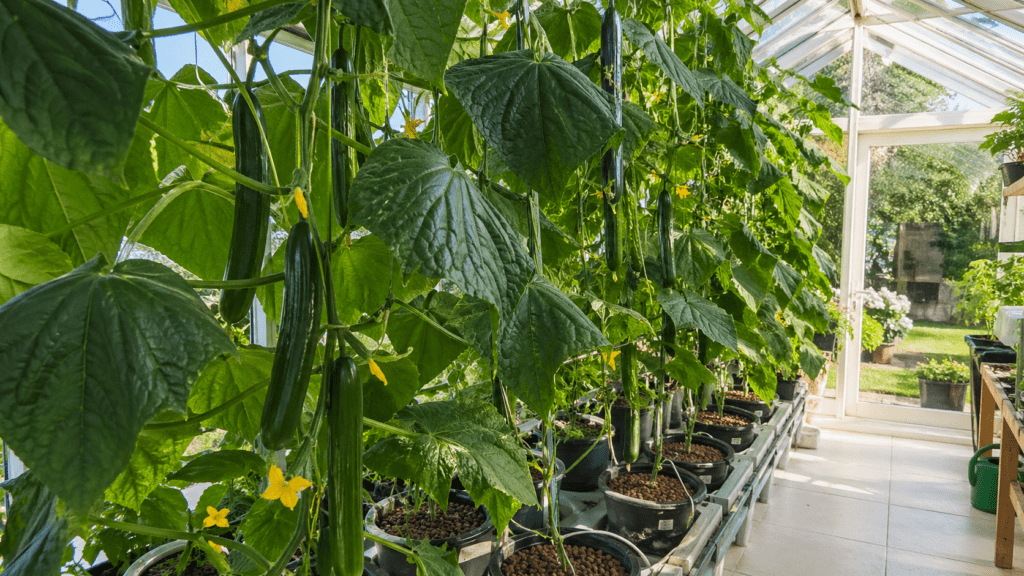
Hydroponic cucumbers need strong light, generous root space, reliable support and careful water and nutrient management. Compact or greenhouse-type varieties can work well, but vigorous vines need much more room than lettuce or herbs.
Choose a suitable cucumber
Look at mature plant size, fruit type and whether the variety is suited to protected growing. Smaller varieties can be easier where indoor space is limited.
System and support
DWC, drip-fed media and other well-aerated systems can work. Provide a trellis or string support early because vines become heavy as fruit develops.
Light and temperature
Cucumbers are light-hungry fruiting plants. In the UK, protected or indoor crops may need supplemental lighting when natural light is inadequate. Avoid sudden temperature extremes.
Nutrients and pH
Use a complete hydroponic nutrient intended for fruiting crops and follow its directions. Track EC trends rather than reacting to one reading, and keep pH within the nutrient manufacturer’s recommended hydroponic range.
Pollination and pruning
Pollination requirements depend on the variety. Some protected-cropping cucumbers are bred to set fruit without pollination, while others need pollination. Follow the seed supplier’s guidance and remove damaged growth as needed.
Common problems
Wilting can indicate water or root problems; pale leaves can involve nutrition, pH or light; misshapen fruit can reflect stress or pollination issues. Diagnose conditions before adding extra nutrient.
FAQ
What should a beginner check first when something goes wrong?
Check the roots, water level, pH, nutrient strength and light before making multiple changes. Those basics explain many hydroponic problems.
Should I follow one fixed nutrient number for every crop?
No. Crop, growth stage, water quality, environment and nutrient formulation all matter. Use product guidance and crop-specific ranges as starting points.