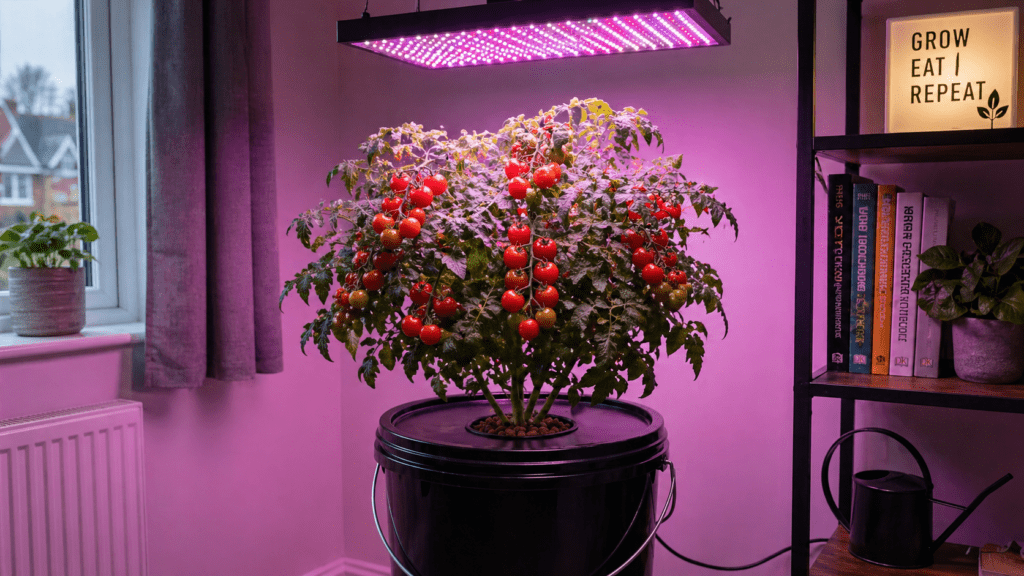
Hydroponic tomatoes can be grown indoors in the UK, but they need more light, root space, support and nutrient management than lettuce or herbs. Compact varieties make the project easier, while larger indeterminate tomatoes require substantial vertical space and training.
For indoor hydroponic tomatoes, choose a suitable compact or manageable variety, provide strong grow lighting, use a well-aerated system with enough reservoir/root volume, support the stems, monitor pH and EC, and assist pollination indoors. Expect a more demanding grow than leafy greens.
Choose the Right Tomato Variety
For limited indoor space, dwarf, bush or compact cherry varieties are easier to manage than vigorous indeterminate vines. Check the seed supplier's mature height and growth habit rather than relying on the word “patio” alone.
Smaller-fruited varieties are often a practical first choice because the plant does not have to support large fruit indoors.
Which Hydroponic System Works?
DWC, drip-fed media systems and Dutch/bato-style buckets can all support tomatoes when sized appropriately. The important requirements are reliable oxygen at the roots, adequate nutrient volume, physical support and access for maintenance.
| System | Strength | Watch for |
|---|---|---|
| DWC | Simple root access and strong aeration | Reservoir temperature, oxygen and plant support |
| Drip/media | Good for larger plants | Emitter reliability and drainage |
| Dutch/bato bucket | Well suited to fruiting crops | More plumbing and space |
Indoor Tomato Lighting
Tomatoes are high-light plants. A bright windowsill alone may not provide enough consistent light through a UK winter. Use a horticultural grow light sized to the growing area and follow the manufacturer's hanging-height guidance.
Watch plant form: excessive stretching and weak stems often indicate insufficient light. Also provide a daily dark period rather than running lights continuously.
Tomato EC and pH
Oklahoma State University's hydroponic crop table lists tomatoes at approximately EC 2.0–4.0 mS/cm and pH 6.0–6.5. Treat that as a reference range rather than forcing seedlings or every cultivar to the same concentration.
Start young plants more gently, increase strength as plants establish, and use your nutrient manufacturer's tomato/fruiting-crop instructions.
Tomato Growing Tools
How to Pollinate Tomatoes Indoors
Tomato flowers are self-fertile, but indoors they may not receive the vibration provided by wind and insects. Once flowers open, gently vibrate flower clusters or use airflow to help release pollen. Avoid rough handling.
Support the plant early
Add stakes, strings or a trellis before stems become heavy with fruit. Support fruiting branches where necessary and follow the pruning guidance appropriate to the variety's growth habit.
Common Indoor Hydroponic Tomato Problems
| Problem | Check first |
|---|---|
| Flowers but little fruit | Pollination, light and temperature |
| Leggy growth | Light intensity/distance |
| Brown leaf tips | EC, pH and root health |
| Blossom-end rot | Calcium transport, water consistency, EC/root conditions—not simply “add Cal-Mag” |
| Wilting | Root oxygen, water level, heat and disease |
Hydroponic Tomato FAQ
Can tomatoes grow indoors all year?
Potentially, if you can provide suitable light, temperature, root-zone conditions and space. Winter production generally depends much more heavily on artificial light.
Do indoor tomatoes need hand pollination?
They can self-pollinate, but gently vibrating flowers can improve pollen release where wind/insect movement is absent.
Are tomatoes good for a first hydroponic grow?
They are possible, but lettuce or basil is easier. Tomatoes demand more light, support, time and nutrient management.