
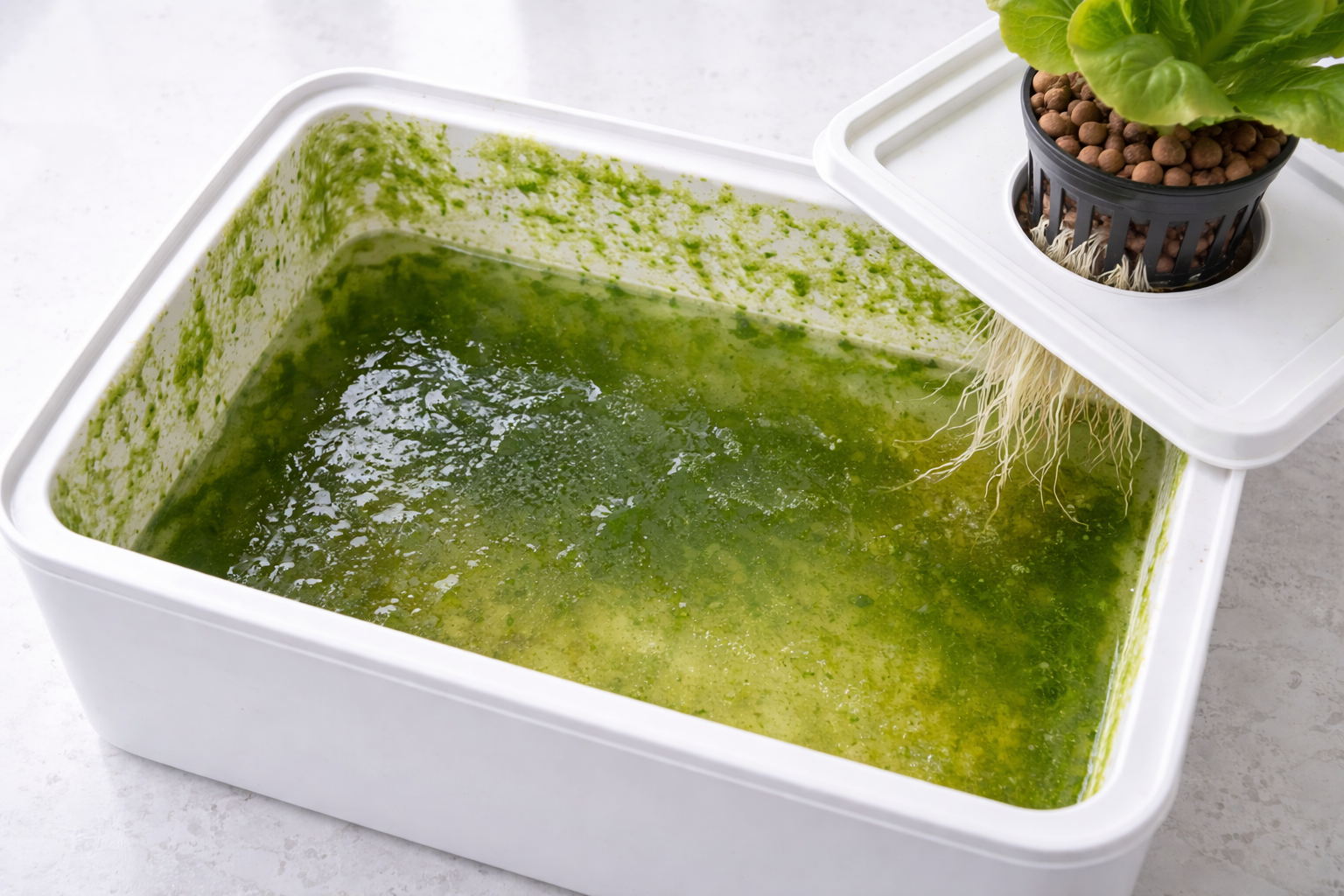
Finding algae in hydroponic system reservoirs is one of the most common problems beginners encounter. You lift the lid, and instead of clear nutrient solution, you see green water, slimy green film on the container walls, or green growth creeping up the sides of your net pot. It looks alarming, and your first instinct might be that your system is ruined.
It is not. Algae in hydroponic system setups is a nuisance, not a catastrophe. It is almost always caused by one simple mistake (allowing light to reach the nutrient solution), and the fix is equally simple. This guide explains what algae is, why it appears, whether it actually harms your plants, how to remove it, and — most importantly — how to prevent it from ever returning.
💡 The One-Sentence Rule
Algae in hydroponic system containers is caused by light reaching the nutrient solution, and blocking that light prevents it entirely. No light, no algae. It really is that simple.
What is algae and why does it grow in your system?
Algae are simple photosynthetic organisms — tiny plants, essentially — that exist virtually everywhere in the environment. Their spores are present in tap water, in the air, on your hands, and on every surface in your home. Under normal conditions, they are invisible and harmless.
Algae become a visible problem when they find an environment with two things they need to multiply rapidly: light and nutrients. A hydroponic reservoir provides both. The nutrient solution is rich in the exact minerals that algae thrive on (nitrogen, phosphorus, potassium), and if any light reaches the solution, algae begin photosynthesising and reproducing. A small colony can become a visible bloom within 48-72 hours under favourable conditions.
Finding algae in hydroponic system containers is not a sign that you did anything fundamentally wrong. It simply means light is reaching your nutrient solution somewhere. Identify and block that light source and the algae stops growing.
Is algae in hydroponic system setups actually harmful?
This is the question every beginner asks, and the answer is nuanced. A small amount of algae is cosmetically unpleasant but rarely harmful to your plants. Your plant’s root system vastly outcompetes a thin layer of algae for nutrients and water. Many commercial hydroponic operations tolerate minor algae without significant impact on crop quality.
However, algae in hydroponic system environments becomes problematic when it reaches heavy levels:
| Problem | Why It Matters |
|---|---|
| Oxygen competition | Algae consume oxygen at night, reducing dissolved oxygen and stressing roots |
| Nutrient competition | Dense blooms absorb nitrogen and phosphorus, stealing nutrients from your plant |
| pH instability | Photosynthesis raises pH daily, respiration lowers it nightly — creating swings |
| Clogging | In NFT and drip systems, algae clogs pump intakes, drip emitters, and channels |
| Decomposition | Dead algae consume oxygen, creating anaerobic conditions that promote root rot |
Summary: A small amount of algae is tolerable but not desirable. Heavy algae growth creates real problems that affect plant health. Prevention is always better than management.
Where does light enter your system?
Finding algae in hydroponic system setups means light is reaching the nutrient solution. The most common entry points are:
| Light Entry Point | Why It Happens |
|---|---|
| Transparent or translucent containers | Glass mason jars, clear plastic tubs, and white containers all allow light through (#1 cause) |
| Gaps around net pots | Space between net pot and lid opening allows light to shine down into the reservoir |
| Loose-fitting lids | Gaps between lid and container body allow light from the sides |
| Light through clay pebbles | If net pot has no cover, light travels down through loosely packed pebbles |
| Exposed clear tubing | Clear airline tubing in DWC systems allows light into the reservoir |
How to remove algae from your system
When you find algae in your system, follow this 6-step removal process. Total time: 15-20 minutes.
Step 1Remove the plant temporarily
Lift the net pot out and set it in a bowl of clean, pH-adjusted water to keep the roots hydrated while you clean the system. Handle the roots gently — this is especially important if roots have grown through the net pot into the solution.
Step 2Drain the reservoir
Pour out all the nutrient solution. Do not save it — algae-contaminated solution should be discarded. The amount of nutrients you are losing is minimal (pennies worth) and not worth the risk of reintroducing algae with the saved solution.
Step 3Scrub the container
Scrub the inside walls, lid, and rim with a soft brush or sponge. Use one of these cleaning solutions:
🧪 Three Safe Cleaning Options
- Hydrogen peroxide (recommended): 3ml of 3% hydrogen peroxide per litre of water. Effective, plant-safe, breaks down into water and oxygen.
- White vinegar: 1 part vinegar to 10 parts water. Effective against algae, food-safe, and cheap.
- Dilute bleach: 1 tablespoon of household bleach per litre of water. Very effective but must be rinsed extremely thoroughly — any bleach residue will harm your plant.
Step 4Clean the net pot and pebbles
Remove the plant from the net pot. Rinse the clay pebbles under running water, scrubbing off any visible green growth. Soak them in hydrogen peroxide solution for 10 minutes, then rinse thoroughly. Clean the net pot the same way. Discard any growing medium (rock wool, coco) that has visible algae rather than trying to clean it — new medium costs pennies and starting fresh is easier.
Step 5Block the light source
This is the critical step. Before reassembling, address the light entry point that caused the algae in the first place. Wrap transparent containers in aluminium foil. Fill gaps around net pots with small pieces of foil or cut cardboard. Replace clear tubing with opaque tubing. If you clean the system but do not block the light, algae will return within days and all your cleaning work is wasted.
Step 6Reassemble with fresh solution
Mix fresh nutrient solution, adjust pH to 5.5-6.5, return the plant to the clean system, and resume growing. The plant may show mild transplant stress for 1-2 days but should recover quickly. If you used bleach in Step 3, triple-rinse everything before reassembly — any bleach residue is harmful to plants.
How to prevent algae in hydroponic system setups permanently
Prevention is simpler, faster, and more effective than treatment. These five measures eliminate algae in hydroponic system environments completely:
Prevention 1Use opaque containers
Dark-coloured containers (black, dark blue, dark green) block virtually all light. This single choice eliminates the most common cause of algae in hydroponic system setups. When buying containers, hold them up to a light — if you can see any light through the walls, they need wrapping.
Prevention 2Wrap transparent containers completely
If you prefer using glass mason jars or clear containers for aesthetic reasons, wrap them completely in aluminium foil. Overlap the edges so there are no gaps. Cover the bottom as well — light can reflect off surfaces and enter from below. For a neater appearance, paint the jar with acrylic paint in any dark colour instead of using foil. Our kratky jar setup guide walks through the exact foil-wrapping technique.
Prevention 3Seal the lid
Cut a small disc of foil or cardboard to cover the top of the net pot, with a hole for the plant stem. This blocks light from entering through the clay pebbles from above. Also ensure the lid fits tightly on the container with no gaps around the edges.
Prevention 4Use opaque tubing
In DWC systems, replace clear airline tubing with black or dark-coloured tubing. It costs the same (£1-2 per metre from Amazon UK or any aquarium supplier) and eliminates a subtle but real light entry point that most beginners overlook.
Prevention 5Position away from direct light on the reservoir
While the plant needs light, the container itself should receive as little direct light as possible. Position the system so the plant canopy shades the container below, or orient it so that direct sunlight falls on the leaves rather than the reservoir. This is easier than it sounds — most windowsill setups naturally shade the container because the plant grows above it.
Can I use algaecide in my hydroponic system?
⚠️ Never Use Pool or Pond Algaecides
Chemical algaecides designed for swimming pools and ponds should never be used in a hydroponic system where you are growing food. These products contain chemicals that are not food-safe and can be absorbed by plant roots, ending up in the leaves you eat.
Hydrogen peroxide is the safest algae treatment for food-producing hydroponic systems. It kills algae effectively, breaks down into water and oxygen (both harmless), and does not leave toxic residues. Used at the recommended concentration (3ml of 3% per litre), it is safe for both plants and humans.
Some growers add a small ongoing dose of hydrogen peroxide to their nutrient solution (1ml per litre) as a preventive measure. This works but is unnecessary if you have properly blocked all light sources — no light means no algae, regardless of what is in the water.
Algae on clay pebbles and net pots
Green growth on the top surface of clay pebbles and around the rim of net pots is extremely common and largely harmless. This surface algae grows where the pebbles are moist and exposed to ambient room light. It does not affect the plant because it is not in the nutrient solution.
If it bothers you aesthetically, cover the top of the net pot with a small piece of foil or a cut section of dark fabric. This blocks light from the pebble surface and the algae will die back within a week.
Do not confuse surface algae on pebbles (harmless) with algae in hydroponic system reservoirs (problematic). The former is cosmetic. The latter affects plant health if left unchecked.
Frequently asked questions about algae in hydroponic systems
How quickly does algae grow once light reaches the solution?
Under favourable conditions (warm nutrient solution, bright light, full nutrient mix), visible algae can appear within 48-72 hours. In cooler conditions or with less light, it may take 1-2 weeks to become visible. Once you see any green tinge in the water, assume the colony is already well-established and take action immediately.
Will algae spread from one hydroponic system to another?
Algae spores can transfer between systems via shared tools, hands, clay pebbles, and even water splashes. When treating algae in one system, wash your hands and tools before touching other systems. Do not reuse contaminated clay pebbles in a new system without thorough sterilisation.
My plant looks healthy despite the algae — do I still need to treat it?
Yes, but not urgently. If the algae is light (faint green tinge, no slimy buildup) and the plant is healthy, you have time to plan the cleaning and prevention work. Heavy algae (thick green growth, cloudy water, visible film) should be addressed immediately regardless of plant appearance because the problems escalate quickly.
Can algae survive in a kratky jar with no moving water?
Absolutely. Algae doesn’t need moving water — it needs light and nutrients, both of which kratky jars have in abundance. In fact, kratky systems are particularly prone to algae because the nutrient solution sits in one place for weeks with no circulation. Proper light blocking is essential for kratky. See our kratky method troubleshooting guide for kratky-specific algae issues.
Does UV light kill algae in hydroponic systems?
Yes, but it’s overkill for home hydroponics. UV sterilisers used in aquariums effectively kill algae spores as water passes through them, but they cost £30-100 and only work in recirculating systems with continuous water flow. For home growers, blocking light sources costs nothing and achieves the same prevention result.
Why does my system keep getting algae despite wrapping it in foil?
The most common causes when “foil-wrapped” systems still get algae: (1) gaps where foil edges meet that you can’t see but light can, (2) the top of the net pot has no cover so light enters down through the pebbles, (3) the container bottom isn’t covered and light reflects off the surface it’s sitting on, (4) foil has small tears or thin spots from handling. Check all four and re-wrap properly.
Related posts you might find useful
- Hydroponic Root Rot: Identify, Fix, and Prevent — Algae decomposition can trigger root rot
- pH Keeps Dropping in Hydroponics — Algae causes pH swings
- Hydroponic Nutrient Deficiency Chart — Algae steals nutrients, triggering deficiencies
- Hydroponic Plants Turning Yellow — Yellowing from algae-caused nutrient competition
- Hydroponic Nutrient Burn — Another common Troubleshooting issue
- Kratky Method Troubleshooting — Kratky-specific algae prevention
- Kratky Jar Setup in Under 10 Minutes — Proper foil-wrapping technique
Diagnose Every Hydroponic Problem
Our 22-page ebook Hydroponic Troubleshooting Guide covers algae, root rot, nutrient deficiencies, pH problems, pests, and every common issue with visual symptom charts and step-by-step fixes.
✓ Visual symptom charts · ✓ Step-by-step fixes · ✓ Prevention checklists · ✓ Instant PDF download