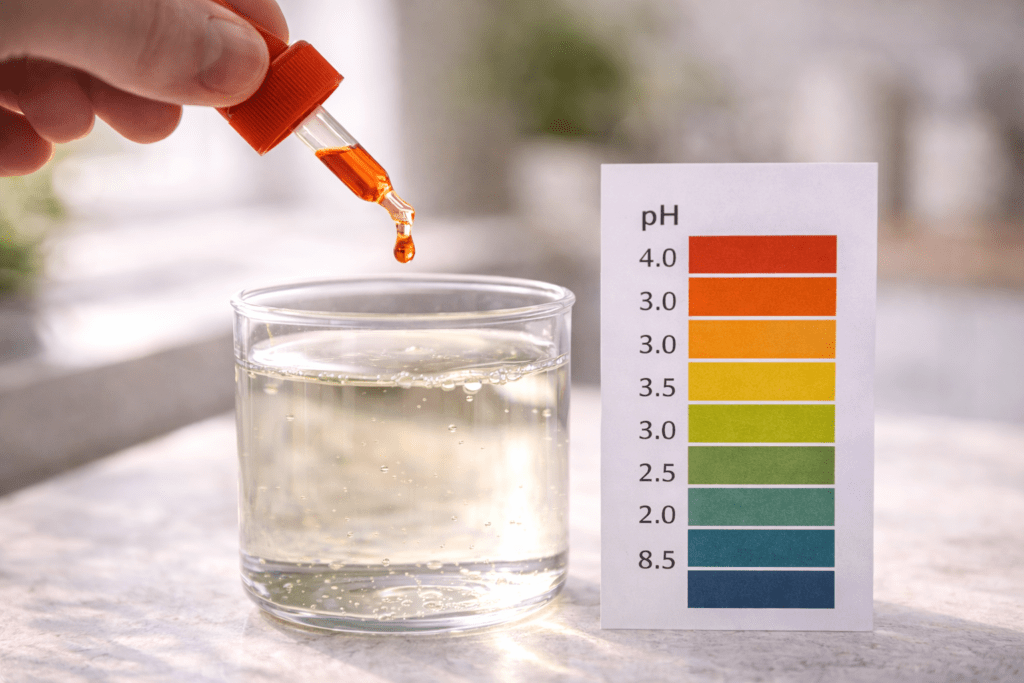
Hydroponic pH affects how readily roots can access nutrients. The practical approach is simple: mix the nutrient solution first, measure pH, adjust cautiously with a product intended for the job, then recheck rather than chasing every tiny fluctuation.
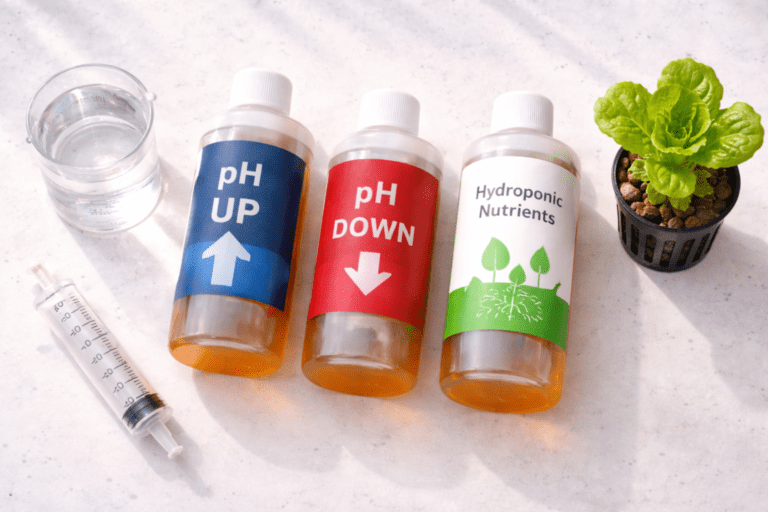
After mixing nutrients, test the solution. If pH is outside the useful range for your crop, add a small measured amount of pH Down or pH Up, mix thoroughly and retest. Avoid universal “drops per litre” recipes because product strength and water alkalinity vary.
Why pH Matters in Hydroponics
pH describes how acidic or alkaline a solution is. In a hydroponic root zone, pH influences nutrient availability. Oklahoma State University explains that soilless nutrient solutions are commonly maintained on the acidic side and that root-zone pH around 6.0–6.5 supports nutrient availability, while crop-specific recommendations vary.
Do not force every crop to one magic number. Use the nutrient manufacturer's advice and a crop-specific reference when available.
How to Test pH
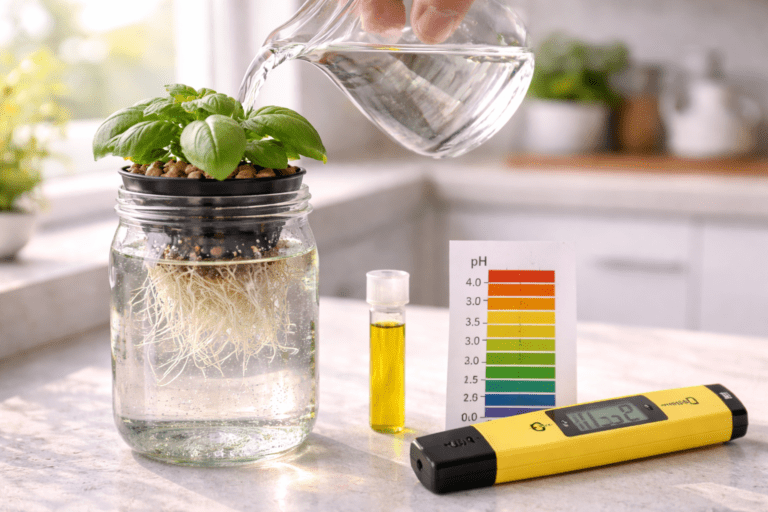
You can use indicator drops/strips or a calibrated digital pH meter. Digital meters are more precise but need appropriate calibration and storage. Whatever method you use, test after the nutrient concentrate has been diluted and mixed because adding nutrients can change pH.
How to Lower Hydroponic pH
- Mix the complete nutrient solution.
- Measure pH.
- Add a very small amount of a labelled hydroponic pH-lowering product.
- Mix thoroughly and allow the solution to equalise.
- Retest.
- Repeat cautiously if necessary.
Wear appropriate protection and follow the product label. Concentrated acids can be hazardous; never improvise with an unknown dose.
How to Raise Hydroponic pH
The same principle applies to pH Up: use a suitable product, add a small measured amount, mix and retest. Large corrections can overshoot the target and lead to repeated additions of Up and Down.
Use Your Own Test Dose
Why Does Hydroponic pH Drift?
Plants selectively absorb water and ions, the nutrient balance changes, and the buffering/alkalinity of the source water matters. A small movement is not automatically a failure. Persistent or rapid movement deserves investigation.
| Pattern | Check |
|---|---|
| pH rises repeatedly | Source-water alkalinity, nutrient uptake, reservoir management |
| pH drops rapidly | Over-strong solution, root health, formulation and biological activity |
| Reading jumps around | Meter calibration, mixing, sample method |
Common pH Mistakes
- Adjusting plain water and assuming nutrients will not change the result.
- Using a universal acid dose without considering product concentration.
- Making a large correction instead of small measured adjustments.
- Failing to calibrate a digital meter.
- Chasing tiny movements several times a day.
- Ignoring root health and EC when pH behaves abnormally.
pH FAQ
What pH should hydroponics be?
There is no single number for every crop. Many nutrient solutions are managed in a mildly acidic range; use crop-specific guidance and your nutrient manufacturer's instructions.
Should I adjust pH before nutrients?
Usually mix nutrients first, then measure and adjust the final solution unless your product instructions specify a different procedure.
Can I use vinegar or lemon juice?
Household acids can alter pH but are less predictable for ongoing reservoir control. A labelled hydroponic pH product provides clearer concentration and dosing information.