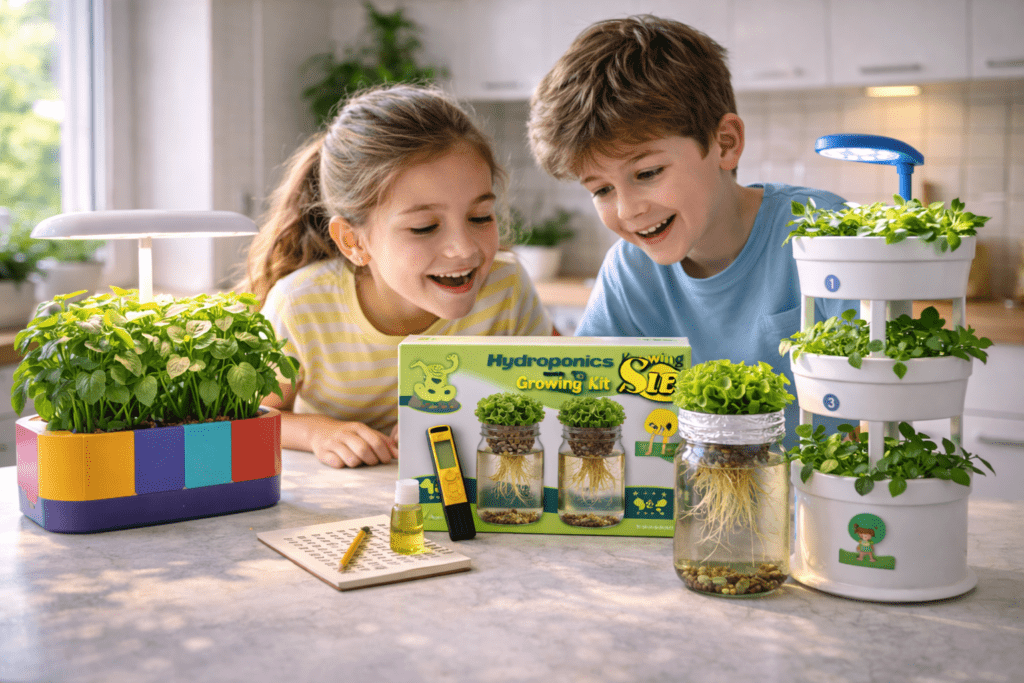
A child-friendly hydroponic kit should be stable, easy to understand and simple to clean, with protected electrical components and clear instructions. Choose the system for the child’s age and the adult supervision available rather than buying on the basis of app features or plant capacity alone.
Prioritise simple, visible operation
A reservoir that is easy for an adult to inspect, clear water-level guidance and straightforward lighting controls are more useful than unnecessary complexity. Replacement sponges, baskets and other consumables should also be easy to obtain.
Adults remain responsible for the setup
Water and electricity require care. Position cables and plugs away from spills, use equipment according to its instructions and let an adult handle nutrient concentrates, pH chemicals and cleaning products. Check the manufacturer’s age guidance where provided.
Choose fast, compact plants
Leaf lettuce and many herbs give children visible changes without requiring the space, support and long wait associated with large fruiting crops. Choose plants that fit the system rather than filling every pod simply because it is available.
A kit is better when it encourages observation
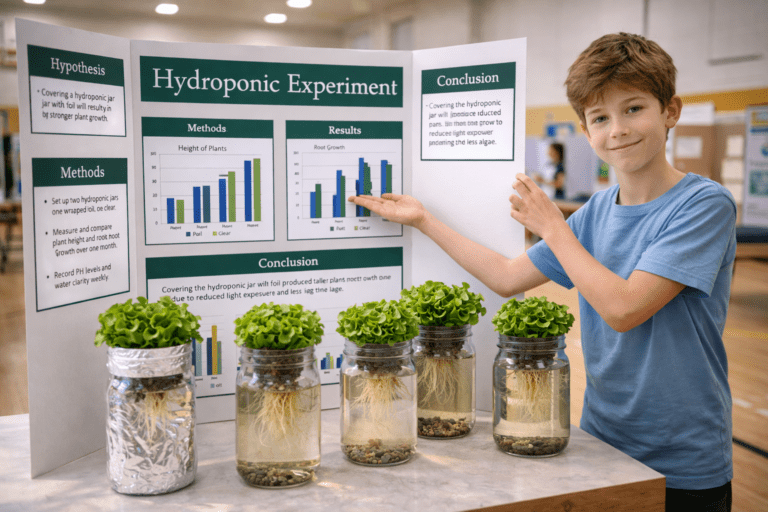
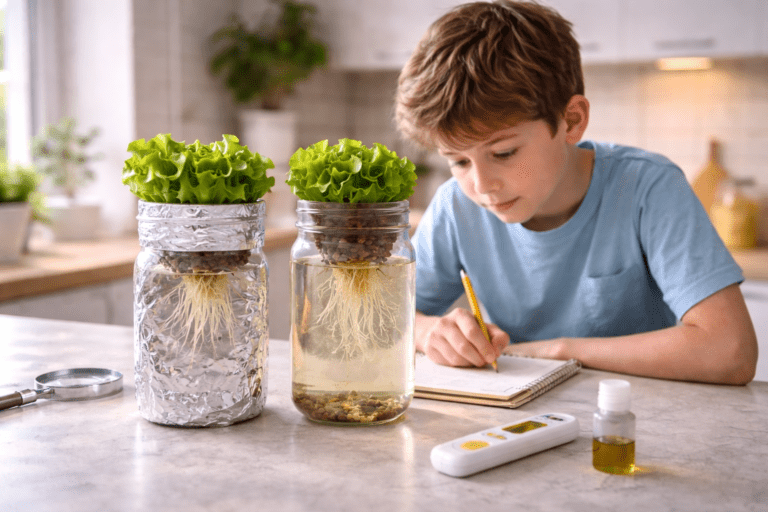
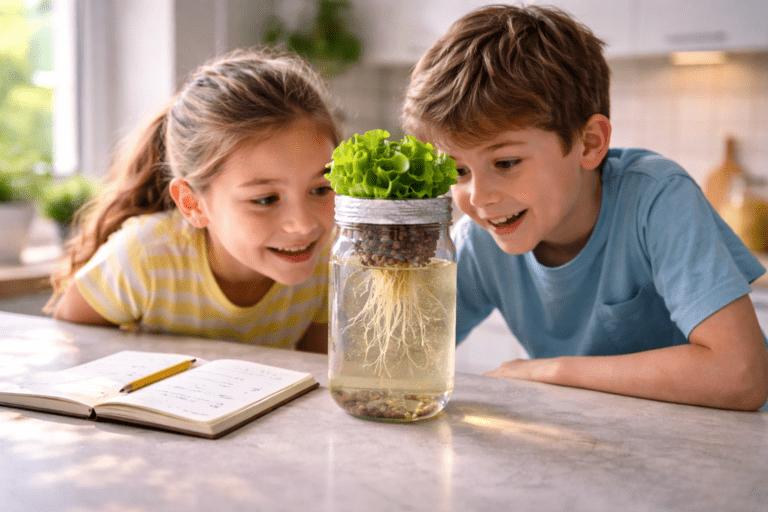
Use the system to record germination, root growth, leaf number and harvest dates. The learning comes from observing cause and effect, not merely pressing an automated button.
Check ongoing costs before buying
Look beyond the initial kit price. Consider replacement growing media, nutrients, seeds, proprietary parts and electricity. Systems that accept standard consumables may offer more flexibility.
FAQ
Does a child need a smart hydroponic system?
No. Automation can be convenient, but a simple system can teach the same core ideas about roots, water, nutrients and light.
Should children mix hydroponic nutrients?
Concentrated nutrients should be handled by an adult following the product label and appropriate safety precautions.