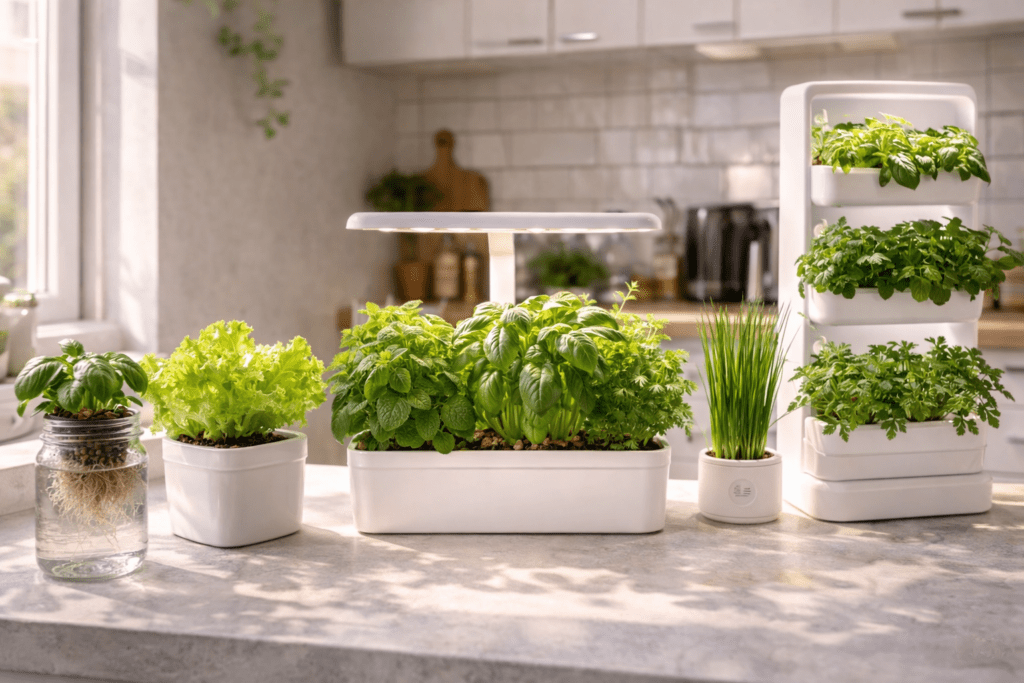
Understand what smart hydroponic systems automate, which features are genuinely useful, ongoing costs, limitations and what to compare before buying.
What makes a system smart?
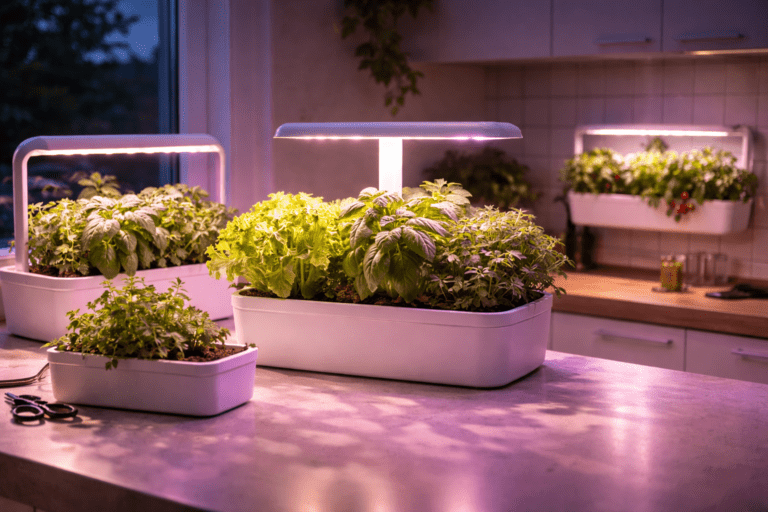
Smart hydroponic systems combine a reservoir and growing area with features such as timers, integrated grow lights, water-level alerts or app controls. Automation can reduce routine tasks, but plants still need regular observation.
Features worth having
| Feature | Why it can help |
|---|---|
| Light timer | Keeps a consistent daily light period |
| Water-level alert | Reduces the chance of a reservoir running too low |
| Accessible reservoir | Makes cleaning and nutrient changes easier |
| Replaceable parts | Can extend the useful life of the system |
App control is convenient, but it is less important than reliable lighting, adequate root space and easy cleaning.
Limitations
Automation does not remove the need to check roots, plant health, water quality and nutrient strength. Proprietary pods and replacement parts can also increase ongoing costs.
How to choose
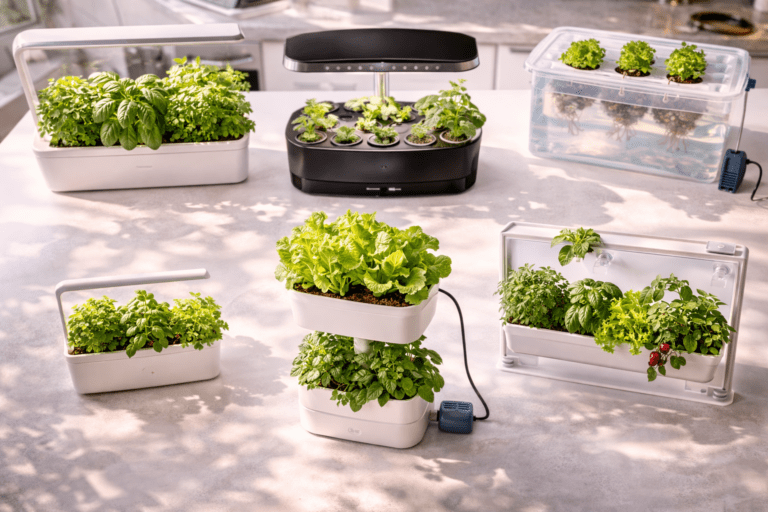
Compare growing height, reservoir size, light output, noise, replacement-part availability and cleaning access. Choose for the crops you intend to grow rather than the largest advertised plant count.
FAQ
Do I need Wi-Fi for hydroponics?
No. Plants do not benefit from Wi-Fi itself; connected features are mainly for convenience and monitoring.
Are smart systems good for beginners?
They can be, particularly when the controls simplify lighting and reminders, but a simple manual system can teach the same growing fundamentals.