
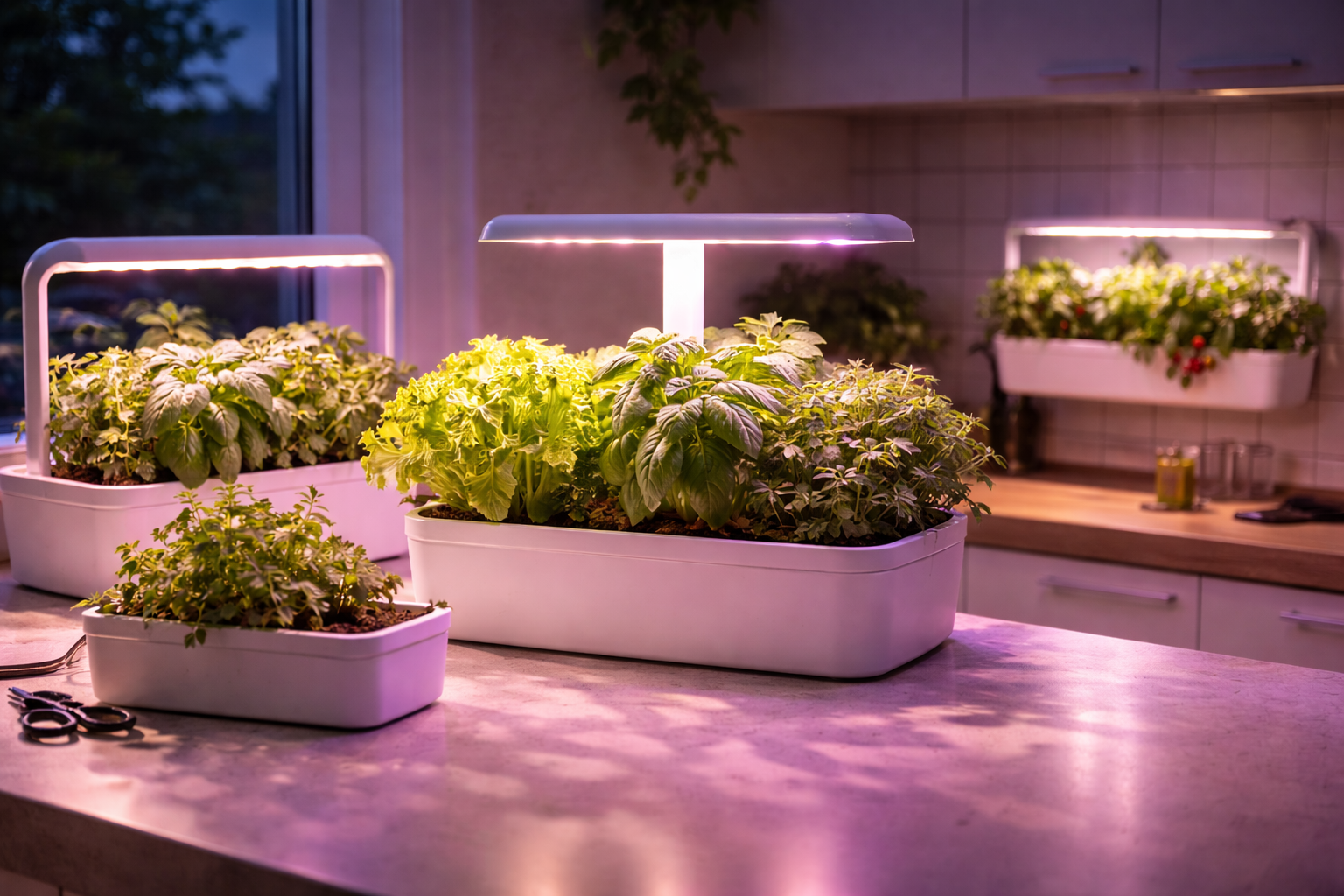
Finding the best grow lights for hydroponics is one of the most important decisions you will make as an indoor grower. The right grow light transforms a struggling windowsill garden into a productive food-growing system, while a cheap or poorly designed light wastes money and produces leggy, weak plants. The good news is that you do not need to spend hundreds of pounds — the best grow lights for hydroponics under £100 deliver excellent results for home setups.
This guide ranks the 5 best grow lights for hydroponics under £100, tested across multiple lettuce, herb, and tomato grow cycles. Each review covers light intensity, coverage area, energy efficiency, build quality, and value for money.
💡 Quick Pick
For the best grow lights for hydroponics on a budget, start with a 100W full-spectrum LED panel from a reputable brand like Spider Farmer or Mars Hydro for £40-70. These produce excellent results for lettuce, herbs, and even fruiting crops in small home setups.
Why do you need grow lights for hydroponic growing?
Plants need light to photosynthesise — to convert water and nutrients into the sugars that fuel their growth. Without enough light, even perfectly mixed nutrients and ideal pH cannot drive healthy plant development. Leafy greens need a minimum of 200-300 PPFD (photosynthetic photon flux density) for healthy growth, while fruiting crops need 400-600 PPFD or more.
Most UK windowsills, especially during winter months from November to February, simply do not provide enough natural light for healthy hydroponic growing. The best grow lights for hydroponics fill this gap by delivering consistent, full-spectrum light on a controlled schedule regardless of weather or season.
What features should the best grow lights for hydroponics have?
| Feature | Why It Matters |
|---|---|
| Full spectrum | Mimics natural sunlight, supports all growth stages |
| PPFD output | Measures actual usable light delivered to plants |
| Energy efficiency | More light per watt means lower electricity bills |
| Coverage area | How many plants the light can support |
| Mounting options | Hanging, clip-on, stand — affects placement flexibility |
The 5 best grow lights for hydroponics ranked
#1Spider Farmer SF-1000 LED (£75-100) — Best Overall
The Spider Farmer SF-1000 is the best grow lights for hydroponics winner for the third year running. It uses Samsung LM301B diodes, which are among the most efficient LED chips available, delivering excellent PPFD output at 100W actual power draw. Coverage area is approximately 60x60cm, perfect for a small indoor garden of 6-12 plants.
| Specification | Detail |
|---|---|
| Power draw | 100W |
| PPFD at 30cm | 700-900 μmol/m²/s |
| Coverage | 60×60 cm |
| Price | £75-100 |
Pros: Excellent build quality, brand-name Samsung LEDs, dimmer included, daisy-chain capable.
Cons: Higher upfront cost than budget options, requires hanging setup.
#2Mars Hydro TS-600 (£60-80) — Best Mid-Range
The Mars Hydro TS-600 is one of the best grow lights for hydroponics in the mid-range category. It delivers 100W of actual power draw with full spectrum coverage, making it suitable for everything from seedlings to flowering tomatoes. The build quality is solid and it includes a dimmer for adjusting intensity at different growth stages.
Pros: Full spectrum, dimmer included, solid build quality, established brand.
Cons: Slightly less efficient than Spider Farmer, no daisy-chain.
#3Phlizon 600W LED Plant Light (£40-60) — Best Budget
The Phlizon 600W is one of the best grow lights for hydroponics at the budget end. While the “600W” label is misleading marketing (actual power draw is closer to 100W), the light produces solid PPFD output for lettuce and herbs. It is an excellent first grow light for beginners testing whether they want to commit to indoor growing.
Pros: Cheapest panel option, acceptable output for leafy greens, works well for small setups.
Cons: Misleading wattage claims, lower build quality, no dimmer, LEDs may dim faster over time.
#4GE BR30 LED Grow Light Bulbs (£15-25 each) — Best for Single Plants
For growers with just 1-3 individual plants, you do not need a panel system. The GE BR30 grow light bulbs screw into any standard E27 lamp socket and provide focused light for a single hydroponic jar or small plant. They are some of the best grow lights for hydroponics for windowsill growers who only need supplemental light during winter.
Pros: Cheapest option, uses existing lamps, perfect for single Kratky jars.
Cons: Low coverage (one plant per bulb), lower intensity than panels.
#5Sansi 40W Clip-On Grow Light (£20-35) — Best Clip-On
The Sansi clip-on grow light is the most flexible of the best grow lights for hydroponics in this list. The adjustable goose-neck and clip mounting let you attach it to any shelf, desk, or windowsill. It works for 1-2 small plants and includes a built-in timer for automated lighting schedules.
Pros: Adjustable positioning, built-in timer, no mounting hardware needed.
Cons: Limited to 1-2 plants, lower intensity than panels, clip can slip on thick shelves.
Which best grow light should you actually buy?
🎯 Quick Recommendation Guide
| Best overall | Spider Farmer SF-1000 (£75-100) |
| Best mid-range | Mars Hydro TS-600 (£60-80) |
| Tightest budget | Phlizon 600W (£40-60) |
| 1-3 plants only | GE BR30 bulbs (£15-25 each) |
| Most flexible positioning | Sansi 40W clip-on (£20-35) |
How long should grow lights run for hydroponic plants?
Different plants need different photoperiods (daily light hours). Getting this wrong means either wasted electricity or stunted plants. Here is the daily light schedule for common hydroponic crops:
| Crop | Daily Light Hours | Notes |
|---|---|---|
| Lettuce, salad greens | 12-14 hours | Dark period prevents bolting |
| Herbs (basil, mint) | 14-16 hours | More light = more vigorous growth |
| Microgreens | 12-16 hours | Light needed only after germination |
| Tomatoes (vegetative) | 16-18 hours | Maximum vegetative growth |
| Tomatoes (flowering) | 12-14 hours | Reduce to trigger flowering |
Intermediate level: positioning and mounting grow lights
Buying the best grow lights for hydroponics is only half the equation. Proper positioning makes the difference between healthy plants and disappointing results. Most beginners position grow lights too far from their plants, dramatically reducing the light intensity that actually reaches the leaves.
Optimal hanging distances
| Growth Stage | Hanging Distance | Why |
|---|---|---|
| Seedlings | 30-40cm above plants | Lower intensity prevents scorching |
| Vegetative growth | 25-35cm above plants | Full intensity without burn |
| Flowering/fruiting | 20-30cm above plants | Maximum intensity for fruit production |
Using a timer for automation
A simple plug-in timer (£5-10 from Argos, B&Q, or Amazon UK) is essential for grow light setups. Set it to your chosen photoperiod and the light turns on and off automatically every day. This consistency is far more important than your physical presence to switch lights manually.
What next? Building a complete grow light system
After choosing one of the best grow lights for hydroponics, here are the natural next steps:
- Add a mechanical timer for automated daily light schedules
- Install reflective material around your growing area to maximise light efficiency
- Add a second light for larger setups or to reduce shadows
- Get a PAR meter to measure actual light intensity at the plant level
- Build a dedicated grow shelf with multiple lights for serious indoor production
- Pair with a proper starter kit — see our best hydroponic starter kits guide for the system to put under your new light
Frequently asked questions about grow lights for hydroponics
How much electricity do hydroponic grow lights use?
A typical 100W LED grow light running 14 hours daily uses approximately 1.4 kWh per day, costing £0.30-0.50 per day in UK electricity prices. Monthly cost is approximately £9-15 per light. This is significantly less than older HPS or CFL grow lights.
Do I need a special grow light or will a regular LED work?
Regular household LED bulbs do not produce the right spectrum for plant growth. They lack the red and blue wavelengths plants need most. Always buy lights specifically marketed as “grow lights” or “full spectrum plant lights” for hydroponic use.
Can grow lights replace sunlight completely?
Yes, modern LED grow lights provide all the light wavelengths plants need to grow from seed to harvest without any natural sunlight. Many commercial vertical farms operate entirely under artificial lighting with excellent results.
Are purple grow lights better than white grow lights?
Purple grow lights focus on the red and blue spectrums plants use most efficiently, making them more energy-efficient. Full-spectrum white grow lights include green and yellow wavelengths too, which produce more visually pleasing light and slightly better fruiting results. For most beginners, full-spectrum white LEDs are the better choice.
How close should grow lights be to seedlings?
Position grow lights 30-40cm above seedlings to prevent light burn while still providing adequate intensity. As plants grow taller and stronger, you can lower the light or raise the plants to 25-30cm distance for vegetative growth.
Will grow lights damage my eyes?
Most modern LED grow lights are safe for occasional viewing but can cause eye strain with prolonged direct exposure. Avoid staring directly into the light source, and wear sunglasses if you spend extended time inspecting plants under the light.
Do I need a grow light for a UK windowsill garden?
From March to October, a south-facing UK windowsill provides enough light for lettuce and herbs without supplemental lighting. From November to February, UK daylight is too limited for vigorous growth — a £15-40 supplemental grow light keeps plants thriving through winter. Growers in north-facing rooms or basement spaces need grow lights year-round.
Will my grow light interfere with sleep if it’s near the bedroom?
Yes — grow lights are intense and can disrupt melatonin production if visible from a bed at night. Use a timer to ensure the light is off during bedtime hours, or position the setup in a kitchen, spare room, or closet where light doesn’t escape. Some growers use blackout curtains around the growing area specifically to prevent light bleed.
Related posts you might find useful
- 7 Best Hydroponic Starter Kits Tested — Pair a light with a complete system
- AeroGarden vs DIY Hydroponics — Built-in lights vs separate lights
- Smart Hydroponic Systems Reviewed — Systems with integrated grow lights
- Best pH Meters for Home Hydroponics — Essential accessory after lighting
- Apartment Hydroponics Complete Guide — When and where you need grow lights
- Hydroponic Lettuce: Week-by-Week Guide — Lighting requirements for lettuce
- Hydroponic Strawberries Indoors — High-light fruiting crop
Master Hydroponic Lighting
Our 21-page ebook Hydroponic Equipment Guide includes detailed grow light comparison charts, PPFD measurements for popular models, and complete setups for every budget level.
✓ Grow light comparisons · ✓ PPFD measurements · ✓ Complete shelf setups · ✓ Instant PDF download