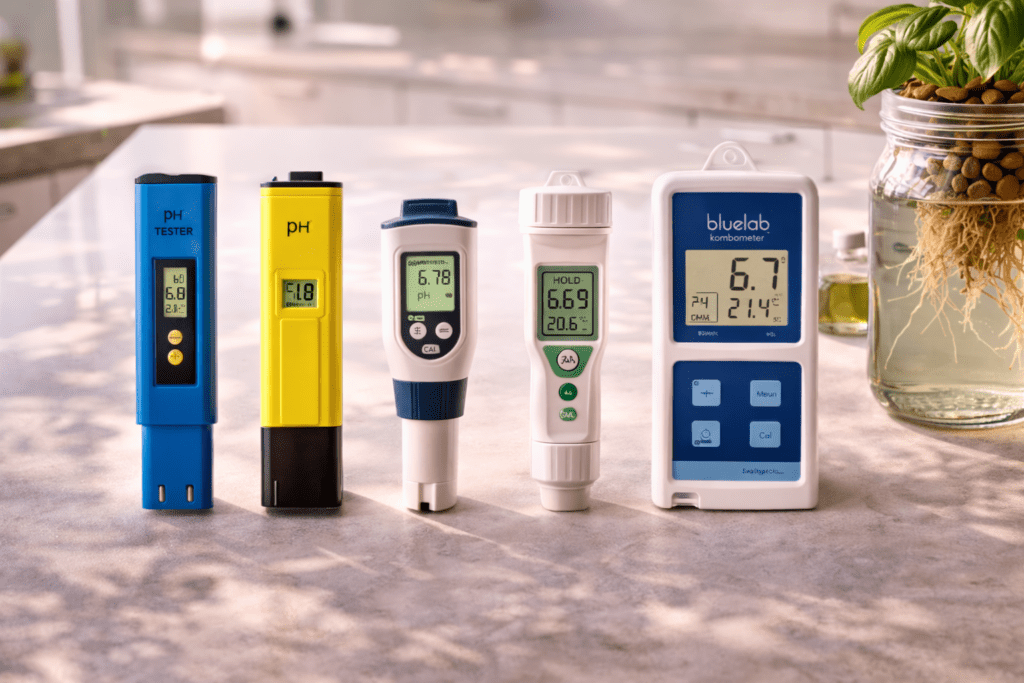
Learn what matters when choosing a hydroponic pH meter, including calibration, replaceable probes, accuracy, storage and cheaper alternatives.
What matters most
A useful hydroponic pH meter should be easy to calibrate, give repeatable readings and be suitable for liquid testing. Extremely fine displayed precision does not automatically mean better real-world accuracy.
Calibration and care
Follow the meter manufacturer’s calibration and storage instructions. Use fresh calibration solutions, rinse the probe between solutions and do not assume every probe should be stored dry. Poor storage is a common cause of unreliable readings.
Digital meter vs test drops
| Method | Strength | Limitation |
|---|---|---|
| Digital meter | Quick numerical reading | Needs calibration and care |
| Indicator drops | Simple backup, no calibration | Less precise and colour-dependent |
Buying checklist
Look for clear calibration instructions, readily available buffers, a protective cap, sensible resolution and—on higher-priced meters—replaceable probes. Keep a simple backup test method if pH is critical to your grow.
FAQ
How often should I calibrate a pH meter?
Follow the manufacturer’s guidance and recalibrate whenever readings appear doubtful or after extended storage.
Is the cheapest meter good enough?
It can be useful, but consistency, calibration and probe care matter more than price alone.