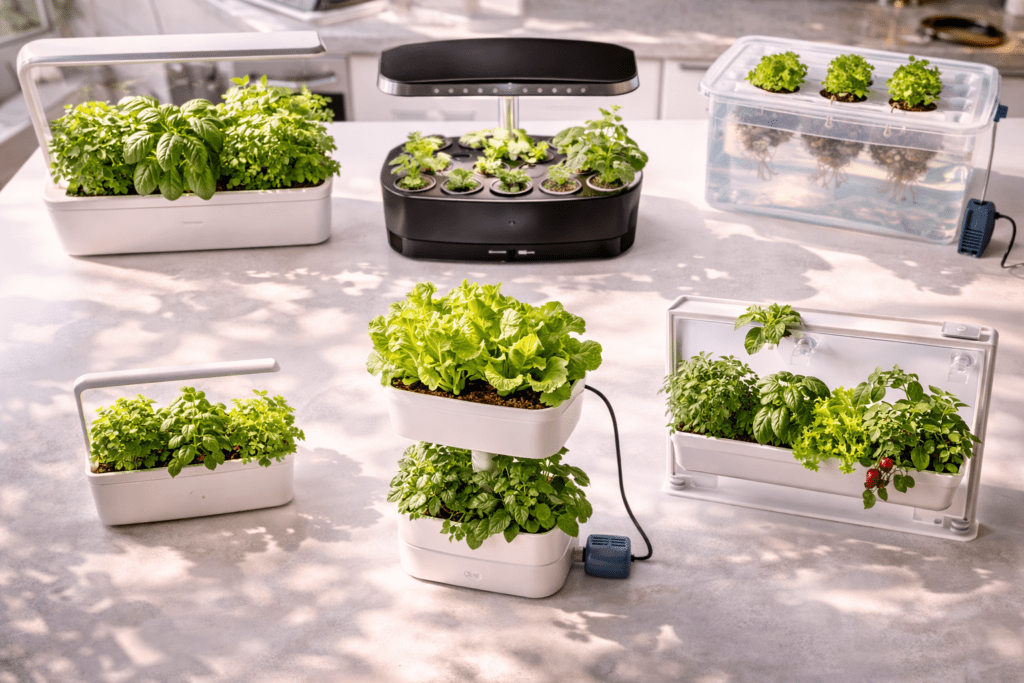
Learn how to compare hydroponic starter kits by system type, reservoir, lighting, included equipment, replacement parts and ongoing costs.
What a useful kit includes
A starter kit should make the first grow simpler, not merely contain lots of accessories. The essentials depend on the system but usually include a suitable reservoir or growing unit, plant support and clear instructions. Powered systems also need the appropriate pump or aeration equipment.
Common kit types
| Type | Good for | Consider |
|---|---|---|
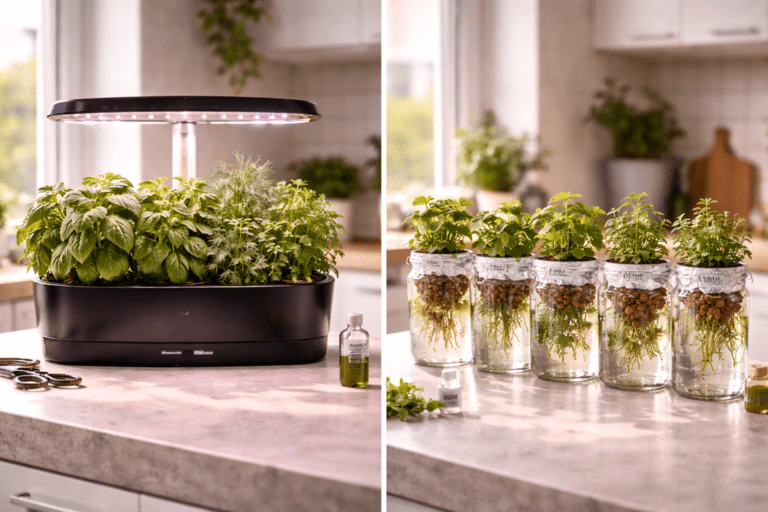
| Kratky | Simple leafy greens | No pump; manage light entering reservoir |
| DWC | Beginners wanting active aeration | Air pump, noise and power |
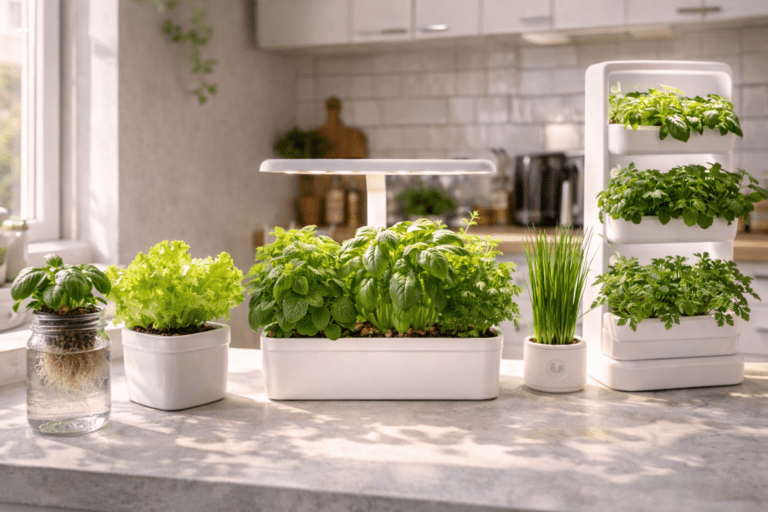
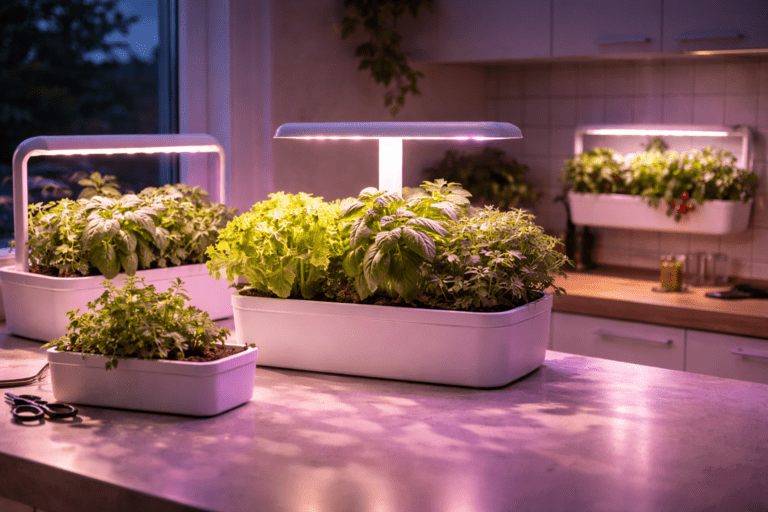
| Countertop | Compact indoor growing | Growing height and proprietary parts |
What to avoid
Be cautious of kits that promise unrealistic yields, provide little information about reservoir size or light performance, or rely on hard-to-source replacement parts.
Buying checklist
Check the system type, plant spacing, reservoir access, included lighting, electrical safety, instructions, replacement parts and ongoing consumable costs. A smaller, understandable system is often a better first project than a complicated kit.
FAQ
Do starter kits include nutrients?
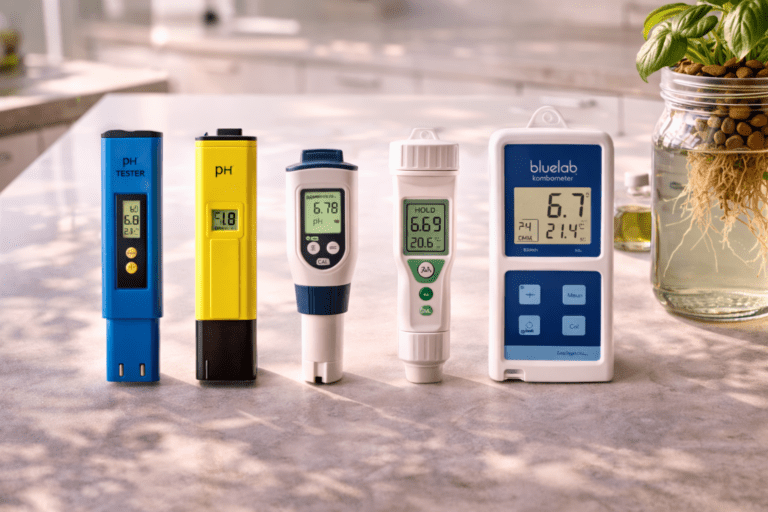
Some do and some do not. Check the contents rather than assuming nutrients, pH testing equipment or seeds are included.
Which system is simplest?
Kratky has very few components, while an integrated countertop unit can be convenient for growers who prefer an all-in-one setup.