
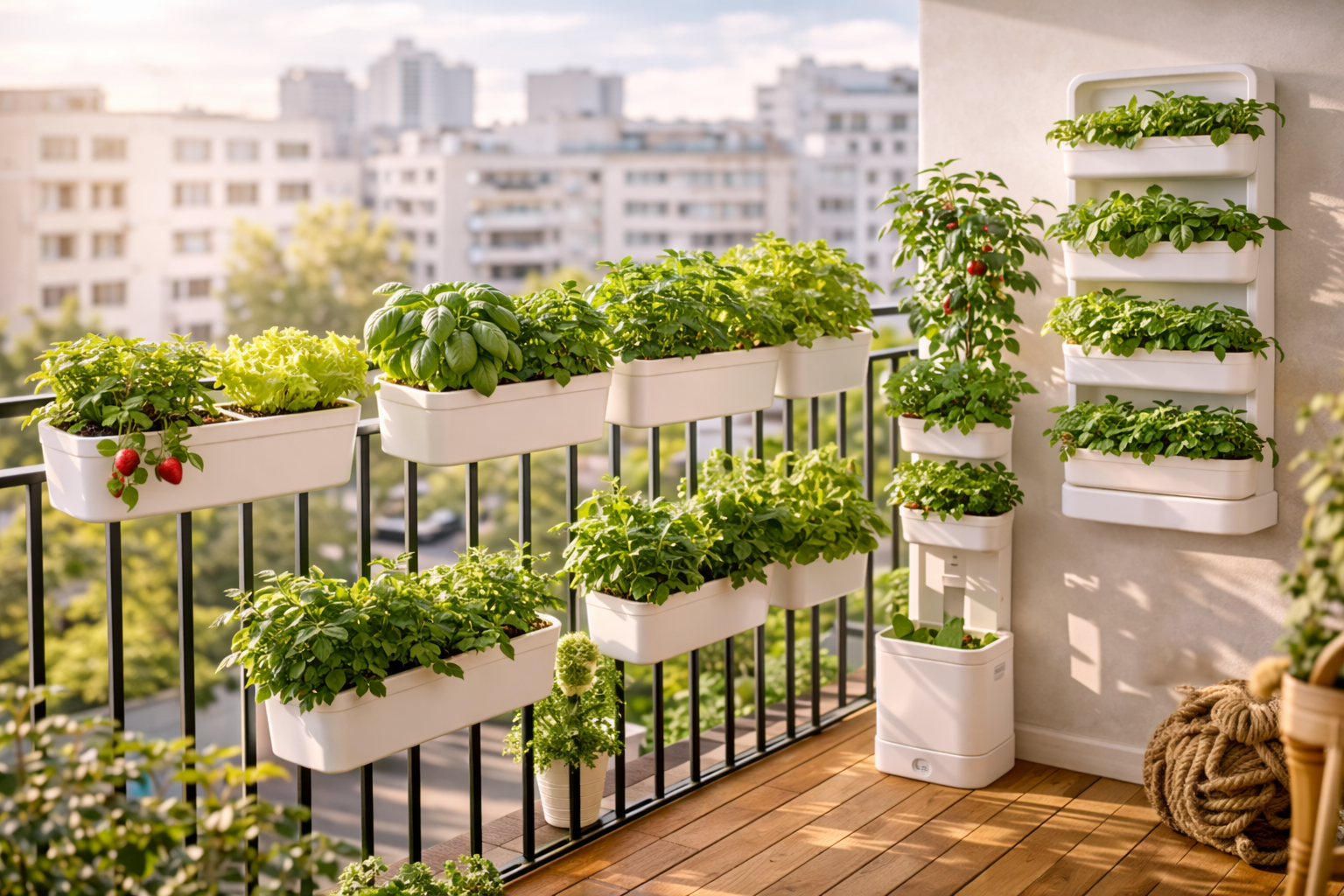
If you have an apartment balcony, you have an enormous advantage for growing fresh food. Balcony hydroponics combines the natural light and ventilation of outdoor growing with the space efficiency and clean operation of hydroponic systems. The result is a productive food garden in spaces as small as 1 square metre — without the soil, weeds, or pests of traditional outdoor gardening.
This guide shows you 6 proven balcony hydroponics setups, the best plants for outdoor balcony growing, and how to weather-proof your systems against UK conditions. Whether your balcony is a tiny Juliet balcony or a generous wraparound space, there is a hydroponic approach that fits.
🌞 The Balcony Advantage
Balcony hydroponics offers something indoor growing cannot: natural sunlight at full intensity. This means faster growth, larger harvests, and the ability to grow fruiting crops like tomatoes and peppers without needing expensive grow lights.
Why is balcony hydroponics better than traditional balcony gardening?
Traditional balcony container gardening has several frustrating problems: heavy soil-filled pots, frequent watering (especially in summer when balconies heat up), drainage that can stain neighbours’ balconies below, fungus gnats and other pests, and the need to lug bags of compost up to the balcony. Balcony hydroponics eliminates every one of these issues.
Hydroponic systems are lighter than soil pots, retain water in sealed reservoirs (no drips), produce no mess, attract minimal pests, and eliminate the need for compost altogether. Research compiled by Gardeners’ World consistently shows that hydroponic systems use 70-90% less water than soil-based growing while producing higher yields.
What is the best balcony hydroponics setup for beginners?
The 6 setups below are ranked from easiest to most advanced. Beginners should start with method 1 before working up the list.
#1Mason jar Kratky on a balcony shelf
A simple shelf installed against the balcony wall holds 4-8 mason jar Kratky systems. This is the easiest entry into balcony hydroponics: no electricity required, no plumbing, minimal weatherproofing concerns. Each jar grows one herb or lettuce plant. Total cost for 6 jars: approximately £25-35.
| Specification | Detail |
|---|---|
| Space | 1 metre shelf wall-mounted |
| Plants | 6-8 herbs or salad greens |
| Cost | £25-35 |
| Weather rating | Spring to autumn |
See our kratky jar setup guide for the exact 10-minute assembly process.
#2Railing-mounted planter box
A long planter box that hooks over the balcony railing provides 60-100 cm of growing space without using any floor area. Standard planter boxes can be converted to balcony hydroponics by lining them with plastic and using a passive Kratky setup with multiple net pots in the lid. Perfect for narrow Juliet balconies where floor space is at a premium.
#3DWC bucket with weather cover
A single 5-gallon DWC bucket on the balcony floor grows one large plant or 4-6 smaller plants with a small air pump. For balcony use, position the pump under cover (or inside through an open door) and run the airline tubing out to the bucket. This protects the pump from rain while allowing the system to use natural sunlight. For the complete comparison, see our kratky vs DWC guide.
#4Vertical PVC tower for balconies
A DIY vertical hydroponic tower designed for outdoor use takes advantage of vertical balcony space and can grow 15-25 plants in a 30×30 cm floor footprint. Outdoor towers benefit from natural sunlight and the wind helps strengthen plant stems. Build one yourself for £40-80 in materials. Our DIY vertical hydroponic tower guide covers the complete build process.
#5Stacked container system
Stacked plastic storage tubs with cut planting holes create a tiered growing system that grows herbs and greens on multiple levels. This setup is excellent for balcony hydroponics because it provides natural drainage levels — water from the top tier flows to the next, etc. Total cost for a 3-tier system: approximately £30-50.
#6Raised bed style hydroponic planter
A long, shallow plastic container that sits along the balcony wall mimics a traditional raised bed but uses hydroponic principles. This is the most productive single-container option for balcony hydroponics, growing 8-15 plants in a 1-metre length. Cost: £30-60 depending on size.
What plants grow best in balcony hydroponics?
Balcony hydroponics opens up crops that struggle indoors due to insufficient light. With 6+ hours of direct sunlight on a typical south-facing balcony, you can grow far more variety than indoor systems allow.
🌱 Top 10 Balcony Hydroponics Crops
- Cherry tomatoes — Thrive in balcony sunlight, far more productive than indoors
- Strawberries — Real outdoor fruit production with natural pollination
- Basil and Mediterranean herbs — Love the heat and direct sun
- Lettuce and salad greens — Cool-loving crops for spring and autumn
- Peppers and chillies — Need the heat balconies provide
- Spring onions — Compact and fast
- Pak choi — Fast Asian green for cooler months
- Spinach — Cool-weather staple
- Mint — Aggressive growth, perfect for outdoor balcony conditions
- Coriander — Quick-growing herb that does well in cooler balcony spots
How do you weather-proof a balcony hydroponics system?
UK weather presents real challenges for outdoor hydroponic systems. Rain dilutes nutrient solutions, wind tips containers, frost can damage roots, and summer heat stresses plants. These four protections solve nearly every weather issue.
Protection 1Rain protection
Cover all reservoirs with lids that have only the necessary holes for net pots. This prevents rainwater from entering and diluting your nutrient solution. For Kratky jars, the standard lid does this automatically. For DIY systems, cut tight-fitting lids from thick plastic or foam board.
Protection 2Wind protection
Secure all containers to the balcony floor or railing using bungee cords, zip ties, or weighted bases. A single gust can topple lightweight containers, especially when plants are tall. Position systems against walls or railings rather than in open exposed areas. The UK Met Office recommends checking wind forecasts before placing tall plants outdoors during autumn and winter months.
Protection 3Frost protection
Most balcony hydroponics systems should be brought indoors or covered with frost cloth during freezing temperatures. Hydroponic roots in cold water are more vulnerable to frost damage than soil-protected roots. Plan to grow from April to October on most UK balconies, or move systems inside for winter.
Protection 4Heat protection
In summer heat (above 28°C), balcony reservoirs can warm to dangerous levels for root health. Position systems in afternoon shade, use white or reflective container colours to bounce heat away, and check water temperature regularly. A simple frozen water bottle added to the reservoir on hot days helps cool the system.
Intermediate level: maximising balcony hydroponics yields
Once your basic balcony hydroponics setup is running, several techniques significantly increase production from the same space:
Use vertical and horizontal space together
Most balconies have unused vertical space above the railing. Adding wall-mounted shelves, hanging baskets, and tall vertical towers triples your growing area without using additional floor space. The combination of wall, railing, and floor mounting creates a 3D growing environment.
Take advantage of natural pollination
Unlike indoor hydroponic systems, balcony hydroponics gives you access to bees, hoverflies, and other natural pollinators. This makes fruiting crops like tomatoes, strawberries, and peppers far more productive than they would be indoors with hand pollination.
Plan around seasonal changes
Different crops thrive in different seasons on a UK balcony. Cool-weather crops (lettuce, spinach, pak choi) excel in spring and autumn. Heat-loving crops (tomatoes, basil, peppers) peak in mid-summer. Plan rotations so something is always productive throughout the growing season.
| Season | Best Crops | Notes |
|---|---|---|
| Spring (Mar-May) | Lettuce, spinach, pak choi, coriander | Start early on sheltered balconies |
| Summer (Jun-Aug) | Tomatoes, peppers, basil, strawberries | Peak growing season |
| Autumn (Sep-Oct) | Salad greens, kale, herbs | Return to cool-weather crops |
| Winter (Nov-Feb) | Move systems indoors | Frost risk too high |
What next? Year-round balcony growing
After mastering basic balcony hydroponics, consider these natural next steps:
- Add a small cold frame or cloche to extend the season into November and start in March
- Move sensitive systems indoors for winter while keeping hardy crops on the balcony
- Build a covered growing area using clear plastic sheeting for weather protection
- Try fruiting tree varieties in larger containers like dwarf citrus or fig
- Connect indoor and outdoor systems for a continuous year-round food supply — see our apartment hydroponics guide for indoor setups
- Add a kitchen herb garden as an indoor companion — our kitchen herb garden guide covers the 30-minute setup
Frequently asked questions about balcony hydroponics
Can I do balcony hydroponics on a north-facing balcony?
Yes, but with limitations. North-facing balconies receive no direct sunlight, so you are limited to shade-tolerant crops like lettuce, mint, and parsley. Fruiting crops like tomatoes will not produce well. East and west-facing balconies are significantly better, and south-facing is ideal.
How do I prevent my balcony hydroponics from leaking onto neighbours below?
Choose closed reservoir systems (Kratky jars, sealed DWC buckets, lined planters) that contain all water. Avoid open trays that could overflow in rain or be tipped over. Place a drip tray under any system that might overflow as a backup precaution. In the UK, leakage onto neighbours below can be grounds for a tenancy complaint, so containment is genuinely important.
Will balcony hydroponics attract pests?
Some, yes. You will likely see aphids, occasional caterpillars, and birds. The pest pressure is much lower than soil gardens because there is no decaying organic matter to attract larger pests. Use insecticidal soap from garden centres or Amazon UK for occasional aphid problems and bird netting if needed.
How much does balcony hydroponics cost to set up?
A complete starter setup for balcony hydroponics costs £30-60 for 4-6 jars or one DWC bucket. Larger setups with multiple systems run £80-200. The cost is comparable to indoor hydroponics but with the added benefit of natural sunlight saving you money on grow lights.
Is balcony hydroponics legal in rental apartments?
Generally yes, as long as your tenancy agreement does not specifically prohibit it. Hydroponic systems do not require any permanent installation, holes in walls, or modifications to the property. Always check with your landlord if uncertain, and avoid systems that could leak water onto property below.
Can I leave a balcony hydroponics system unattended for a week?
Yes, especially Kratky systems which require almost no intervention. DWC and recirculating systems should be checked before leaving — top up reservoirs, ensure pumps are working, and choose plants at growth stages that can handle a week without attention. Most balcony systems handle short absences well.
How do I protect balcony hydroponics from UK wind on high-rise balconies?
High-rise balconies get significantly stronger wind than ground-level ones, especially on corners or above the 5th floor. Use heavy bases (weighted with bricks or sand bags), secure all containers with zip ties, and avoid tall unstable plants like tomatoes unless you have clear shelter. A windbreak made of clear acrylic sheeting attached to the railing cuts wind dramatically without blocking light.
Related posts you might find useful
- Apartment Hydroponics: 7 Easy Ways to Grow Fresh Food — Indoor and outdoor strategies combined
- Best Hydroponic Systems for Small Apartments — System comparison and recommendations
- DIY Vertical Hydroponic Tower — Maximum production for small spaces
- Kitchen Herb Garden in 30 Minutes — Indoor companion to balcony growing
- Kratky Method Hydroponics: Complete Guide — The simplest balcony-friendly method
- Kratky vs DWC: Which Passive System Is Better? — Choose the right system for your balcony
- 10 Easy Hydroponic Plants Almost Impossible to Kill — Beginner-friendly balcony crops
Master Apartment Growing Inside and Out
Our 16-page ebook Apartment Hydroponics includes complete balcony growing systems, weather-proofing techniques, seasonal planting calendars, and indoor-outdoor integration strategies.
✓ Balcony setup designs · ✓ Seasonal calendars · ✓ Weather-proofing guide · ✓ Instant PDF download