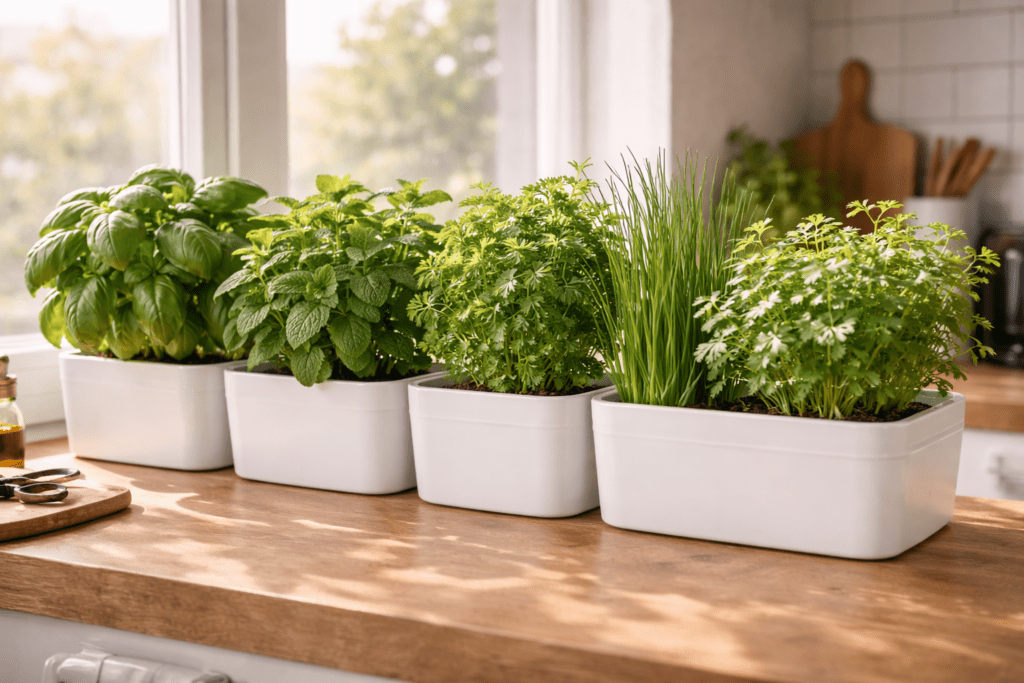
A small hydroponic kitchen herb garden works best with compact herbs you actually use, enough light, an opaque reservoir and a simple nutrient routine. Basil and mint are forgiving choices; coriander can be productive but often prefers cooler conditions and regular re-sowing.
Choose herbs you will use regularly
Basil, mint, parsley and coriander can all be grown hydroponically, but they do not behave identically. Start with two or three herbs rather than filling every planting position. This makes it easier to learn their growth rates and prevent vigorous plants from crowding slower ones.
Keep the first system simple
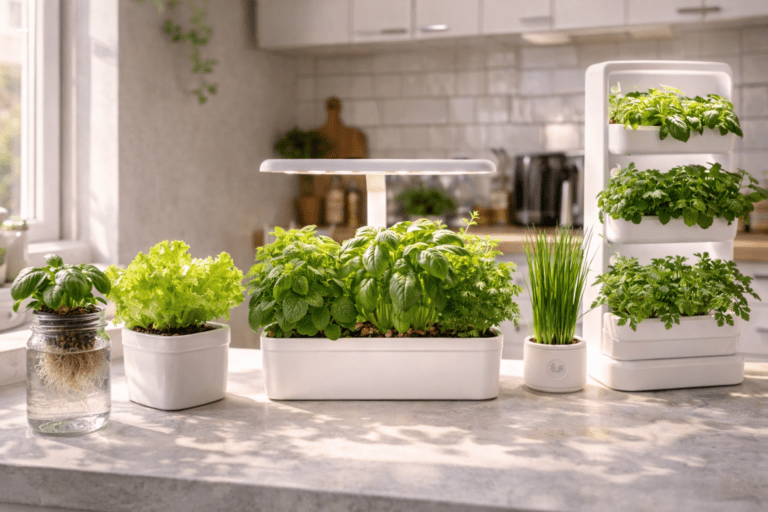
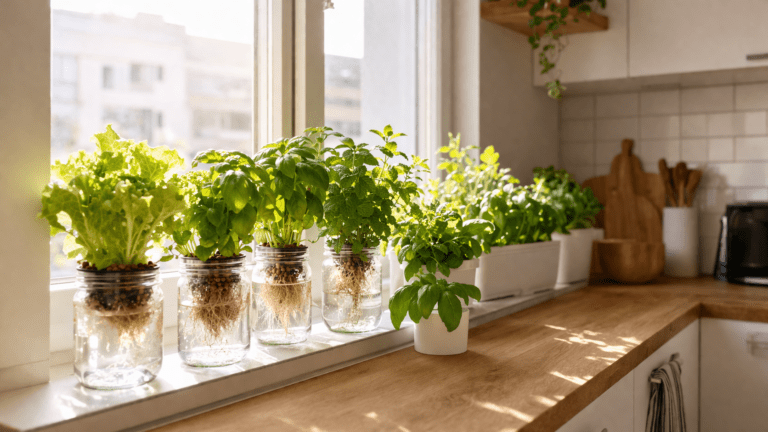
A small countertop unit, Kratky container or compact DWC setup can work well. Whatever the method, keep light away from the nutrient solution and make the reservoir easy to inspect and clean.
Kitchen daylight is not always enough
A bright window can help, but weak or highly directional light often produces stretched growth. If natural light is inadequate, use a grow light sized for the actual growing area and follow the manufacturer’s distance guidance.
Manage water and nutrients consistently
Use a complete hydroponic nutrient formulated for the growth stage and follow its label as a starting point. Check pH and, where useful, EC. Avoid making large corrections based on a single reading.
Harvest to encourage useful regrowth
Take modest, regular harvests and avoid stripping a young plant of most of its foliage. Pinching basil above a node encourages branching; other herbs have different harvesting habits, so treat each crop individually.
FAQ
Can I grow herbs hydroponically all year?
Yes, indoors, provided light and temperature remain suitable.
Do kitchen herbs need an air pump?
It depends on the system. DWC normally uses aeration, while a correctly managed Kratky system is designed to operate passively.