Learn how vertical hydroponic towers work, which crops suit them, and what to consider for pumps, lighting, stability, cleaning and water distribution.
How a tower works
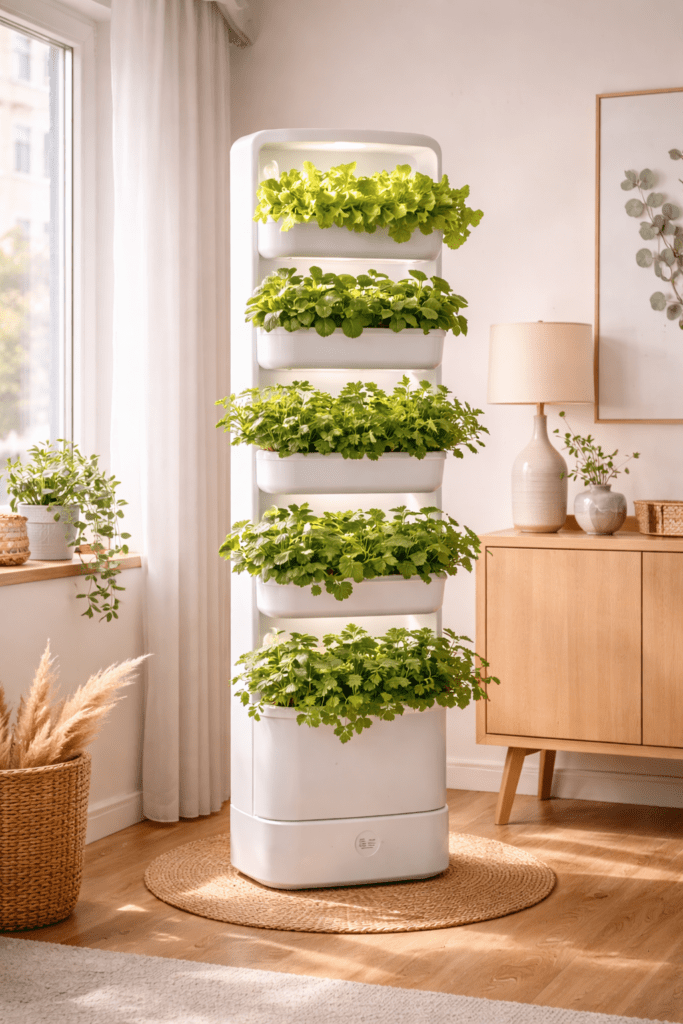
Most vertical hydroponic towers pump nutrient solution upward and allow it to flow past plant roots before returning to the reservoir. Designs vary, so water distribution and root access are important.
Best crops
Compact leafy greens and herbs are generally easier than large fruiting crops. Consider mature plant width as well as the number of planting sites—crowded plants can shade each other.
Planning the system
| Factor | Why it matters |
|---|---|
| Stability | A tall, wet system must remain secure |
| Pump access | Makes maintenance and replacement easier |
| Light | Lower plants can be shaded |
| Reservoir size | Small reservoirs change more quickly |
| Cleaning | Channels and emitters need access |
Common problems
Uneven water delivery, blocked passages, leaks and uneven lighting can affect tower performance. Check flow at different levels rather than assuming every planting site receives the same conditions.
FAQ
Are towers good for small spaces?
They can use floor area efficiently, but they need sufficient height, stable positioning and access for maintenance.
Can a tower run without electricity?
Many tower designs depend on a water pump, although the exact requirements depend on the design.