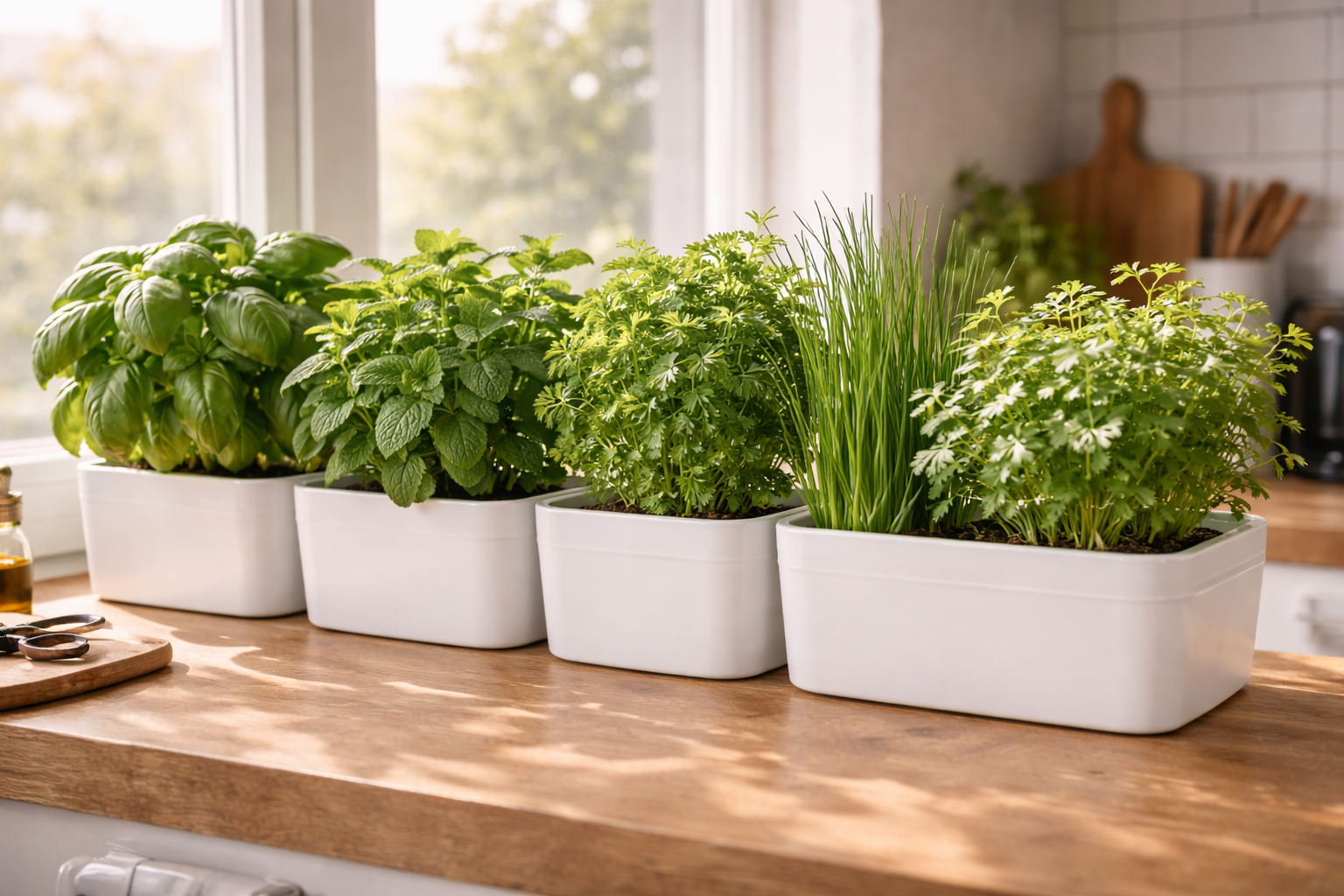
A productive kitchen herb garden is one of the most satisfying things you can build in your home. Imagine reaching across your counter to snip fresh basil for tonight’s pasta, or pinching off mint leaves for morning tea, all from herbs you grew yourself. With hydroponic methods, building a complete kitchen herb garden takes just 30 minutes of setup time and produces fresh herbs continuously for months. No soil. No mess. No mystery.
This guide walks you through every step of building a beautiful, productive kitchen herb garden from scratch. By the end, you will have a complete shopping list, a step-by-step assembly process, and clear knowledge of which herbs work best for absolute beginners.
🌿 The 30-Minute Promise
A complete 5-herb hydroponic kitchen herb garden takes 30 minutes to set up, costs £25-35 in supplies, and produces fresh herbs within 3-5 weeks. Once running, it requires just 2-3 minutes of weekly maintenance.
Why is hydroponic the best method for a kitchen herb garden?
Traditional soil herb gardens have several frustrating problems for indoor use: they create mess, they need daily watering, they harbour fungus gnats, and they often die from overwatering or underwatering. A hydroponic kitchen herb garden eliminates every one of these issues. There is no soil to spill, no watering schedule to track (the herbs sit in their water reservoir), no insects to manage, and no overwatering risk because the plants control their own water uptake.
Hydroponic herbs also grow significantly faster and produce more vigorous plants than soil-grown equivalents. Research published by academic agricultural sources consistently shows that hydroponically grown leafy crops mature 30-50% faster than soil-grown crops with comparable inputs.
What do you need to build a kitchen herb garden?
The complete shopping list for a 5-herb hydroponic kitchen herb garden costs £25-35 from any combination of Amazon, Wilko, B&Q, and a garden centre. Most of the supplies are reusable for years.
| Item | Quantity | Cost | Where to Buy |
|---|---|---|---|
| Wide-mouth jars (1L) | 5 | £10-15 | Wilko, IKEA |
| 3-inch net pots | 10-pack | £3-5 | Amazon |
| Clay pebbles | 2L bag | £3-5 | Amazon, garden centre |
| Hydroponic nutrients | 1 bottle | £8-12 | Amazon |
| pH test kit | 1 kit | £4-6 | Amazon |
| Herb seedlings | 5 plants | £5-10 | Supermarket, garden centre |
Total cost: approximately £33-53 for a complete 5-herb kitchen herb garden setup. After this initial investment, ongoing costs drop to just £1-3 per herb replacement (mostly seeds).
Should you start from seed or supermarket plants?
For your first kitchen herb garden, buy supermarket living herb pots (the kind sold for £1.50-£2.50 in the produce section). These give you instant plants without the 7-10 day wait for seed germination. Carefully wash the soil from the roots, transplant into your hydroponic setup, and you have an established kitchen herb garden the same day. Once you have learned the basics, you can grow future herbs from seed for better results and more variety.
What are the 5 best herbs for a kitchen herb garden?
Choose herbs based on three factors: how often you use them, how easy they grow hydroponically, and how well they tolerate apartment conditions. These five herbs cover virtually every cuisine and grow excellently in hydroponic systems.
🌿 The Essential 5
- Basil — Italian cooking essential, grows fast, smells incredible
- Mint — Tea, cocktails, Middle Eastern dishes, virtually indestructible
- Parsley — Universal garnish and flavour, both flat-leaf and curly
- Chives — Mild onion flavour, perennial, regrows after cutting
- Coriander — Asian, Mexican, Middle Eastern cuisines, fast grower
How do you actually build the kitchen herb garden in 30 minutes?
The build process is simple. You will repeat the same basic steps for each jar in your kitchen herb garden, taking approximately 5-6 minutes per herb.
The 6-step process per jar
- Wrap each jar in foil or paint with chalk paint to block light and prevent algae growth
- Fill each jar with water to approximately 2cm below where the net pot will sit
- Add hydroponic nutrients at half strength (2.5ml per litre of Formulex)
- Test and adjust pH to 5.8-6.0 using pH Down drops
- Place herb in net pot filled with clay pebbles, surrounding the roots gently
- Position net pot in jar opening so the bottom touches the nutrient solution
Repeat for each jar. Place all five jars on your sunniest windowsill or under a grow light. According to guidance from Kew Gardens, most culinary herbs thrive in 6-8 hours of bright light daily. Your complete kitchen herb garden is now operational and will produce fresh herbs within 3-5 weeks.
Where should you place your kitchen herb garden?
Light is the most important factor for kitchen herb garden success. The ideal location combines bright light with easy access from your cooking area.
| Location | Light Quality | Suitability |
|---|---|---|
| South-facing windowsill | 6-8 hours direct sun | ⭐⭐⭐⭐⭐ Best |
| East-facing windowsill | 3-5 hours morning sun | ⭐⭐⭐⭐ Very good |
| West-facing windowsill | 3-5 hours afternoon sun | ⭐⭐⭐⭐ Very good |
| North-facing windowsill | No direct sun | ⭐⭐ Needs grow light |
| Counter near window | Indirect bright light | ⭐⭐⭐ Acceptable |
Intermediate level: how to maintain a productive kitchen herb garden long-term
Once your kitchen herb garden is established, maintaining it for months requires just a few simple practices. The biggest mistake new growers make is over-managing — herbs are forgiving and do best when you leave them alone between weekly checks.
The weekly maintenance routine
- Visual check: Look at each herb for signs of yellowing, wilting, or damage (30 seconds)
- Water level check: Ensure roots still touch the nutrient solution in each jar
- pH test: Test one or two jars and adjust if needed (1 minute)
- Harvest as needed: Pinch basil tips, snip chives, cut mint stems
How to harvest without killing your herbs
The biggest mistake new growers make with their kitchen herb garden is harvesting incorrectly. Each herb has its own technique:
- Basil: Pinch above a leaf node — two new branches grow from each cut
- Mint: Cut stems near the base — regrows aggressively
- Parsley: Take outer stems first, leaving the centre intact
- Chives: Snip with scissors close to the base — regrows in days
- Coriander: Take outer leaves, harvest entire plant before bolting
What next? Expanding your kitchen herb garden
After your initial 5-herb kitchen herb garden is producing reliably, consider these expansions:
- Add lettuce and salad greens for a complete kitchen growing station
- Try unusual herbs like Thai basil, lemon balm, or oregano
- Build a vertical herb wall with mounted shelves for more plants in less space
- Add an LED grow light for winter production when natural light is limited
- Stagger plantings so you always have herbs at different growth stages
Frequently asked questions about kitchen herb gardens
How long does a hydroponic kitchen herb garden last?
Individual herbs in a kitchen herb garden typically produce continuously for 3-6 months before needing replacement. Some perennial herbs like mint and chives can produce for a year or more in the right conditions. The system itself (jars, net pots, pebbles) lasts indefinitely.
Can I grow a kitchen herb garden year-round in the UK?
Yes, with one consideration: winter daylight in the UK is limited from November to February. During these months, supplement with an LED grow light (£10-15) for 14 hours daily to maintain healthy growth. From March to October, natural windowsill light is usually sufficient.
Do hydroponic herbs taste different from soil-grown herbs?
Hydroponic herbs typically have stronger, fresher flavour than soil-grown herbs because they grow faster and are harvested immediately before use. The difference is most noticeable with basil, mint, and coriander, which lose flavour quickly after cutting.
How much can a kitchen herb garden save on grocery bills?
A productive kitchen herb garden typically replaces £15-30 of monthly herb purchases. Fresh basil packets cost £1.50-2.50 each at supermarkets, and a single hydroponic basil plant produces equivalent amounts continuously for months at a fraction of the cost.
Can children help with a kitchen herb garden?
Absolutely. A kitchen herb garden is one of the best educational projects for children — it teaches biology, chemistry, responsibility, and food awareness simultaneously. Children can help with planting, harvesting, and weekly checks under adult supervision.
What if some of my herbs die?
This is normal and not a disaster. Replace failed herbs with new seedlings using the same jar and reset nutrients. Common causes of herb death include pH problems, root rot from refilling Kratky jars, and insufficient light. The Royal Horticultural Society publishes detailed guidance on diagnosing herb problems. Each failure teaches you something for the next attempt.
Related posts you might find useful
- Apartment Hydroponics: 7 Easy Ways to Grow Fresh Food — Broader apartment growing strategies
- Hydroponic Herbs: Complete Beginner Guide — Detailed growing for basil, mint, and coriander
- How to Start Hydroponics with Mason Jars — The setup method used for this garden
🌿 Build Your Perfect Kitchen Garden
Our ebook ‘Apartment Hydroponics’ includes detailed kitchen herb garden plans, advanced setups for windowless spaces, and complete maintenance guides for year-round herb production.
Buy your copy at hydrohomegarden.com/ebooks/apartment-hydroponics/