
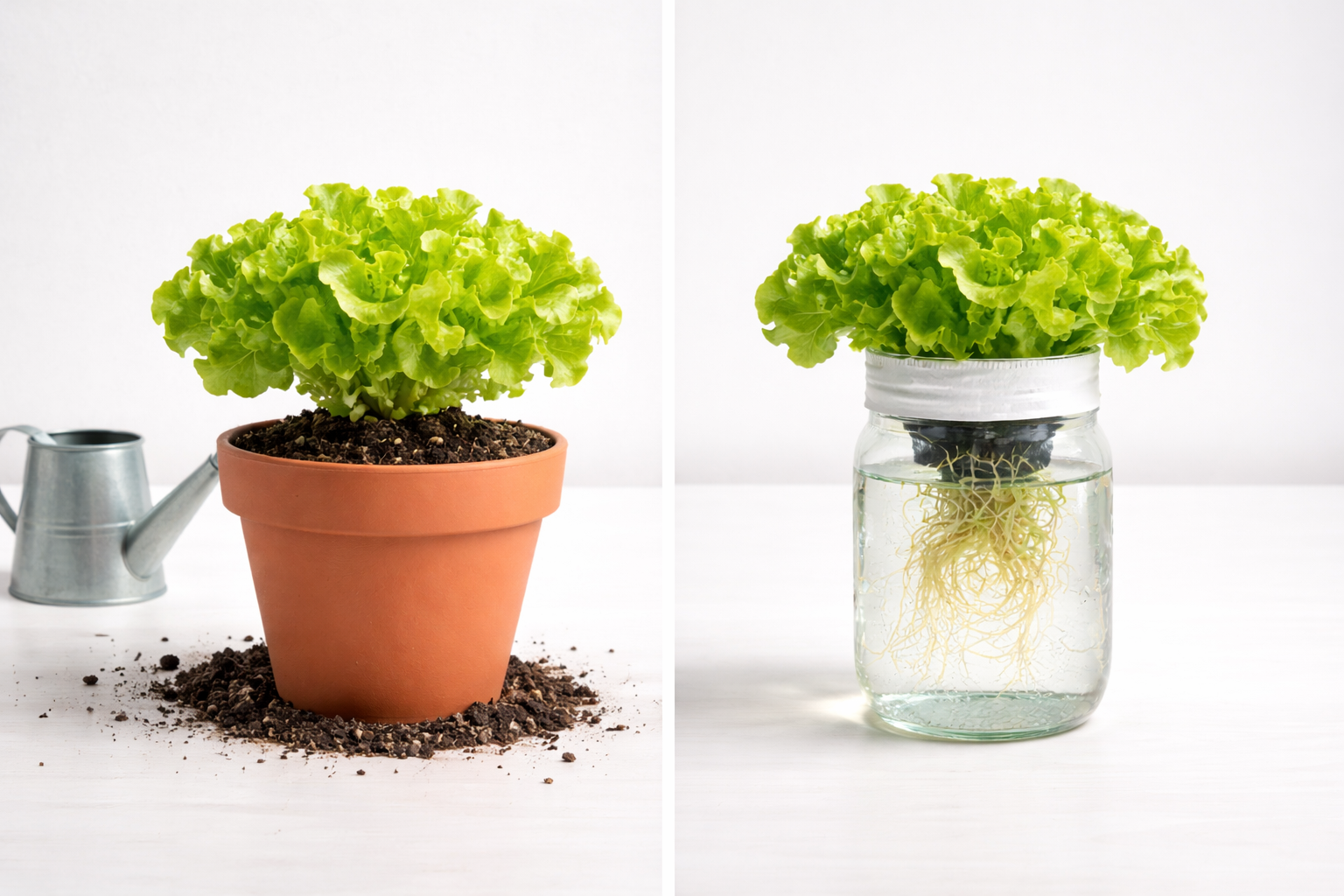
This is one of the most common questions beginners ask, and the honest answer is: it depends on what you want. Both methods can produce excellent food. Both have advantages and drawbacks. And both are accessible to complete beginners. This post compares them head-to-head across every factor that actually matters.
⚖️ The Quick Verdict
Hydroponics wins on growth speed, space efficiency, water usage, pest control, maintenance time, and year-round growing. Soil gardening wins on lower start cost, simpler setup, and outdoor enjoyment. For apartment dwellers and herb-lovers, hydroponics is clearly better. For gardeners with outdoor space who enjoy traditional gardening, soil is still wonderful.
The 8-factor comparison at a glance
| Factor | Hydroponics | Soil Gardening | Winner |
|---|---|---|---|
| Growth speed | 30-50% faster | Standard | 🌱 Hydroponics |
| Start cost | £15-25 minimum | Under £10 | 🌿 Soil |
| Space efficiency | Excellent (vertical stacking) | Requires garden/floor space | 🌱 Hydroponics |
| Water usage | Up to 90% less | High (drains away) | 🌱 Hydroponics |
| Pest problems | Minimal (indoors) | Common (slugs, birds, insects) | 🌱 Hydroponics |
| Weekly time | 2-5 mins (Kratky) | Daily watering + weeding | 🌱 Hydroponics |
| Taste & nutrition | Equivalent | Equivalent | ⚖️ Tie |
| Year-round growing | Yes (with grow lights) | Seasonal | 🌱 Hydroponics |
Growth speed: Hydroponics wins decisively
🌱 Hydroponic lettuce: 30-45 days
Because nutrients are delivered directly to the roots in a readily absorbable form, hydroponic plants typically grow 30 to 50 percent faster than their soil-grown counterparts. Basil reaches harvest size in 3 weeks instead of 5 to 6. This speed advantage comes from the plant not needing to expend energy growing extensive root systems to search for nutrients. In hydroponics, the roots only need to absorb, not search. See our hydroponic lettuce week-by-week guide for the complete timeline.
🌿 Soil-grown lettuce: 60-75 days
In traditional soil gardening, roots must grow extensively through soil to locate nutrients that are bound up in organic matter and slowly released by microbes. This search takes energy that the plant could otherwise put into leaf growth. The result is slower overall development, though the plants are structurally very similar once mature.
Cost to start: Soil is cheaper if you have space
🌿 Soil gardening: under £10 to start
Soil gardening is cheaper to start if you have outdoor space. A packet of seeds (£1-2), a bag of compost (£3-5), and a few pots (£2-5) gets you growing for under £10. If you already have a garden, this can drop to essentially nothing.
🌱 Hydroponics: £15-25 to start
A basic Kratky jar setup costs £15-25 for the initial investment, though nutrients and pH drops last for months. Ongoing costs are actually lower in hydroponics because you use less water and nutrients per plant. Pre-built systems range from £60-300, which is a bigger upfront investment but includes everything you need including lighting. See our hydroponic cost breakdown for full tier analysis.
Space requirements: Hydroponics wins for small homes
🌱 Hydroponics: A windowsill is enough
A single windowsill can hold 4-6 Kratky jars growing herbs and lettuce. A vertical tower in a corner can grow 20 or more plants in under 0.3 square metres. You do not need a garden, a balcony, or even a large room. See our apartment hydroponics guide for space-efficient setups.
🌿 Soil gardening: Requires horizontal space
Soil gardening requires more horizontal space. Each pot needs its own area, and you need somewhere to store compost, watering cans, and tools. If you live in an apartment without a balcony, soil gardening is significantly harder to do at scale.
Water usage: Hydroponics is dramatically more efficient
🌱 Hydroponics: Up to 90% less water
Hydroponic systems use up to 90 percent less water than soil gardening. In soil, much of the water drains through and evaporates. In hydroponics, water is contained and recirculated (or in Kratky, contained in a sealed jar). A single lettuce plant uses approximately 3-4 litres over its entire life cycle in a Kratky jar.
🌿 Soil gardening: High water demand
In soil, much of the water you apply drains through the growing medium and evaporates from the soil surface. Plants only absorb a fraction of what you pour. Outdoor gardening in dry UK summers can require daily watering to keep pots and beds from drying out.
Pests and diseases: Different risks, different management
🌱 Hydroponics: Minimal pests, one key disease
Indoor hydroponics has dramatically fewer pest problems. No slugs, no snails, no caterpillars, no birds. The main pests you might encounter are fungus gnats (easily managed with yellow sticky traps from any UK garden centre) and occasional aphids (rare indoors).
However, hydroponics introduces one risk that soil does not: root rot. If water temperatures are too high or oxygenation is insufficient (in DWC systems), root rot can develop. This is rare in Kratky systems but is a genuine concern in recirculating systems. See our root rot rescue guide for prevention and treatment.
🌿 Soil gardening: Constant pest pressure
Soil gardening outdoors exposes your plants to every pest in your local ecosystem. Slugs eat young seedlings overnight. Birds pick off newly-sown seeds. Cabbage white butterflies lay eggs on brassicas. Caterpillars defoliate plants. Even indoor soil growing can introduce pests via the soil itself — fungus gnat larvae are common in commercial potting soil.
Maintenance effort: Hydroponics wins for time-pressed growers
| Method | Weekly Time | Daily Task? |
|---|---|---|
| Kratky hydroponic (passive) | 2-5 minutes | No |
| DWC hydroponic (active) | 10-15 minutes | Optional check |
| Soil gardening indoors | 20-30 minutes | Watering often needed |
| Soil gardening outdoors | 30-60 mins peak season | Daily in dry weather |
A Kratky hydroponic system is the lowest-maintenance growing method available. You set it up, check it once a week, and harvest. See our mason jar hydroponics guide for the complete setup.
DWC and NFT hydroponic systems require more maintenance than Kratky (checking water level, pH, and nutrient strength every few days), but still less than active soil gardening.
Taste and nutrition: Equivalent when both done right
⚖️ The Tie Category
Both methods produce food that is nutritionally equivalent. Studies have shown no significant nutritional difference between hydroponically and soil-grown vegetables when both receive adequate nutrients. Taste can vary, but this has more to do with the variety, freshness, and nutrient balance than the growing method. The one consistent advantage of home-grown food (regardless of method) is freshness. Supermarket produce is typically 3-7 days old by the time it reaches your plate. Home-grown produce goes from plant to plate in minutes.
Year-round growing: Hydroponics wins for UK winters
🌱 Hydroponics: Year-round with grow lights
With artificial lighting, you can grow indoors through every season, including the darkest UK winter months (November-February). A £10-15 clip-on LED grow light is enough for windowsill herb growing year-round. See our best grow lights under £100 guide for recommendations.
🌿 Soil gardening: Seasonal in the UK
Soil gardening outdoors is limited by temperature, daylight hours, and weather. The UK growing season is effectively March-October. Indoor soil gardening with grow lights is possible but tends to be messier (soil on floors, overwatering, drainage issues) than hydroponic alternatives.
The honest verdict for your situation
| Your Situation | Better Choice |
|---|---|
| Apartment, no outdoor space | 🌱 Hydroponics (clearly) |
| House with garden, love outdoors | 🌿 Soil + herbs indoors hydroponically |
| Only want fresh herbs | 🌱 Hydroponics (Kratky herb garden) |
| Want to grow tomatoes & veg outdoors | 🌿 Soil (better for established fruit crops outdoors) |
| Limited time per week | 🌱 Hydroponics (Kratky is nearly zero-maintenance) |
| Growing in winter in UK | 🌱 Hydroponics (with grow lights) |
| Tight budget, outdoor space | 🌿 Soil (cheaper to start) |
| Want maximum year-round production | 🌱 Hydroponics (vertical stacking) |
💡 The Secret Answer: Do Both
They are not mutually exclusive. Many growers do both. They grow tomatoes and courgettes in their garden soil and keep a Kratky herb garden on their kitchen windowsill for year-round fresh basil and mint. This hybrid approach gives you the best of both worlds — outdoor gardening enjoyment plus consistent indoor fresh herbs.
Frequently asked questions about hydroponics vs soil
Which is easier for an absolute beginner?
Soil gardening has a lower learning curve for the first grow — you put seeds in dirt, water them, and they usually grow. Hydroponics requires learning about pH and nutrients first. However, hydroponics is more forgiving of ongoing neglect — a Kratky jar will survive weeks without attention, while soil pots need regular watering. For long-term ease, hydroponics wins after the initial learning curve.
Do hydroponic plants taste worse than soil-grown?
No — this is a common myth. Blind taste tests show most people cannot distinguish between properly grown hydroponic and soil-grown plants of the same variety. Taste differences come from variety, harvest timing, and freshness, not growing method. A fresh hydroponic basil harvested 5 minutes before dinner tastes dramatically better than 4-day-old supermarket basil, regardless of how either was grown.
Can I convert soil plants to hydroponics?
Sometimes — herbs like mint and basil often survive the transition if you carefully wash all soil off the roots. Rinsing under lukewarm water until no soil remains, then placing the cutting in water, works surprisingly well. Larger established plants (mature tomatoes, peppers) rarely survive conversion and are better replaced with seedlings.
Is hydroponics really more sustainable than soil?
Water-wise, yes — dramatically. Energy-wise, it depends. Indoor hydroponics with grow lights uses electricity that outdoor soil gardening doesn’t. For windowsill hydroponics using natural light, the sustainability advantage is clear. For full-shelf setups with multiple grow lights, the water savings are offset by the energy use.
Will hydroponic plants have smaller root systems?
Yes, dramatically. Hydroponic plants grow much smaller root systems because roots don’t need to search for nutrients. This isn’t a problem — the roots are still healthy, just more compact. It’s actually why hydroponic plants can fit in such small containers.
Which is better for growing in a UK flat?
Hydroponics, clearly. UK flats typically have no outdoor space, limited counter space, and variable light conditions. A compact hydroponic setup on a windowsill provides fresh herbs year-round using minimal space, no soil mess, and no insects crawling around. Soil gardening in a flat means potting soil everywhere and fungus gnats in your living space.
Can I use soil-grown seeds in hydroponic systems?
Yes — any seeds from Suttons, Thompson & Morgan, or UK garden centres work identically in hydroponics. Seeds don’t know or care whether they’ll grow in soil or water. Germinate them on a damp paper towel or in rock wool cubes, then transplant to your hydroponic system once they have true leaves.
What do most “hybrid” growers actually grow hydroponically vs in soil?
The most common split is: hydroponic for herbs and salad greens (basil, mint, coriander, lettuce — things you want fresh and close to the kitchen), soil for larger crops (tomatoes, peppers, courgettes, squash — things that benefit from outdoor space and established root systems). This hybrid approach is genuinely optimal for UK households with both indoor and outdoor space.
Related posts you might find useful
- What Is Hydroponics? — Plain-English introduction to the method
- Is Hydroponics Hard to Learn? — Honest answer from zero-experience perspective
- 7 Beginner Mistakes in Hydroponics — Avoid the common pitfalls
- Mason Jar Hydroponics — The simplest starting method
- Apartment Hydroponics Complete Guide — Why hydroponics wins for small homes
- 10 Easy Hydroponic Plants — Best first crops to prove the method works
- Hydroponic Herbs Guide — Perfect starting hybrid between soil and hydro approaches
The Complete Beginner’s Roadmap
Our 22-page ebook Hydroponics For Complete Beginners is a step-by-step roadmap from zero knowledge to your first harvest. No experience required — plain-English explanations covering systems, nutrients, pH, plant selection, and troubleshooting.
✓ Zero-to-harvest roadmap · ✓ Plain-English explanations · ✓ Troubleshooting guide · ✓ Instant PDF download