
Every hydroponic beginner makes mistakes. That is part of the learning process and nothing to be ashamed of. But some mistakes are so common, so predictable, and so easily avoided that it would be a shame not to warn you about them upfront. Here are the seven that trip up the most beginners, along with the simple fixes.
🎯 The Quick Summary
The #1 mistake is ignoring pH. The #2 mistake is using too much nutrient. The #3 mistake is letting light reach the reservoir. Learn to check pH in 30 seconds, dose at half strength, and wrap your container — you’ll avoid 80% of all beginner problems.
The 7 mistakes at a glance
| # | Mistake | Consequence | Quick Fix |
|---|---|---|---|
| 1 | Ignoring pH | Nutrient lockout, yellowing, death | Test every 2-3 days, adjust to 5.5-6.5 |
| 2 | Over-concentrating nutrients | Nutrient burn, crispy leaves | Start at half strength |
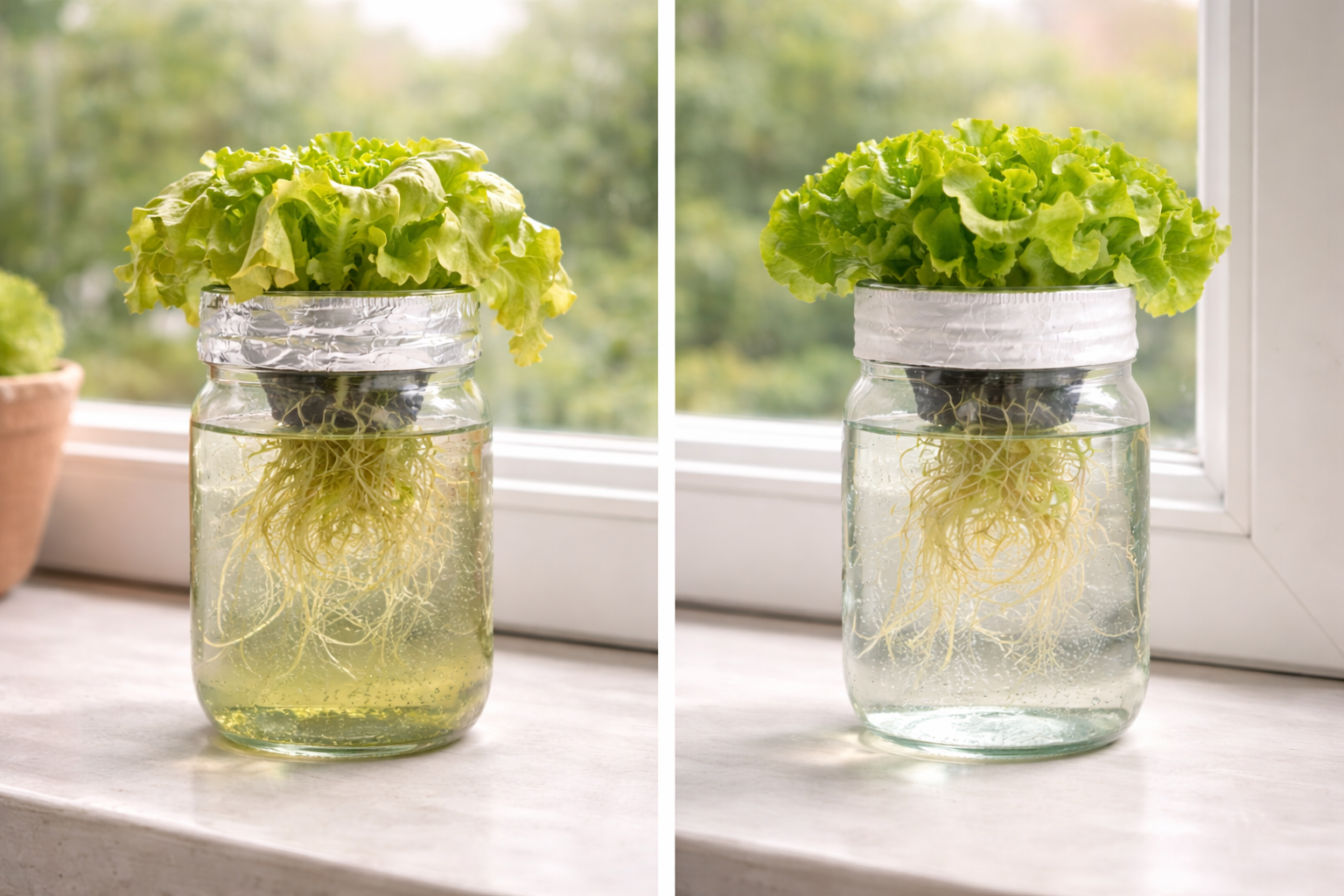
| 3 | Not blocking light | Algae growth | Wrap container in foil |
| 4 | Refilling Kratky to the top | Root suffocation, plant death | Leave dropping water alone |
| 5 | Starting with fruiting crops | Failure, frustration, giving up | Start with lettuce or basil |
| 6 | Buying expensive equipment first | Wasted money if you quit | £15-25 Kratky jar first |
| 7 | Testing pH before adding nutrients | Inaccurate readings, chasing pH | Add nutrients first, then test |
The 7 mistakes explained in detail
Mistake 1Ignoring pH
This is the number one cause of plant problems in hydroponics. When your pH is outside the 5.5 to 6.5 range, nutrients become chemically locked out. Your plant starves even though the nutrients are physically present in the water. The symptoms look like nutrient deficiency (yellowing leaves, stunted growth) and beginners often respond by adding more nutrients, which makes the problem worse.
The irony is that 90% of “my nutrients don’t work” problems are actually pH problems. The nutrients are fine. The plant just cannot absorb them. See our hydroponic plants turning yellow guide for the full diagnostic.
Mistake 2Over-concentrating nutrients
Beginners often assume that more nutrients means faster growth. The opposite is true. Excess nutrients cause nutrient burn: brown, crispy leaf tips and edges that get progressively worse. In severe cases, the plant can die.
This mistake comes from a soil-gardening mindset where over-fertilising is harder to do because soil buffers excess. In hydroponics, there is no buffer — what you add reaches the roots directly and immediately.
Mistake 3Not blocking light from the reservoir
Light reaching your nutrient solution causes algae growth. Algae competes with your plant for nutrients and oxygen, can clog pumps, and makes your water look and smell unpleasant. In severe cases, algae growth can overwhelm a small system.
Transparent containers are the biggest culprit — mason jars, plastic food containers, and glass bottles all let light through. Even opaque containers can let light in around lids or through gaps if not sealed properly.
Mistake 4Refilling a Kratky jar to the top
In a Kratky system, the water level is supposed to drop. As the plant drinks, an air gap forms between the water surface and the container lid. The roots that grow into this air gap absorb oxygen, which is essential for plant health.
Beginners see the dropping water level and panic. They refill the jar to the top, submerging the oxygen-absorbing roots, which then suffocate and rot. This is the most common Kratky-specific mistake and it usually kills the plant. It’s the #1 killer of otherwise-healthy Kratky plants.
Mistake 5Starting with fruiting crops
Tomatoes and peppers are exciting to grow but they are poor choices for a first hydroponic project. They need:
- Intense light (more than most UK windowsills provide)
- High nutrient concentrations
- Physical support structures (stakes, strings)
- Hand pollination (there are no bees indoors)
- 3 months of patience before the first harvest
This combination is unforgiving to the beginner mistakes that are inevitable on your first grow.
Mistake 6Buying expensive equipment before learning
Some beginners spend £200-300 on a premium hydroponic system, grow lights, EC meters, and automated controllers before they have ever grown a single plant. When something goes wrong (and something always goes wrong the first time), they get frustrated and give up — with a lot of money down the drain.
This is especially common with gift purchases and impulse buys after watching impressive YouTube videos. The expensive systems look polished and professional, but they don’t teach you anything useful about how hydroponics actually works.
Mistake 7Testing pH before adding nutrients
This sounds minor but it causes real confusion. Nutrients significantly change the pH of water. If you test pH first, adjust it to 6.0, then add nutrients, the pH will shift again and you will need to readjust. You end up chasing your pH back and forth in a frustrating loop.
Most beginner hydroponic guides show this mistake being made, which is why it’s so widespread. It’s genuinely counterintuitive — you’d think you’d test pH first, then add stuff. But water chemistry doesn’t work that way.
The meta-mistake: overthinking it
⚠️ The Biggest Mistake of All
The biggest mistake is not any single technical error. It is spending so much time researching, watching videos, and reading guides that you never actually start. Hydroponics is a practical skill. You learn by doing. Your first grow will not be perfect, and that is completely fine. The second will be better. The third will be excellent.
Stop reading and start growing. Your first lettuce is waiting. See our mason jar hydroponics guide to start today.
Frequently asked questions about beginner mistakes
How do I know if I’m making a mistake right now?
Watch for these warning signs: yellowing leaves (pH problem), brown crispy tips (nutrient burn), green slime in water (algae = light getting in), brown slimy roots (root rot from overwatering or lack of oxygen). Any of these indicates something needs adjusting. For full diagnostic help, see our nutrient deficiency chart.
I made a mistake — is my plant dead?
Usually no. Most hydroponic mistakes are recoverable if caught within 24-48 hours. pH problems can be fixed by adjusting the solution. Nutrient burn can be reversed by diluting. Even root rot can sometimes be treated if caught early. The plant being “too far gone” is rarer than you think — keep trying to fix it before starting over.
Can I mix mistakes and still save my plant?
Yes, to a point. A plant with both pH issues AND mild nutrient burn can often recover when you fix both. The combination that usually kills plants is overwatering (topping up Kratky) combined with any other problem — the resulting root rot is harder to recover from than any single issue.
How long before I can trust my “gut feeling” about the plants?
After 2-3 successful grows, you’ll start to develop intuition for what plants need. You’ll recognise the difference between “this plant is thirsty” and “this plant has pH issues” just by looking. This is why starting with easy crops (lettuce, basil) matters — they let you develop pattern recognition quickly.
Do these mistakes matter more for certain systems?
Yes. Mistake #4 (refilling Kratky) only matters for Kratky systems. Mistake #3 (blocking light) matters more for transparent containers than opaque ones. Mistake #5 (fruiting crops first) is worse in small systems like mason jars that can’t physically support tomatoes anyway. Mistakes #1, #2, and #7 apply to every system equally.
What’s the #1 mistake experienced growers make after they stop being beginners?
Complacency. After 5-10 successful grows, experienced growers often stop testing pH as regularly, skip refresh cycles, and assume everything is fine based on habit rather than observation. The same mistakes that caught them as beginners catch them again a year later when they’ve forgotten the importance of consistent monitoring.
How do I recover my confidence after a failed first grow?
Understand that failure is part of the learning curve, not a sign you can’t do this. Every experienced grower has killed plants. The difference is they kept going. Start a new jar the same day you throw out the failed one — don’t let the failure become a “maybe I’ll try again later” that turns into never. The next grow will be dramatically better because you’ve already learned what went wrong.
Are there any mistakes that are actually good to make?
Controversially, yes. Making Mistake #1 (pH problem) once teaches you more than any guide ever could about why pH matters. Making Mistake #4 (Kratky overfill) once cements the lesson forever. These are “learning mistakes” — painful in the moment but genuinely educational. Just don’t make the same one twice.
Related posts you might find useful
- What Is Hydroponics? — Start with the plain-English basics
- Is Hydroponics Hard to Learn? — Honest answer from someone who started at zero
- Hydroponics vs Soil Growing — Choose the right method for you
- Hydroponic Plants Turning Yellow — Diagnose mistake #1 symptoms
- Hydroponic Nutrient Burn — Recover from mistake #2
- Hydroponic Root Rot — Recover from mistake #4
- Mason Jar Hydroponics — The cheapest way to start (avoids mistake #6)
The Complete Beginner’s Roadmap
Our 22-page ebook Hydroponics For Complete Beginners includes a full troubleshooting section covering every common problem with visual symptom guides, plus step-by-step setup to avoid all 7 mistakes from day one.
✓ Full troubleshooting guide · ✓ Visual symptom charts · ✓ Plain-English explanations · ✓ Instant PDF download