
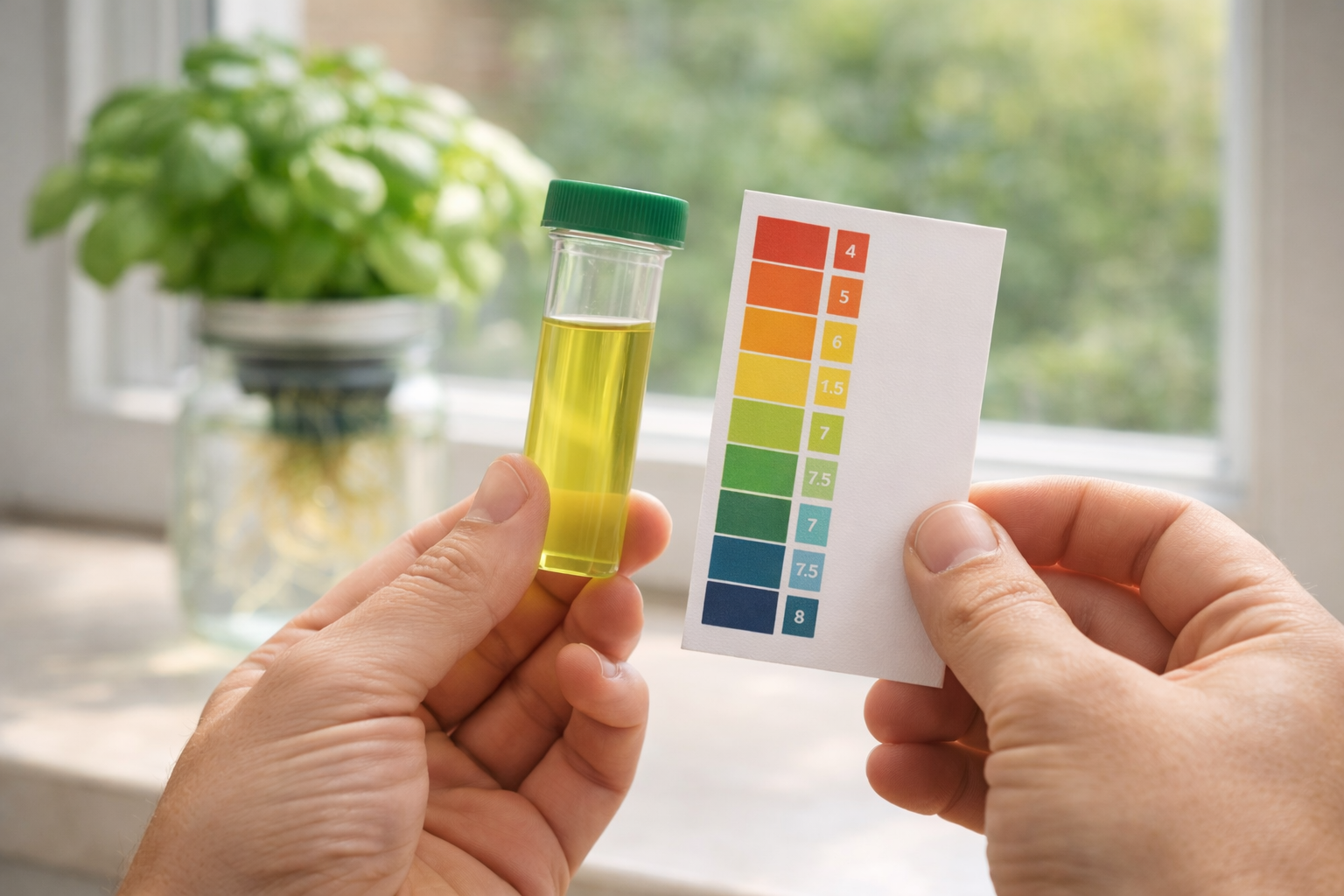
Every beginner asks this question before they start. The answer is no, hydroponics is not hard. But it has a perception problem. The terminology sounds scientific (pH, EC, NPK, nutrient lockout), the equipment looks technical (pumps, timers, meters), and the internet is full of complicated-looking setups that make it seem like you need an engineering degree to grow lettuce.
You do not. The reality is that hydroponics at a basic level involves three skills: mixing nutrients into water (like making squash), testing pH (dipping a strip or pen into water and reading a number), and observing your plants (looking at them every few days). That is genuinely it.
This post breaks down what is actually hard, what is easy, and where beginners waste time worrying about things that do not matter.
🎯 The Honest Answer
Hydroponics requires 3 basic skills: mixing nutrients (like making squash), testing pH (30 seconds), and observing plants weekly. If you can follow a recipe, you can do hydroponics. Your first grow can happen this week for £15-25.
What makes hydroponics seem harder than it is
Three common misconceptions trip up beginners before they even start. Here they are, debunked:
Myth 1The jargon barrier
Hydroponics has a lot of terminology. EC stands for electrical conductivity, which is just a measurement of how much nutrient is dissolved in your water. NPK stands for nitrogen, phosphorus, and potassium, the three main nutrients plants need. pH measures how acidic or alkaline your water is. These concepts are simple once explained, but the abbreviations make them sound intimidating.
The reality: For your first grow, you need to understand exactly one of these. pH. That is the only measurement that genuinely matters for a beginner growing lettuce or herbs. Get your pH between 5.5 and 6.5 and your plants will grow. You can learn everything else later. See our how to adjust pH guide for the 30-second version.
Myth 2The equipment overwhelm
Browse any hydroponics shop and you will find hundreds of products: pH controllers, EC meters, inline filters, UV sterilisers, automatic dosing systems, environmental controllers. None of these are needed for a simple home setup. They exist for commercial growers managing thousands of plants.
The reality: For your first grow, you need a container, a net pot, some clay pebbles, a bottle of nutrients, and pH drops. Total cost: £15-25. Everything else is optional. See our mason jar hydroponics guide for the complete entry-level setup.
Myth 3YouTube complexity
Many popular hydroponics channels showcase elaborate multi-system setups with plumbing, reservoirs, controllers, and monitoring dashboards. These are impressive but they represent the hobby at its most advanced.
The reality: Watching these as a beginner is like watching Formula 1 before your first driving lesson. Inspiring, but not where you start. Your first setup fits on a windowsill and costs less than a pub dinner. Save the YouTube inspiration for month 6 when you’re ready to scale.
What is actually easy about hydroponics
These are the skills people think are hard but turn out to be genuinely simple:
Easy 1Mixing nutrients
Most hydroponic nutrients come with simple instructions: add X millilitres per litre of water. You measure, pour, and stir. It takes less than two minutes. If you can make a cup of tea, you can mix hydroponic nutrients. See our hydroponic nutrients for beginners guide for the complete walkthrough.
Easy 2Testing pH
Add a few drops of indicator solution to a small sample of your water. The liquid changes colour. Compare it to the chart included in the kit. If it is too high, add a drop of pH Down. If too low, add a drop of pH Up. Test again. Done. The entire process takes 30 seconds.
Easy 3Planting
Place a seedling in a net pot filled with clay pebbles. Set the net pot on your container so the bottom touches the water. Put it on a sunny windowsill. Walk away. That is the complete planting process for a Kratky system.
Easy 4Maintenance
For a simple Kratky or DWC system, maintenance means checking the water level and pH every few days. Top up if needed. Adjust pH if it has drifted. Total time: 2-3 minutes per week. Many growers find it less work than watering houseplants.
What is genuinely challenging (and when)
Hydroponics does have real challenges, but they mostly appear at the intermediate and advanced levels:
| Challenge | When It Matters | Difficulty |
|---|---|---|
| Growing fruiting crops (tomatoes, peppers) | Grow #5-6 onwards | 🟡 Moderate |
| Managing multiple systems | After first successful grow | 🟡 Moderate |
| Diagnosing deficiencies | When problems arise | 🟢 Easy with a deficiency chart |
| Preventing root rot (warm conditions) | DWC only, summer months | 🟢 Easy with prevention guide |
| Scaling to serious production | Year 2 onwards | 🟡 Moderate |
| Building complex systems (NFT, aeroponics) | Year 2+ hobbyist level | 🔴 Advanced |
None of these challenges apply to your first grow if you start with lettuce or herbs in a simple Kratky jar. Save the complexity for later when you have the confidence and experience to handle it.
The one thing you need to get right
If there is one skill that separates successful beginners from frustrated ones, it is pH management. When your pH is in the correct range (5.5 to 6.5), your plants can absorb all the nutrients they need. When it drifts outside this range, nutrients become chemically unavailable, even though they are present in the water. This is called nutrient lockout and it is the cause of most beginner problems.
🔑 The One Skill That Matters Most
A pH test kit costs £4-6 from Amazon UK, takes 30 seconds to use, and a single bottle lasts for hundreds of tests. Test after mixing nutrients, adjust if needed, and you have eliminated the most common source of failure. This one skill alone prevents 80% of all beginner problems. See our how to adjust pH guide for the complete walkthrough.
How to start this week (your 5-step action plan)
Here is your action plan. It requires no prior knowledge, no special skills, and less than £30:
Day 1Buy your supplies
Buy a mason jar, net pot, clay pebbles, hydroponic nutrients, and pH test drops. All available on Amazon UK. Total cost: £15-25. For the exact shopping list with UK retailers, see our mason jar hydroponics guide.
Day 2Germinate your seeds
Germinate lettuce seeds on a damp paper towel. Place in a warm spot away from direct sunlight. Cover with cling film to retain moisture. This step happens while you wait for your supplies to arrive from Amazon UK.
Day 3-7Wait for sprouting
Wait for seeds to sprout (usually 3-5 days for lettuce). During this time, read up on pH testing and nutrient mixing if you want, but honestly, you can learn as you go. The plant doesn’t care how much theory you’ve consumed.
Day 7Build and plant
Mix nutrients into the jar, test and adjust pH to 5.5-6.5, and transplant your seedling. Wrap the jar in foil to block light. Place on a sunny windowsill. Total time: about 15 minutes. You’ve just completed the hardest part of hydroponics.
Day 7-45Watch it grow and harvest
Watch it grow. Check once a week. Adjust pH if needed. Harvest and eat. That is the entire process. You will spend more time reading about hydroponics than actually doing it. The doing is the easy part.
Frequently asked questions about learning hydroponics
How long does it take to actually “learn” hydroponics?
Basic competence comes after your first successful grow (4-6 weeks). Intermediate skill comes after 3-4 grow cycles (~6 months). You’ll feel genuinely confident with any hydroponic method by your 10th grow (~1 year). But you can grow successful lettuce on day 1 of grow 1 — you don’t need to wait until you “know hydroponics” to start benefiting from it.
What if I have no gardening experience at all?
Perfect — you have no bad habits to unlearn. Soil gardeners sometimes struggle with hydroponics because they try to apply soil techniques (overwatering, over-fertilising) that don’t work. Complete beginners often have an easier time because they take the instructions literally. If you can follow a recipe, you can do hydroponics.
What if I kill my first plant?
You probably won’t, but if you do, that’s genuinely fine. Every experienced grower has killed plants. The difference is they kept going. Start a new jar the same day you throw out the failed one. Your second attempt will be dramatically better because you’ve learned what went wrong. See our 7 beginner mistakes guide for the common failure modes.
Do I need to learn chemistry to grow hydroponically?
No. You need to understand two numbers: pH (target 5.5-6.5) and nutrient dose (usually 2.5-5ml per litre). That’s it. The “chemistry” is already done by the nutrient manufacturer — you just measure and pour. Home growers don’t need to understand why chlorine binds with ammonia or how phosphate solubility changes with pH. You need to follow the label.
How long does a single pH test kit last?
A £4-6 General Hydroponics pH Test Kit lasts for approximately 200-300 tests. For a beginner testing once a week on a single jar, that’s literally 4-6 years of testing from one bottle. This is why buying a digital pH meter as a beginner is usually unnecessary — the drop kit lasts longer than most people stick with the hobby.
Is there a learning curve for each new hydroponic method?
Less than you’d think. The underlying skills (pH, nutrients, light, observation) transfer completely. Moving from Kratky to DWC adds one new element (the air pump) but uses the same nutrients, same pH targets, and same plant care. Moving to NFT adds timers. Most “new methods” are just adding one or two pieces to skills you already have.
How do I know if I’m ready to try more advanced techniques?
When you’ve had 3-4 successful grows in a row without making any of the 7 beginner mistakes. If your plants consistently thrive, you understand pH drift, and you’ve handled at least one minor problem successfully — you’re ready to try DWC, a vertical tower, or fruiting crops. Before that, keep perfecting the basics on lettuce and herbs.
What’s the single biggest thing that helps beginners?
Starting with lettuce. Not tomatoes, not peppers, not strawberries. Lettuce is forgiving, fast-growing, tolerates minor mistakes, and gives you visible results in 30-45 days. Nothing builds confidence faster than eating a lettuce you grew yourself from seed. See our hydroponic lettuce week-by-week guide for the complete first-grow blueprint.
Related posts you might find useful
- What Is Hydroponics? — Plain-English definition and method overview
- 7 Beginner Mistakes in Hydroponics — The mistakes to avoid on your first grow
- Hydroponics vs Soil Growing — Choose the right method for you
- Mason Jar Hydroponics — The simplest first build
- Hydroponic Lettuce: Week-by-Week — Your first grow blueprint
- How to Adjust pH Without Expensive Tools — The one skill that matters most
- Hydroponic Nutrients for Beginners — The second most important skill
The Complete Beginner’s Roadmap
Our 22-page ebook Hydroponics For Complete Beginners walks you through every step from your first purchase to your first harvest, with photos, checklists, and troubleshooting tips in plain English.
✓ Step-by-step photo walkthroughs · ✓ Troubleshooting checklists · ✓ Plain-English explanations · ✓ Instant PDF download