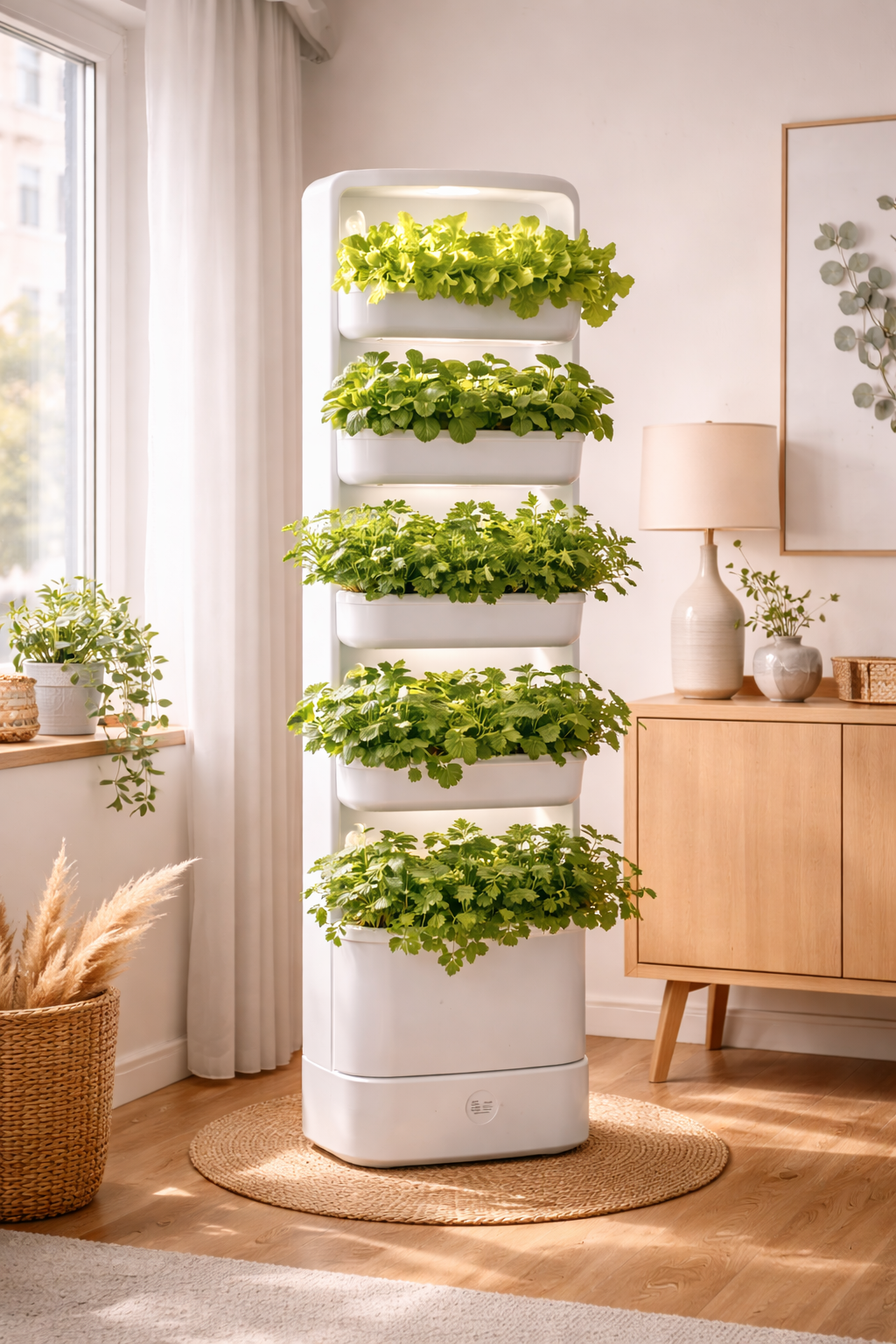
A vertical hydroponic tower promises something incredible: growing 20-32 plants in less than 1 square metre of floor space. For apartment dwellers and anyone with limited room, that productivity is genuinely tempting. But these systems also cost £100-£300 or more, take up valuable vertical space, and require commitment. This guide answers the most important question: is a vertical hydroponic tower actually worth it for small spaces, or are simpler options better?
I have tested several vertical tower systems alongside simpler alternatives over multiple growing seasons. This honest review covers the genuine pros and cons, who should buy one, who should avoid them, and a complete comparison of the best models available in 2026.
⚖️ The Quick Verdict
A vertical hydroponic tower is genuinely worth it if you have £150+ to spend, want to grow 20+ plants simultaneously, and value floor space over counter space. For most beginners and tight budgets, simpler Kratky jar setups deliver better value and easier results.
What is a vertical hydroponic tower and how does it work?
A vertical hydroponic tower is a tall, narrow growing system that holds multiple plants stacked vertically rather than spread horizontally. Most towers use a recirculating water system: a small pump at the base sends nutrient solution to the top of the tower, where it trickles down through the planting holes, watering each plant on its way down before returning to the reservoir at the base.
The plants grow horizontally outward from the tower walls, taking advantage of the surrounding light from all directions. A typical vertical hydroponic tower stands 1-2 metres tall and holds anywhere from 12 to 32 plants depending on the model. Some commercial systems like the Tower Garden use aeroponics (misting roots) rather than traditional drip recirculation for even more efficient growing.
What are the real advantages of a vertical hydroponic tower?
Maximum plants per square foot
This is the headline advantage. A vertical hydroponic tower can grow 20-32 plants in a footprint smaller than 1 square metre. To grow the same number of plants horizontally would require a counter or shelf 4-5 metres long. For apartment dwellers with very limited horizontal space, this is genuinely transformative.
Continuous harvests from one system
Because a vertical hydroponic tower holds 20+ plants, you can stagger plantings so that something is always ready to harvest. This means weekly fresh greens and herbs without having to manage multiple separate systems.
Looks impressive and intentional
Unlike rows of mason jars, which can look improvised, a vertical tower looks like a deliberate design choice. Many apartment dwellers consider the aesthetic value alone justification for the higher cost.
Self-watering and low daily maintenance
Recirculating tower systems handle their own watering through the pump. You only need to refill the reservoir every few weeks and check pH occasionally. Once established, the system runs largely on its own.
What are the genuine disadvantages?
A vertical hydroponic tower has real downsides that many marketing materials gloss over. Understanding these helps you decide if a tower is right for your situation.
High upfront cost
Quality vertical tower systems cost £100-300, with premium models reaching £500+. Compare this to a Kratky mason jar setup at £15-25 and you are paying 5-20 times more for the convenience and capacity. For beginners unsure if they will stick with hydroponics, this is a significant gamble.
Pump dependency creates failure points
A vertical hydroponic tower relies on its water pump to distribute nutrients. If the pump fails (and pumps do fail eventually), the upper plants stop receiving water and can die within a day or two. This is the opposite of Kratky systems, which have no moving parts and cannot mechanically fail.
Lighting is harder than it sounds
Plants on the lower levels of a tower receive less light than those at the top because the upper plants shade them. In natural light, this means rotating the tower regularly so all plants get equal exposure. With artificial lighting, you need to position lights carefully to reach all levels.
Noise from the pump
The pump in a vertical hydroponic tower produces a constant low hum and the gentle sound of water trickling. Most people find this acceptable or even pleasant, but in a small studio apartment or bedroom, it can be noticeable.
Cleaning is more involved
Between grow cycles, the tower needs to be dismantled, cleaned, and reassembled. Compare this to a Kratky jar where you simply rinse the jar and pebbles. Tower cleaning takes 30-60 minutes versus 5 minutes for a jar.
Which vertical hydroponic tower is best in 2026?
| Model | Plants | Price | Best For |
|---|---|---|---|
| Lettuce Grow Farmstand | 12-36 | £300-500 | Premium home setup |
| Tower Garden HOME | 32 | £600-800 | Aeroponic enthusiasts |
| Gardyn Home Kit | 30 | £450-650 | App-controlled growing |
| Vertical PVC tower (DIY) | 15-25 | £40-80 | DIY budget builds |
| Hydroponic stacking pots | 8-15 | £25-50 | Budget vertical entry |
Can you build a DIY vertical hydroponic tower under £50?
Yes, and it works surprisingly well. A DIY vertical hydroponic tower built from PVC pipe, a small water pump, and net pots costs £40-80 in parts and grows 15-25 plants. It is not as polished-looking as commercial models, but it produces equivalent results for a fraction of the price.
🛠️ DIY Tower Shopping List
- 4-inch PVC pipe (1.5m length): £8-12 from Screwfix
- Pipe end caps: £3-5
- Reservoir bucket (5L): £3-5
- Submersible water pump (200L/h): £8-15
- Net pots (15-pack): £5-8
- Clay pebbles: £5-8
- Vinyl tubing and connectors: £3-5
Total cost: £40-60 for a fully functional DIY vertical hydroponic tower. The trade-off is the time investment to drill planting holes, assemble the system, and troubleshoot any issues yourself.
Intermediate level: optimising tower productivity
Once you have a vertical hydroponic tower running, several techniques significantly improve productivity:
Rotate the tower weekly
Plants grow toward light. Rotating your tower 90 degrees once a week ensures all plants receive equal light exposure and grow evenly. This is especially important for towers in windowsill positions where light comes from one direction.
Adjust nutrient strength by level
The plants at the top of the tower receive full-strength nutrients first, while plants at the bottom receive solution that has already been processed by the upper plants. Some advanced growers use slightly stronger nutrients to compensate for this distribution effect.
Stagger planting for continuous harvests
Instead of planting all 20+ slots at once, fill the tower 25% per week over 4 weeks. This creates a continuous rotation where you always have plants at every growth stage and never face an empty tower after a single harvest.
What next? Beyond a single tower
After mastering a vertical hydroponic tower, here are the natural next steps:
- Add a grow light system for year-round production
- Run multiple towers if space allows for serious production
- Combine with horizontal systems for fruiting crops the tower cannot grow
- Try aeroponic upgrades for even faster growth rates
- Automate nutrient dosing with pH controllers and EC monitors
Frequently asked questions about vertical hydroponic towers
Is a vertical hydroponic tower worth buying?
A vertical hydroponic tower is worth buying if you have £150+ to spend, want to grow 20+ plants simultaneously, value compact floor space, and have committed to long-term hydroponic growing. For beginners or tight budgets, simpler systems offer better value while you learn the basics.
How much does a vertical tower cost to run monthly?
Running costs are minimal: £1-3 per month in electricity for the pump, £2-5 in nutrients, £1-2 in seeds. Total monthly running cost is approximately £4-10. The main expense is the upfront purchase, not ongoing costs.
What plants grow best in a vertical hydroponic tower?
Leafy greens (lettuce, spinach, kale, pak choi), herbs (basil, mint, parsley, coriander), and small fruiting crops (strawberries, cherry tomatoes if the tower is sturdy enough) all grow well. Avoid root vegetables, large fruiting crops, and plants that need extensive support structures.
How tall is a typical vertical hydroponic tower?
Most vertical hydroponic tower systems stand 1.2-1.8 metres tall. Make sure your ceiling height is sufficient (at least 2 metres) and that you have access to top plants for harvesting and maintenance. Some models offer adjustable heights to fit different spaces.
Do I need a grow light for a vertical hydroponic tower?
It depends on placement. If positioned next to a south-facing window with 6+ hours of direct sun, natural light may be sufficient for leafy greens. For consistent year-round production or low-light apartments, an LED grow light is recommended. Some commercial models include integrated grow lights.
Can I move a vertical hydroponic tower easily?
Most vertical towers have wheels or are designed to be moved when empty. However, when filled with water and plants, they can weigh 30-50 kg and become difficult to relocate. Choose your tower location carefully before assembly.
Related posts you might find useful
- Apartment Hydroponics: 7 Easy Ways to Grow Fresh Food — Compare tower systems with simpler alternatives
- 5 Best Hydroponic Systems for Small Apartments — Full system comparison guide
- Cheap vs Expensive Hydroponic Kits — Decide whether premium systems are worth the cost
🌱 Master Vertical Growing
Our ebook ‘Apartment Hydroponics’ includes complete DIY tower build plans, commercial system reviews, and advanced techniques for maximising vertical growing productivity.
Buy your copy at hydrohomegarden.com/ebooks/apartment-hydroponics/