
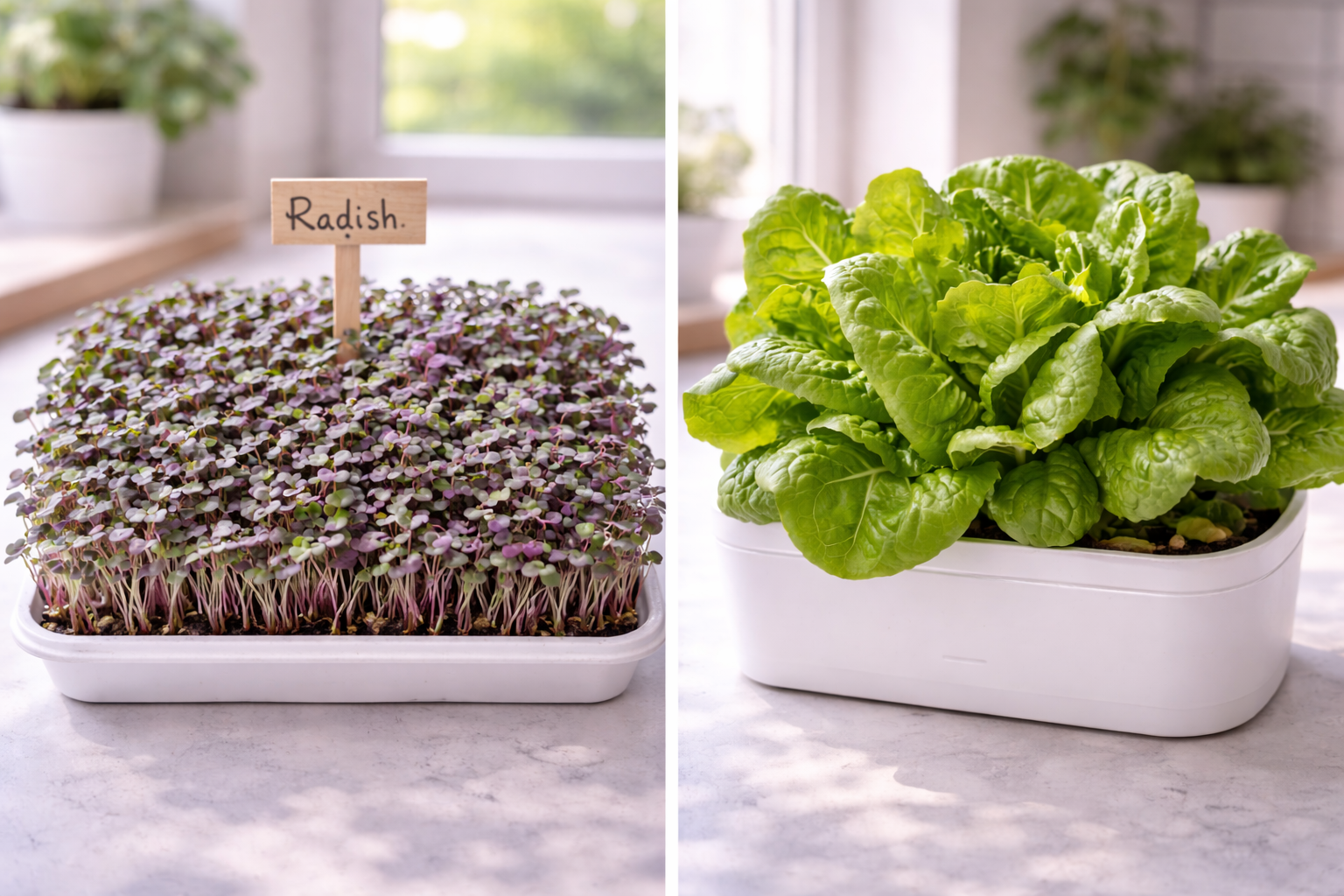
The microgreens vs full size plants question is one every new hydroponic grower faces. Both options have genuine advantages, both produce edible food, and both teach you the fundamentals of soilless growing. But for absolute beginners, one of these is almost always the better starting point. This guide compares microgreens vs full size plants across every factor that matters and gives you a clear recommendation based on your goals.
Whether you want fast results, maximum nutrition, the best cost-per-meal, or the easiest learning experience, this comparison will help you choose the right path for your first hydroponic adventure.
⚖️ The Quick Verdict
For absolute beginners, the microgreens vs full size plants debate strongly favours microgreens. They are faster, cheaper, easier, more forgiving, and produce results in a week instead of a month. Start with microgreens, then graduate to full plants once you understand the basics.
How does the microgreens vs full size plants comparison break down?
Comparing microgreens vs full size plants requires looking at multiple factors that matter to home growers. Each method has clear strengths and weaknesses that suit different goals and lifestyles.
| Factor | Microgreens | Full Size Plants |
|---|---|---|
| Time to harvest | 7-14 days | 30-60 days |
| Setup complexity | Very simple | Moderate |
| Need for nutrients | No (water only) | Yes (mixing required) |
| pH management | Not required | Critical |
| Nutritional density | 4-40x higher per gram | Standard |
| Volume produced | Small per tray | Larger per plant |
| Cost per meal | Higher | Lower |
Why are microgreens easier than full size plants for beginners?
The microgreens vs full size plants comparison heavily favours microgreens for absolute beginners because microgreens eliminate nearly every variable that causes beginner failures. Understanding why helps you appreciate just how forgiving microgreens really are.
No nutrient mixing needed
Microgreens get all their nutrition from the seed itself and harvest before they need any external nutrition. This means plain tap water is sufficient for the entire growing cycle. Full size plants need carefully mixed hydroponic nutrients that can be confusing for beginners and dangerous if dosed incorrectly.
No pH management required
Without nutrients in the water, pH management becomes irrelevant. The biggest cause of failure for beginner full-size plant growers is pH problems leading to nutrient lockout. Microgreens completely sidestep this issue.
Faster feedback loops
If something goes wrong with a microgreen tray, you know within 7 days and can start fresh immediately. If something goes wrong with full size plants, you might not realise for weeks and lose a month of effort. This faster feedback dramatically accelerates learning.
Forgiving of mistakes
Microgreens tolerate inconsistent watering, slightly wrong temperatures, and beginner errors that would devastate full-size plants. Resources from Epic Gardening consistently rank microgreens as the #1 recommended starting crop for new growers. For the complete step-by-step setup, see our microgreens hydroponics first harvest guide.
When do full size plants beat microgreens?
The microgreens vs full size plants comparison is not entirely one-sided. Full size plants have genuine advantages that matter for specific situations and goals.
Better cost per meal
Full size plants produce significantly more food per pound of seed. A single £1 packet of lettuce seeds can produce 20+ heads of lettuce over a year of staggered planting. The same pound spent on microgreens produces fewer total meals because each tray uses many seeds for a single harvest.
More substantial meals
You cannot make a salad meal from microgreens alone. They are garnishes and accents, not main ingredients. A head of butter lettuce can be the base of multiple substantial salads. If you want to seriously reduce your supermarket purchases, full size plants deliver more practical value.
Wider crop variety
Full size plants let you grow tomatoes, peppers, cucumbers, strawberries, and other fruiting crops that simply cannot be grown as microgreens. The variety of produce available expands dramatically once you graduate to full size plants — see our 10 easy hydroponic plants almost impossible to kill for the best beginner full-size crops.
More satisfying harvests
Cutting a full head of lettuce or pulling a ripe tomato from a hydroponic plant feels significantly more rewarding than harvesting a tray of microgreens. For some growers, this satisfaction matters more than any practical consideration.
What are the costs of microgreens vs full size plants?
Cost is one of the most important factors in the microgreens vs full size plants decision. Here is what the actual math looks like for typical home growers:
💰 Cost Comparison
| Microgreens setup Trays, mats, seeds, scissors |
£15-25 |
| Full size plant setup Jar, net pots, pebbles, nutrients, pH kit |
£20-30 |
| Microgreens per harvest Seeds + growing mat |
£1-3 |
| Full size plants per harvest Nutrients and minor consumables |
£0.30-1 |
| Long-term cost per meal | Full size wins |
Intermediate level: combining microgreens vs full size plants
The smartest hydroponic growers do not choose between microgreens vs full size plants — they grow both simultaneously. This combination gives you the best of both worlds without committing entirely to either approach.
The combined approach
Run a microgreens tray every 7-10 days for fresh garnishes and quick wins. Simultaneously, run 4-6 mason jars or a small DWC system with full size lettuce and herbs for substantial meal ingredients. This gives you continuous harvests of different types and lets you experiment with everything hydroponic growing offers. Our mason jar hydroponics guide shows the simplest full-size plant method to pair with your microgreens trays.
Why beginners should still start with microgreens first
Even if you plan to combine both methods eventually, starting with microgreens for your first 2-3 grows builds confidence and basic skills before tackling the more complex full size plant approach. The skills transfer (germination, light management, harvest timing) but microgreens fail less catastrophically when you make beginner mistakes.
What next? Progressing from microgreens to full size plants
After mastering microgreens vs full size plants and feeling ready to expand, here are the natural next steps for combining both approaches:
- Add a single Kratky mason jar alongside your microgreens trays for your first full size plant
- Choose easy beginner crops like butter lettuce or basil for the first full size grow — see 10 easy hydroponic plants for options
- Learn nutrient mixing carefully with reputable hydroponic nutrient brands and manufacturer dosing charts
- Get a basic pH test kit for £4-6 before starting full size plants
- Pick the right varieties using our 10 best microgreen varieties ranked
- Consider turning it into income with our microgreens business from home guide once you have consistent results
- Run both systems in parallel for at least one full grow cycle to compare directly
Frequently asked questions about microgreens vs full size plants
Are microgreens healthier than full size plants?
Per gram, yes. Research from the USDA shows microgreens contain 4-40 times more nutrients than mature plants of the same species. However, you eat smaller amounts of microgreens per meal, so total nutritional intake from a serving may be similar between microgreens and full size plants.
Which is more cost-effective long term, microgreens vs full size plants?
Full size plants are more cost-effective long term because they produce more food per seed and per unit of effort. Microgreens cost more per meal but offer concentrated nutrition and fast results. The microgreens vs full size plants cost question depends on whether you value speed and convenience or maximum food production.
Can microgreens replace my supermarket vegetables?
Microgreens cannot fully replace supermarket vegetables because of their small serving sizes. They work as nutrition boosters and flavour enhancers added to other foods. Full size plants come closer to replacing supermarket purchases but still typically supplement rather than replace shopping for most home growers.
Which method teaches more about hydroponic growing?
Full size plants teach more comprehensive hydroponic skills because they involve nutrient mixing, pH management, and longer-term plant care. Microgreens teach basic principles in a forgiving environment. For deep hydroponic knowledge, eventually growing full size plants is essential.
Can I sell microgreens vs full size plants for profit?
Microgreens are significantly easier to sell commercially because they have premium pricing (£15-30 per pound), fast production cycles, and strong restaurant demand. Full size plants face competition from cheap supermarket produce and lower per-pound pricing. For home-based food business, microgreens are the clear winner — see our microgreens business startup guide and farmers market selling tips for the complete approach.
Do microgreens vs full size plants taste different?
Yes, dramatically. Microgreens have intensely concentrated flavour that can be 5-10 times stronger than mature plants of the same species. Microgreen radish tastes much spicier than mature radish. Microgreen cilantro is more pungent than mature cilantro. This intensity is part of what makes microgreens special in the kitchen.
Related posts you might find useful
- Microgreens Hydroponics: Your First Harvest in 7 Days — Start with microgreens method
- 10 Best Microgreen Varieties for Hydroponic Beginners — Choose the right starting variety
- Microgreens Business from Home — Turn it into income
- Selling Microgreens at Farmers Markets — 7 proven tips for success
- 10 Easy Hydroponic Plants Almost Impossible to Kill — Easy full-size crops to try next
- Mason Jar Hydroponics for Beginners — Simplest full-size plant method
- Fastest Hydroponic Crops: Top 8 Plants Under 30 Days — Quick full-size alternatives
Turn Microgreens Into a Side Income
Our 23-page ebook Microgreens: Hobby to Side Income includes detailed grow guides for 20+ varieties, complete business startup plan, pricing strategies, and everything you need to sell to restaurants and farmers markets.
✓ 20+ variety grow guides · ✓ Pricing strategies · ✓ Restaurant pitch scripts · ✓ Instant PDF download