
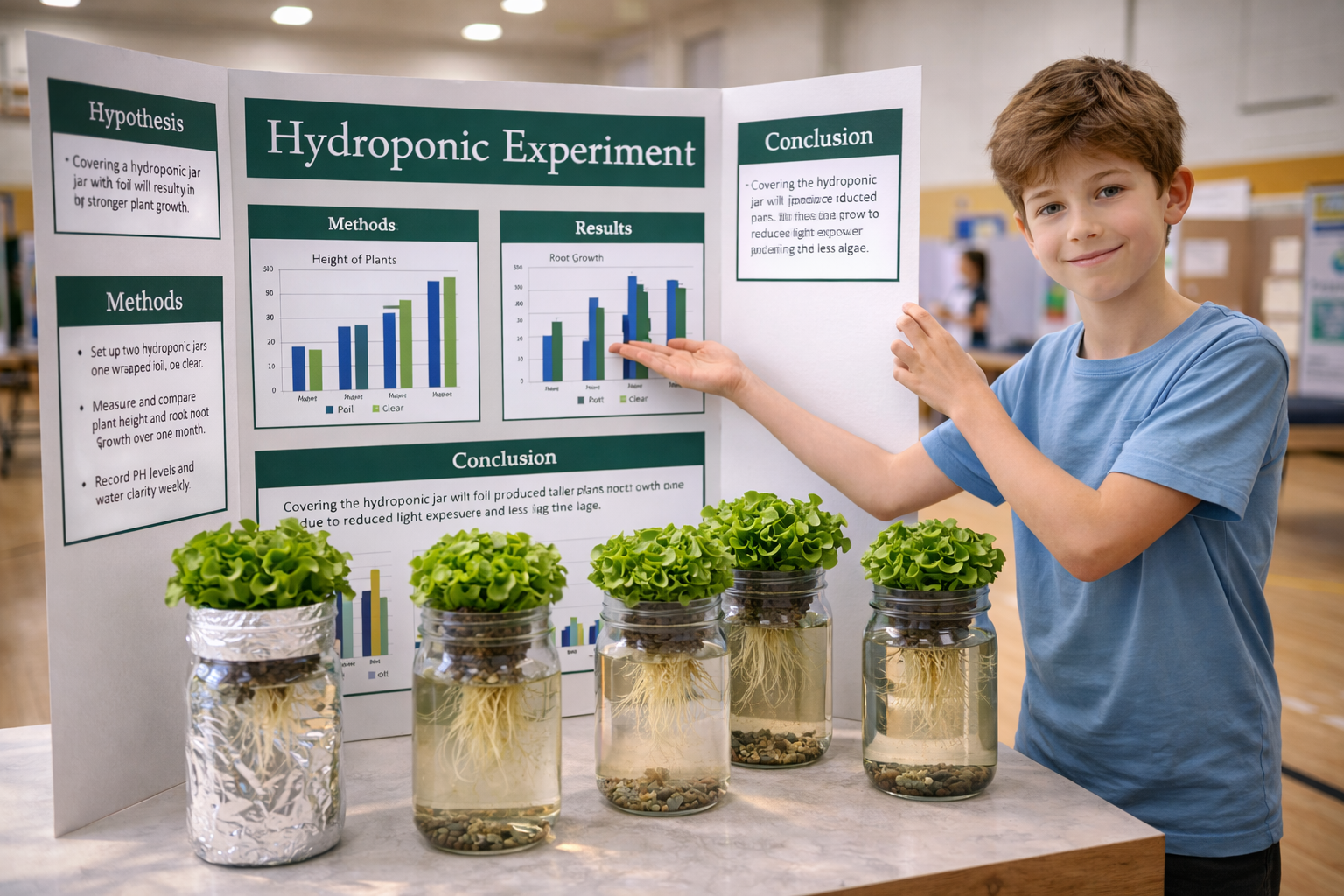
A hydroponic science fair project gives students one of the strongest possible advantages in any school competition. Judges consistently respond well to projects that produce real results, demonstrate clear scientific method, and show practical applications to real-world problems. Hydroponic projects deliver all three. The combination of visible plant growth, measurable data, and connection to sustainable food production makes hydroponic projects stand out from the typical baking soda volcanoes and crystal growing experiments.
This guide covers 10 winning hydroponic science fair project ideas, complete with research questions, hypotheses, materials lists, and tips for impressive presentations. Each idea has been tested and judged in real science fairs, with notes on what made winning projects successful.
🏆 Why Judges Love These Projects
Judges award high marks to a hydroponic science fair project because it shows real scientific method, produces measurable data, has clear practical applications, and demonstrates the student understands genuine concepts rather than just following instructions.
What makes a winning hydroponic science fair project?
Before exploring specific project ideas, understand what judges actually evaluate in science fairs. The same criteria apply whether the fair is at a primary school or a national competition.
| Judging Criteria | How Hydroponic Projects Score |
|---|---|
| Scientific method | Hydroponics naturally enables controlled experiments |
| Original thinking | Less common topic stands out from typical projects |
| Data quality | Plant growth produces clear measurable data |
| Practical relevance | Connects to real food production issues |
| Visual presentation | Live plants make impressive displays |
| Student understanding | Topic is rich enough for genuine learning |
Which is the best hydroponic science fair project to start with?
#1Effect of nutrient concentration on plant growth
This is the gold standard hydroponic science fair project for beginners and consistently wins awards because it tests a single clear variable with easily measurable results. The student grows identical plants in solutions with different nutrient strengths and measures the growth differences over 3-4 weeks.
🔬 Project Specifications
- Question: How does nutrient concentration affect plant growth rate?
- Hypothesis: Plants will grow best at the manufacturer’s recommended dose
- Variables: 4 jars at 25%, 50%, 100%, and 200% strength nutrients
- Measurements: Plant height, leaf count, leaf area every 3 days
- Duration: 21-28 days
#2Effect of light colour on plant growth
This hydroponic science fair project tests how different light colours affect plant growth. Use coloured cellophane filters or red/blue/green LED lights to test which spectrum produces the best growth. Results often surprise judges because most assume white light is best, when actually red and blue light often produce superior plant growth.
#3Comparing tap water vs filtered water vs rainwater
Test whether water source affects hydroponic plant growth. Three identical setups using different water types (tap, filtered, and collected rainwater) reveal whether the minerals and chlorine in tap water actually matter for plant health. This is a particularly relevant hydroponic science fair project because it has real-world implications for home growers.
#4pH range optimisation experiment
This hydroponic science fair project tests which pH range produces the best plant growth by setting up multiple jars at different pH levels (4.0, 5.0, 5.5, 6.0, 6.5, 7.0, 8.0). The results clearly show that plants only thrive in a narrow pH window, demonstrating why pH management matters in real hydroponic farming.
#5Comparing hydroponic vs soil growing speed
One of the most impactful hydroponic science fair project ideas compares the growth rate of identical seedlings grown in hydroponics versus traditional soil. The hydroponic plants typically grow 30-50% faster, providing dramatic visual evidence that judges find compelling. Research from the Royal Horticultural Society consistently confirms this growth advantage.
#6Effect of root oxygen levels on plant health
Compare a properly aerated DWC (deep water culture) system using an air pump with a Kratky setup with no aeration. Measure plant growth rates over 3 weeks to demonstrate how dissolved oxygen affects root health. This hydroponic science fair project teaches an important concept that many people misunderstand about plant biology.
#7Temperature effect on hydroponic plant growth
Test how nutrient solution temperature affects plant growth by maintaining identical setups at different temperatures (cold, room temperature, and warm). Use small aquarium heaters to maintain test temperatures. This experiment connects to real concerns about climate change effects on food production, giving the project real-world relevance judges appreciate.
#8Vertical vs horizontal growing space efficiency
Build a small vertical hydroponic tower alongside a horizontal setup with identical plants. Calculate plants per square foot for each to demonstrate how vertical farming maximises food production in limited spaces. This hydroponic science fair project connects to urban farming research that judges find timely and relevant.
#9Comparing different growing media
Test how different growing media (clay pebbles, rockwool, coconut coir, perlite) affect plant growth in identical hydroponic setups. Measure root development and overall plant health over 3-4 weeks. This experiment teaches the importance of substrate choice and produces interesting comparative data.
#10Microgreens nutrition density comparison
This advanced hydroponic science fair project compares the nutritional density of microgreens versus mature plants of the same species. While direct chemical analysis is complex, students can use simple visual indicators (colour intensity, water content) and reference research from USDA studies showing microgreens contain 4-40 times more nutrients than mature plants. For the practical microgreens setup guide, see our microgreens hydroponics first harvest guide.
How do you present a winning hydroponic science fair project?
The actual experiment is only half of any successful hydroponic science fair project. The presentation matters just as much for impressing judges. Here are the elements every winning presentation includes:
📋 Winning Presentation Elements
- Clear hypothesis: A specific testable prediction stated upfront
- Live plants: Bring the actual hydroponic systems if possible — judges love seeing real evidence
- Data graphs: Charts showing measurements over time look professional and demonstrate real data
- Photos throughout: Show the experiment at multiple stages to demonstrate progress
- Real-world connection: Explain why your findings matter for food production or sustainability
- Confident explanation: Practice explaining your project clearly to non-scientists
How long does a hydroponic science fair project take?
Plan ahead — most hydroponic science fair project ideas need 3-6 weeks from start to finish, including setup, growing time, data collection, and presentation preparation. Here is a typical timeline:
| Week | Activity |
|---|---|
| Week 1 | Research, planning, gather materials, set up experiment |
| Weeks 2-4 | Run experiment, take measurements, photograph progress |
| Week 5 | Final measurements, analyse data, create graphs |
| Week 6 | Build display board, write report, practice presentation |
If you have less than 3 weeks, choose microgreens-based experiments which can complete in 7-14 days. For easier experiments to practice the scientific method before a fair, see our 5 simple hydroponic experiments for kids ages 6-12.
Intermediate level: making your hydroponic science fair project more impressive
For students wanting to maximise their chances of winning, several techniques can elevate a basic hydroponic science fair project to award-winning status.
Add multiple control groups
Most winning projects test more than just one variable against a single control. Use 4-5 different test conditions to provide stronger data and more nuanced conclusions. This shows judges you understand the importance of controlled experimentation.
Include statistical analysis
Older students can calculate averages, ranges, and even simple statistical significance for their measurements. Even basic statistics impress judges who often see students reporting raw numbers without analysis.
Connect to current research
Reference real scientific studies or current research projects related to your topic. Resources like Science Buddies include links to academic papers students can reference in their write-ups. This shows judges you understand your project fits into broader scientific knowledge.
Document everything photographically
Take photos every 2-3 days throughout the experiment. Use these in your presentation to show clear visual progression. Time-lapse style photo arrays make impressive display elements.
What next? After winning your science fair
After a successful hydroponic science fair project, many students continue developing their interest in plant science. Here are natural next steps:
- Enter regional or national competitions with refined versions of your project
- Connect with university researchers studying plant biology
- Explore career paths in agricultural science, botany, or sustainable food production
- Read advanced research on topics that interested you most
- Consider entrepreneurship by selling microgreens or starting a small growing business
- Teach younger students using our teaching kids hydroponics guide — strong leadership experience for university applications
Frequently asked questions about hydroponic science fair projects
What grade levels can do a hydroponic science fair project?
A hydroponic science fair project works for grades 3-12. Younger students should focus on simpler experiments with one variable (like light vs darkness). Middle school students can tackle multi-variable experiments. High school students can pursue advanced projects with statistical analysis and connections to current research.
How much does a hydroponic science fair project cost?
Most projects can be completed for £20-40 in materials including jars, nutrients, seeds, and basic measurement tools. The costs are comparable to traditional science fair projects but with the advantage that materials can be reused for future experiments.
Can a hydroponic science fair project be completed in 2 weeks?
Microgreens-based experiments can complete in 7-14 days, making them suitable for short timeframes. Most full plant experiments need 3-4 weeks minimum to show meaningful growth differences. Plan ahead to ensure adequate time for both growing and presentation preparation.
What is the most original hydroponic science fair project?
Students often score well by combining hydroponics with current trending topics: testing the effect of music on plant growth, comparing growth under different colour LED grow lights, or measuring how plants respond to different watering schedules. The more original your hypothesis, the more judges will remember your project.
Do judges care about pretty displays or just data?
Both matter, but data quality is more important. A project with messy presentation but excellent data will usually beat a beautifully decorated project with weak experimental design. Aim for clean, professional presentation that highlights your real scientific work.
Can I use AI tools to help with my hydroponic science fair project?
AI tools can help with research, outlining, and proofreading, but the actual experimental work and conclusions must be your own. Judges quickly identify projects where students do not understand their own results. Use AI as a helper, not a replacement for genuine learning.
Related posts you might find useful
- Teaching Kids Hydroponics: The Best STEM Project — Background on educational hydroponics
- 5 Simple Hydroponic Experiments for Kids Ages 6-12 — Easier experiments for practice
- How to Explain Hydroponics to a Child — Explaining your project to younger siblings
- 7 Best Kid Friendly Hydroponic Kits for 2026 — Ready-made kit options
- Microgreens Hydroponics: First Harvest in 7 Days — Fast option for tight deadlines
- Mason Jar Hydroponics for Beginners — Basic setup for most experiments
- What Is Hydroponics? A Plain-English Explanation — Background research for your report
Win Your Next Science Fair
Our 25-page ebook Teaching Kids Hydroponics includes 20+ science fair project templates with hypotheses, methods, data sheets, and presentation guides ready to print and use.
✓ 20+ project templates · ✓ Data recording sheets · ✓ Presentation guides · ✓ Instant PDF download