
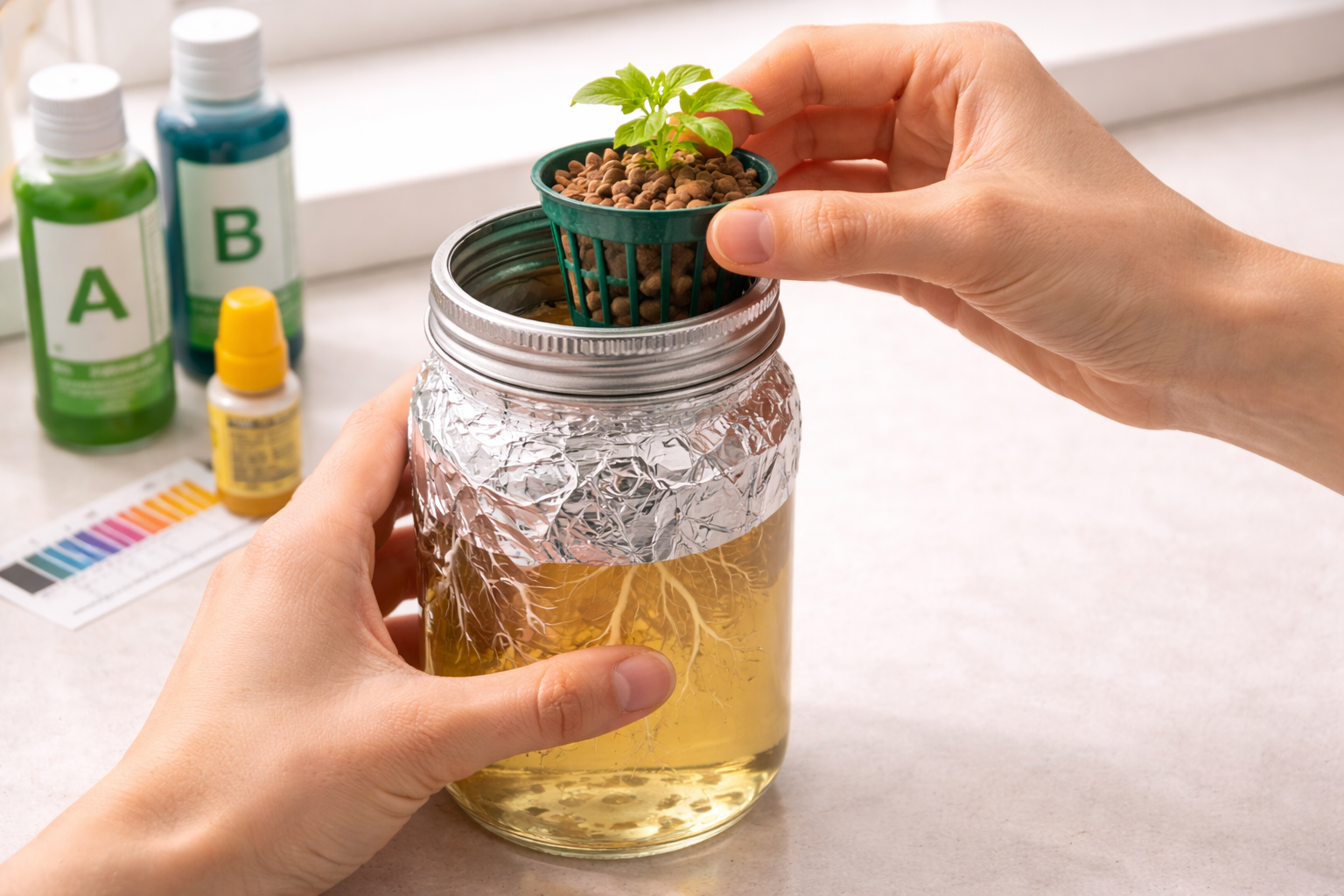
Choosing the best plants for kratky method growing is the single most important decision you make after setting up your jar. Pick the right crop and you will harvest fresh food in 3-6 weeks with almost no effort. Pick the wrong one and you will struggle with a plant that outgrows its container, runs out of water, or needs more oxygen than a passive system can provide.
Not every plant is suited to the kratky method. Because there is no air pump providing continuous oxygen, and because the nutrient solution is mixed once and not replenished, the best plants for kratky method systems are compact, fast-growing crops that finish their life cycle before the reservoir runs dry.
This guide ranks every common hydroponic crop by its success rate in kratky systems, from the ones that practically grow themselves to the ones that need experienced hands and large containers.
🏆 Top 3 Starter Recommendations
For your first 3 kratky grows, do them in this order: butter lettuce (guaranteed win in 30-45 days), then basil (months of continuous harvest), then a Tier 2 crop of your choice. By grow #4 you will be ready to try anything.
How we ranked these plants
Each crop was evaluated on four factors that determine success in kratky method growing:
| Factor | Why It Matters |
|---|---|
| Speed to harvest | Faster crops finish before the nutrient solution depletes |
| Water demand | Plants that drink less work better in limited reservoirs |
| Oxygen tolerance | Some plants handle lower dissolved oxygen better than others |
| Forgiveness | How well the plant tolerates pH, nutrient, and light mistakes |
For context on why kratky provides limited oxygen compared to DWC, see our kratky vs DWC comparison.
Tier 1: Almost impossible to fail (start here)
These are the best plants for kratky method beginners. They grow fast, drink modestly, tolerate mistakes, and produce satisfying harvests in small containers. If you have never grown anything hydroponically, pick one of these for your first jar.
Tier 1Butter lettuce — The undisputed #1
The single best plant for kratky method growing. Butter lettuce grows quickly (30-45 days from transplant to harvest), stays compact, has modest water needs, and tolerates pH fluctuations that would stress fussier crops. It thrives in containers as small as 500ml. The soft, buttery leaves taste far better than anything from a supermarket because you harvest them minutes before eating.
Tier 1Basil — The continuous producer
Basil is one of the best plants for kratky method systems because it grows fast, smells incredible, and produces continuously for months if you pinch it correctly. Harvest by cutting stems just above a leaf node — two new branches grow from every cut, making the plant bushier and more productive over time. One kratky jar of basil produces more than most families can use.
Tier 1Mint — Virtually indestructible
Mint is virtually indestructible in a kratky system. It grows aggressively, tolerates almost any pH, handles low light better than most herbs, and recovers from heavy harvesting within days. The only downside is that it can become root-bound in small containers after a couple of months. When that happens, start a fresh jar with a cutting from the old plant.
Tier 1Leaf lettuce varieties (oakleaf, lollo rosso, red sails)
All loose-leaf lettuce varieties perform excellently in kratky. They grow slightly faster than head lettuce and can be harvested leaf-by-leaf over several weeks, extending the productive life of each jar. Red varieties like lollo rosso add visual appeal to your windowsill garden and contain additional antioxidants compared to green varieties.
Tier 1Microgreens — Fastest harvest
Technically not a kratky jar crop (they grow better in shallow trays), but microgreens deserve mention because they are the absolute fastest harvest in hydroponics: 7-14 days from seed to plate. Sunflower, radish, pea shoot, and broccoli microgreens all work well in a shallow container with just a thin layer of nutrient solution. They are among the best plants for kratky method growers who want instant gratification. For the complete microgreens setup, see our microgreens hydroponics first harvest guide.
Tier 2: Reliable with basic experience
These crops are slightly more demanding than Tier 1 but still well within beginner reach. Try these after your first successful harvest. They are still among the best plants for kratky method growing but need a little more attention to container size and growing conditions.
Tier 2Coriander (cilantro) — Fast but bolts
Coriander grows very quickly in kratky (21-30 days to harvest) but has one weakness: it bolts (goes to flower and becomes bitter) rapidly in warm conditions. Keep your kratky jar away from heat sources and direct afternoon sun. Once coriander bolts, the leaf flavour deteriorates. Harvest early and sow fresh seeds frequently for a continuous supply.
Tier 2Spinach — Best in cooler months
Spinach grows well in kratky but prefers cooler conditions (15-20°C). In warm rooms or during summer, it bolts quickly. For UK growers, spinach is an excellent autumn and winter kratky crop when windowsill temperatures are naturally cooler. Use a 1-2 litre container because spinach develops a larger root system than lettuce.
Tier 2Pak choi (bok choy) — Fast Asian green
Pak choi is a fast, rewarding kratky crop that matures in 30-45 days. It produces crisp, crunchy stems and tender leaves that are excellent in stir-fries and soups. Like coriander, it can bolt in very warm conditions, so grow it during cooler months or keep it away from heat sources.
Tier 2Kale — Needs a bigger container
Kale needs a larger container than most kratky crops (2-5 litres) because it develops a substantial root system and drinks more water. In a sufficiently large container, kale grows beautifully using the kratky method and produces a continuous supply of nutrient-dense leaves that you harvest from the bottom up while the plant keeps growing from the centre.
Tier 2Parsley — Slow start, long harvest
Parsley is slow to germinate (10-14 days) but once established, it produces reliably for months in a kratky jar. Both flat-leaf and curly varieties work well. Parsley is more tolerant of lower light conditions than basil, making it a good choice for east or west-facing windowsills that do not get intense direct sun.
Tier 2Chives — Perennial producer
Chives are a perennial herb, meaning a single plant keeps producing for months or even years in the right conditions. They grow steadily in kratky systems and tolerate a wide range of pH and nutrient levels. Harvest by snipping individual leaves with scissors — they regrow from the base within a week.
Tier 2Spring onions — Regrow from supermarket cuttings
Spring onions are among the more unusual best plants for kratky method growing. They take longer than herbs (60-90 days) but produce a satisfying harvest of mild, crunchy onions. You can even regrow spring onions from supermarket cuttings by placing the root end in a kratky jar — no seeds needed.
Tier 3: Possible but challenging
These crops can grow in kratky systems, but they push the method to its limits. The main challenges are high water demand, long growing cycles, and the need for more oxygen than a passive air gap typically provides. Attempt these only after several successful Tier 1 and Tier 2 harvests.
Tier 3Cherry tomatoes — Kratky at its limit
Cherry tomatoes can produce fruit in kratky, but they need a large container (10-20 litres minimum), strong light (8+ hours direct sun or a powerful grow light), physical support (a stake or cage), and hand pollination (gently shake the flowers daily since there are no bees indoors). The nutrient solution will need topping up because tomatoes are heavy drinkers. This is kratky at its limit.
Tier 3Peppers — Long cycle, intense light needed
Similar requirements to tomatoes: large container, intense light, long growing cycle, and hand pollination. Peppers are slightly less water-demanding than tomatoes but still push a kratky system hard. Hot pepper varieties tend to be more compact and slightly more kratky-friendly than large bell peppers.
Tier 3Strawberries — Unpredictable results
Strawberries can fruit in kratky but results are inconsistent. They need a long establishment period, strong light, and careful nutrient management during the transition from vegetative growth to fruiting. When they work, the results are delightful. When they do not, the plant produces runners and leaves but no fruit.
Tier 3Cucumbers — Too thirsty for kratky
Cucumbers have enormous water demands — a single plant can drink 2-3 litres per day at maturity. This makes them extremely difficult to manage in a passive kratky system without very frequent top-ups, which defeats the low-maintenance advantage. A 50-litre tub might work, but a DWC bucket with an air pump is the far better choice for cucumbers.
Our recommendation for your first three kratky grows
Based on years of testing and community feedback, here is the ideal progression for selecting the best plants for kratky method growing:
| Grow # | Crop | Why |
|---|---|---|
| First grow | Butter lettuce in 1L jar | Most forgiving, fastest, most satisfying first harvest |
| Second grow | Basil in 1L jar | Months of continuous harvest, never buy supermarket basil again |
| Third grow | Tier 2 crop (spinach, pak choi, or kale) | Teaches container sizing and conditions while still beginner-safe |
By your fourth grow, you will have enough experience and confidence to try anything on this list, including the challenging Tier 3 crops if you are willing to invest in larger containers and more light. If you run into issues with any crop, our kratky method troubleshooting guide covers the most common problems and their fixes.
Frequently asked questions about best plants for kratky method
Can I grow multiple plants in one kratky jar?
Not in a single 1-litre jar — one plant per 1 litre is the general rule. For multiple plants, use larger containers (5-20 litres) with multiple net pot holes in the lid. This is sometimes called a kratky tub. Each plant still needs roughly 1-2 litres of nutrient solution to reach harvest.
Why do Tier 3 plants not grow well in kratky?
Fruiting crops like tomatoes, peppers, and cucumbers have two problems in passive kratky systems: they drink huge amounts of water (exhausting the reservoir before fruit ripens) and they need more dissolved oxygen than the passive air gap can provide during peak growth. DWC solves both issues with continuous aeration and regular top-ups.
Can I grow root vegetables like carrots or radishes in kratky?
Generally no. Root vegetables need a solid growing medium to form proper roots. They either produce stunted, misshapen roots or refuse to bulb at all in water-only systems. The exception is radish microgreens, which are grown for their leaves not their roots, and do well in shallow kratky trays.
What is the easiest herb to start with?
Basil is the easiest and most rewarding first herb for kratky. It germinates reliably, grows visibly fast, smells amazing while growing, and produces continuously for months with regular pinching. Mint is even more forgiving but less useful in most cooking. Start with basil.
How do I know if my crop choice is drinking too much water?
If the water level in your kratky jar drops more than 50% in the first 2 weeks, the plant is probably too thirsty for the container size. Either move to a larger container (double or triple the volume) or switch to a less thirsty crop. Tier 1 plants should take 3-4 weeks to significantly lower the water level.
Can I use supermarket herbs as kratky starters?
Yes for some, no for others. Basil, mint, and coriander from supermarket pots can be washed clean of soil, gently separated, and transplanted into kratky jars where they continue growing. Success rate is 60-70%. For best results, buy seedlings specifically intended for growing on rather than pre-trimmed cut herbs.
Related posts you might find useful
- Kratky Method Hydroponics: Complete Guide — The background theory and science
- Kratky Jar Setup in Under 10 Minutes — Step-by-step jar assembly
- Kratky vs DWC: Which Passive System Is Better? — When to graduate to DWC
- Kratky Method Troubleshooting Guide — Fix common problems
- 10 Easy Hydroponic Plants Almost Impossible to Kill — Beginner-friendly crops across all methods
- Fastest Hydroponic Crops: Top 8 Plants Under 30 Days — Quick-harvest options
- Microgreens Hydroponics: First Harvest in 7 Days — Fastest possible kratky harvest
Master the Kratky Method
Our 22-page ebook The Kratky Method: Hydroponics Without Electricity covers single jars, multi-plant tubs, nutrient schedules, a complete week-by-week calendar, troubleshooting, and advanced techniques.
✓ Week-by-week calendar · ✓ Multi-plant tub designs · ✓ Troubleshooting guide · ✓ Instant PDF download