
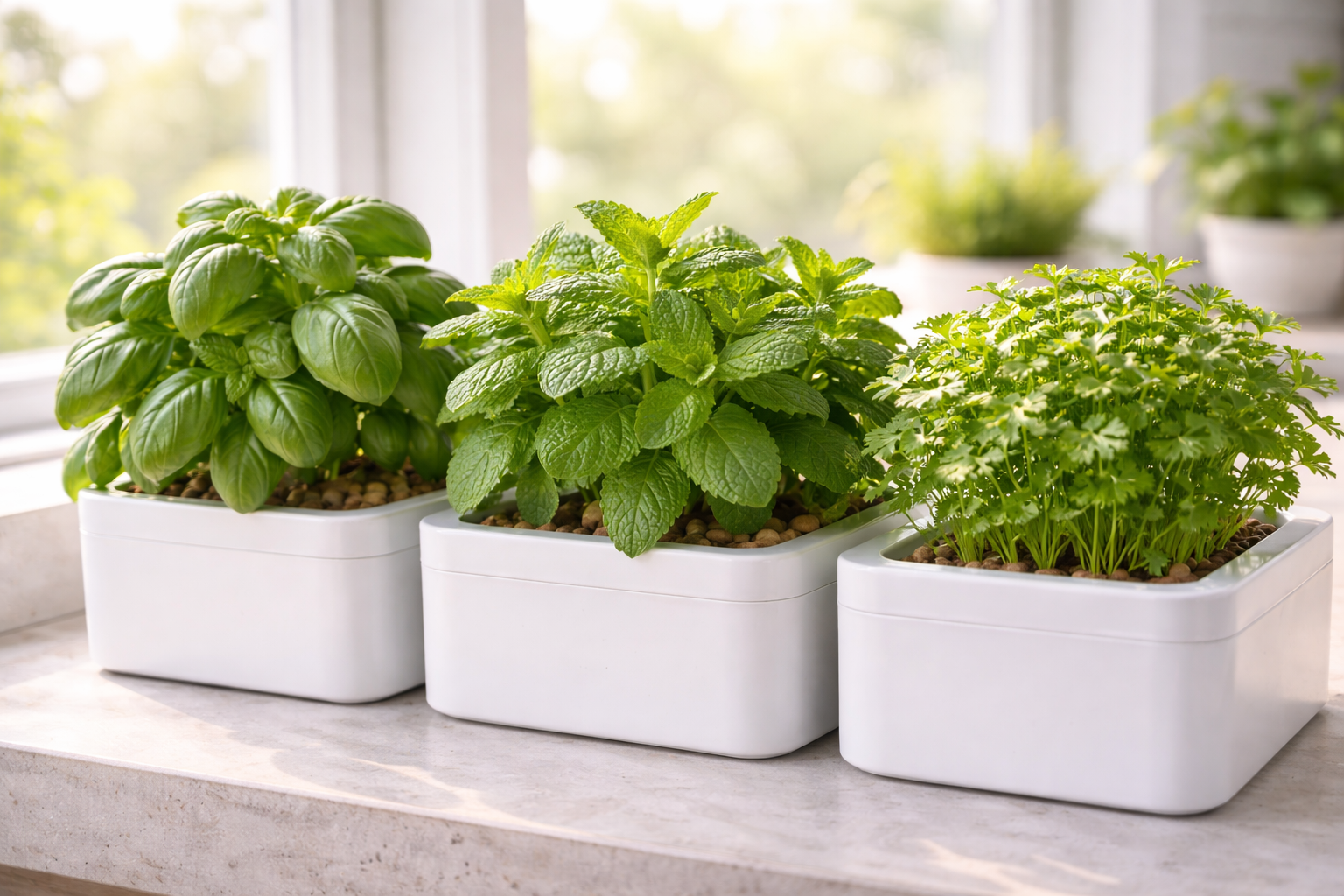
Fresh hydroponic herbs are one of the most satisfying things you can grow at home. Unlike supermarket herbs that wilt within days of purchase, your own hydroponic herbs are alive, growing, and ready to use whenever you need them. A small windowsill garden of basil, mint, and coriander can replace nearly all the cut herbs you would normally buy, paying for itself within weeks.
This guide focuses on the three essential beginner hydroponic herbs: basil, mint, and coriander. These three crops cover the majority of cuisines (Mediterranean, Middle Eastern, Asian, Mexican), grow rapidly in simple setups, and are forgiving of beginner mistakes.
🌿 The Beginner Herb Trio
Basil, mint, and coriander together cover virtually every recipe in your kitchen. Master these three hydroponic herbs and you will rarely need to buy fresh herbs from a supermarket again.
Why grow hydroponic herbs at home?
Before diving into the how, let’s address the why. Hydroponic herbs offer several advantages over both supermarket-bought herbs and traditional soil-grown herbs:
| Factor | Supermarket | Hydroponic Herbs |
|---|---|---|
| Cost (basil) | £1.50 per packet | £2 for months of supply |
| Freshness | 3-5 days before wilting | Cut as needed, always fresh |
| Flavour | Mild, often stale | Intense, vibrant, aromatic |
| Waste | Often discard half the packet | Zero waste, harvest only what you need |
#1Basil — The king of hydroponic herbs
Basil is the easiest and most rewarding of all hydroponic herbs to grow. It thrives in warm, bright conditions, grows vigorously, and produces aromatic leaves continuously for months when harvested correctly. A single basil plant in a 1-litre Kratky jar can produce more basil than most families use in a month.
| Specification | Basil |
|---|---|
| Container | 500ml-1L jar minimum |
| Light | 6+ hours direct sunlight or 14-16 hours under grow light |
| Temperature | 20-25°C ideal (basil loves warmth) |
| pH | 5.5-6.5 |
| Time to first harvest | 21-28 days from transplant |
The pinching technique
The single most important skill for growing hydroponic herbs like basil is knowing how to harvest correctly. Never just pull individual leaves — this stresses the plant and reduces overall production. Instead, pinch or cut the entire stem just above a leaf node (the point where leaves branch out). The plant responds by growing two new branches from that node, doubling its productivity.
#2Mint — The unstoppable workhorse
Mint is virtually impossible to kill, which makes it perfect for absolute beginners learning to grow hydroponic herbs. It tolerates almost any pH within the broad 5.5-6.5 range, handles low light better than most herbs, and grows so aggressively that the only real challenge is keeping it from outgrowing its container.
| Specification | Mint |
|---|---|
| Container | 1-2L jar (mint grows aggressively) |
| Light | Tolerates lower light than basil, 4-6 hours direct sunlight sufficient |
| Temperature | 18-22°C ideal but tolerates wider range |
| pH | 5.5-6.5 (very tolerant) |
| Time to first harvest | 30-40 days from transplant or cutting |
Starting mint from a supermarket cutting
One of the easiest tricks with hydroponic herbs is starting mint from a supermarket cutting rather than seeds. Buy a packet of fresh mint from Tesco or Sainsbury’s, select 2-3 healthy stems, and place them in a glass of water. Within 7-10 days, white roots emerge. Once roots are 2-3cm long, transplant the cutting into your hydroponic setup. This bypasses the slow seed germination phase entirely.
🌱 Mint Variety Recommendations
- Spearmint — classic mint flavour, best for tea and cooking
- Peppermint — stronger, more menthol-forward flavour
- Moroccan mint — sweet and fragrant, traditional for mint tea
- Chocolate mint — novel flavour with subtle chocolate notes, fun for desserts
#3Coriander — The fast and tricky one
Coriander (cilantro) is the third essential herb for any hydroponic herbs garden. It grows quickly (21-30 days to harvest) and is forgiving of beginner mistakes, but it has one significant weakness: it bolts (goes to flower) rapidly in warm or stressful conditions, after which the leaves become bitter and the plant stops producing new growth.
| Specification | Coriander |
|---|---|
| Container | 500ml-1L jar |
| Light | Moderate light, avoid intense afternoon sun |
| Temperature | 16-22°C ideal (coriander prefers cooler conditions) |
| pH | 5.5-6.5 |
| Time to first harvest | 21-30 days from transplant |
How to prevent bolting
The trick with coriander is to keep conditions cool and stress-free. Position the jar away from radiators, hot south-facing windows during summer, and any heat sources. Harvest leaves early and frequently — never let the plant get stressed. Most importantly, sow new coriander seeds every 2-3 weeks for a continuous supply rather than expecting one plant to last for months.
⚠️ The Bolting Warning Sign
If your coriander suddenly produces a tall central stem with feathery, dill-like leaves, it has bolted. Harvest the remaining good leaves immediately, then start a new jar. Bolted coriander will not return to producing flat, broad leaves.
Building a windowsill hydroponic herb garden
The best way to grow hydroponic herbs is not with one large container, but with multiple small jars on a windowsill. This approach lets you grow multiple varieties simultaneously, replace individual plants as needed, and never run out of any one herb.
The recommended starter setup
| Jar # | Herb | Why |
|---|---|---|
| 1 | Basil | Most-used herb in most cuisines |
| 2 | Mint | Continuous production, many uses |
| 3 | Coriander | Asian and Mexican cooking essential |
| 4 | Coriander (staggered) | Started 2 weeks after jar 3 for continuous supply |
This four-jar setup costs approximately £25-35 for the initial investment and provides a continuous supply of fresh hydroponic herbs indefinitely. Total ongoing cost: pennies per month for new seeds and small amounts of nutrients. For the complete 30-minute build process, see our kitchen herb garden guide.
Common hydroponic herbs problems
Hydroponic herbs are forgiving but not foolproof. Watch for these common issues:
| Symptom | Cause | Fix |
|---|---|---|
| Yellow leaves on basil | pH problems | Test and adjust to 5.5-6.5 — see our plants turning yellow guide |
| Slow basil growth | Insufficient light | Basil needs more light than other herbs — add a grow light |
| Mint becoming root-bound | Container outgrown | Upgrade to a larger container or take a cutting and start fresh |
| Coriander bolting | Too warm or stressed | Move to a cooler location and start new seeds |
| Leggy seedlings | Not enough light during germination | Add a grow light from day one |
| Root rot, slimy brown roots | Lack of oxygen | See our hydroponic root rot guide for rescue and prevention |
Beyond the basic three: expanding your hydroponic herbs collection
Once you have mastered basil, mint, and coriander, you can confidently add more hydroponic herbs to your collection. The following herbs are slightly more demanding but still well within reach for intermediate beginners.
Parsley
Parsley is slow to germinate (10-14 days) but once established, it produces reliably for months. Both flat-leaf (Italian) and curly varieties grow well as hydroponic herbs. Parsley tolerates lower light conditions than basil, making it ideal for east or west-facing windowsills.
Chives
Chives are perennial hydroponic herbs, meaning a single plant produces continuously for months or even years. They tolerate a wide pH range and bounce back quickly from harvesting. Snip leaves close to the base with scissors, and they regrow within a week.
Oregano
Oregano is hardy and adaptable to hydroponic systems. It needs a slightly larger container than basil (1-2 litres) but rewards the small upgrade with intensely flavoured leaves perfect for Italian cooking. Like basil, regular pinching encourages bushier growth.
Thyme
Thyme is one of the more challenging hydroponic herbs because it prefers drier conditions than most leafy plants. However, it works in hydroponic systems if you provide adequate airflow around the foliage and avoid overcrowding. Thyme grows slowly but lasts for many months once established.
Storing and using fresh hydroponic herbs
One of the joys of growing your own hydroponic herbs is harvesting only what you need. There is no need to store herbs in the fridge when fresh leaves are growing on your windowsill. However, occasionally you may want to harvest more than you need immediately.
Short-term storage (1-3 days)
For herbs you will use within a few days, place freshly cut stems in a small glass of water on the kitchen counter, like flowers in a vase. Cover loosely with a plastic bag or cling film to retain humidity. This keeps basil and mint fresh for 3-5 days at room temperature.
Long-term preservation
For longer storage, the best method is freezing. Chop herbs finely, pack into ice cube trays, top with olive oil or water, and freeze. Pop out a cube whenever you need a dose of fresh-tasting herbs in cooking. Alternatively, dry herbs by hanging small bundles upside down in a warm, dark place for 1-2 weeks, then crumble into airtight jars.
💡 The Continuous Production Mindset
The biggest mindset shift with hydroponic herbs is moving from “buy when needed” to “harvest as needed.” Once you have a productive setup, you stop thinking of herbs as a shopping list item and start thinking of them as something always available. This single shift transforms how you cook.
Frequently asked questions about hydroponic herbs
Can I grow all three herbs in the same container?
Generally no. Each herb has different optimal conditions — basil wants warm/bright, mint tolerates anything, coriander wants cool and stress-free. Using separate jars for each lets you position them in their best spots on your windowsill. It also means one herb’s problems don’t affect the others.
How often should I harvest my hydroponic herbs?
At least once a week for basil and mint, ideally every 3-5 days. Regular harvesting encourages vigorous new growth. For coriander, harvest smaller amounts more frequently (every 5-7 days) to prevent bolting. Chives and parsley can be cut less often — every 2-3 weeks works well.
Why is my basil producing smaller leaves than supermarket basil?
Three common causes: (1) insufficient light, (2) plant too young — first leaves are always smaller than mature production, (3) too-small container restricting root development. Commercial greenhouse basil benefits from perfect controlled conditions you can’t quite match at home, but your leaves will still taste better and be larger after the 4-6 week mark.
Can I grow hydroponic herbs year-round in the UK?
Yes, but winter (November-February) requires supplemental lighting. A £10-15 clip-on LED grow light on a 14-hour timer provides sufficient supplementation. From March to October, south-facing windowsills provide adequate natural light for all three herbs. The lowest-light UK months are genuinely too dim for basil without help.
How do I tell if my coriander is about to bolt?
Look for these signs in order: (1) the plant stops producing new flat leaves, (2) new growth comes out feathery and dill-like instead, (3) a tall central stem starts rising from the middle of the plant, (4) tiny white or pink flower buds appear at the top. Catch it at stage 1 or 2 by harvesting all the good leaves and starting new seeds.
What nutrient strength should I use for hydroponic herbs?
Half strength works beautifully for all three herbs. Full strength can cause nutrient burn in sensitive herbs like basil. Most UK-available nutrients recommend 5ml per litre for full strength — use 2.5ml per litre for herbs. If you see leaf tip browning, see our nutrient burn guide.
Can I grow hydroponic herbs in a Kratky jar setup?
Yes — Kratky is actually ideal for herbs because they don’t need massive amounts of water and the passive system is virtually foolproof. A standard 1L mason jar Kratky works perfectly for basil, mint, or coriander. See our kratky jar setup guide for the 10-minute build.
Why do my hydroponic herbs taste stronger than supermarket herbs?
Three reasons: (1) harvested minutes before use, so no flavour loss from storage, (2) grown to higher nutrient concentration that increases essential oil production, (3) not sprayed with anything to extend shelf life. The difference is most dramatic with basil — home-grown hydroponic basil is probably 2-3x more aromatic than the supermarket version.
Related posts you might find useful
- Kitchen Herb Garden in 30 Minutes — Complete build process for this 4-jar setup
- 10 Easy Hydroponic Plants Almost Impossible to Kill — Herbs alongside other easy crops
- Fastest Hydroponic Crops — Coriander is one of the fastest
- Hydroponic Lettuce: Week-by-Week Guide — Companion crop for herbs
- Kratky Jar Setup in Under 10 Minutes — The simplest system for herbs
- Apartment Hydroponics Complete Guide — Windowsill setups for tight spaces
- Hydroponic Plants Turning Yellow — Troubleshoot herb-specific yellowing
Master Every Herb and Vegetable
Our 27-page ebook Best Plants to Grow Hydroponically covers 40+ herbs and vegetables with detailed growing profiles, harvest techniques, and crop-specific tips for each.
✓ 40+ crop profiles · ✓ Harvest techniques · ✓ Variety comparisons · ✓ Instant PDF download