
One of the biggest misconceptions about hydroponics is that it is expensive. It can be, if you buy premium equipment and smart garden systems. But it does not have to be. You can grow fresh food hydroponically for less than the cost of a takeaway dinner.
This post breaks down the exact costs for four different starting points, from the absolute cheapest to a premium setup. Every item is listed with its real price so you can budget accurately for UK growers in 2026.
💷 The Quick Answer
Starting hydroponics at home costs £15-25 for a Kratky jar, £25-45 for a DWC bucket, £60-200 for a smart garden, or £100-300 for a full shelf setup. Ongoing costs average £5-15/month — typically half what you’d spend on supermarket herbs and lettuce.
The 4 main budget tiers at a glance
| Option | Setup Cost | Best For | Year 1 Total |
|---|---|---|---|
| #1 Kratky jar | £15-25 | Absolute beginners | £30-50 |
| #2 DWC bucket | £25-45 | Faster growth, bigger plants | £55-85 |
| #3 Smart garden | £60-200 | Zero learning curve | £175-415 |
| #4 Full home setup | £100-300 | Maximum production | £165-375 |
The 4 budget tiers explained in detail
#1The Kratky jar (£15-25) — Cheapest possible entry
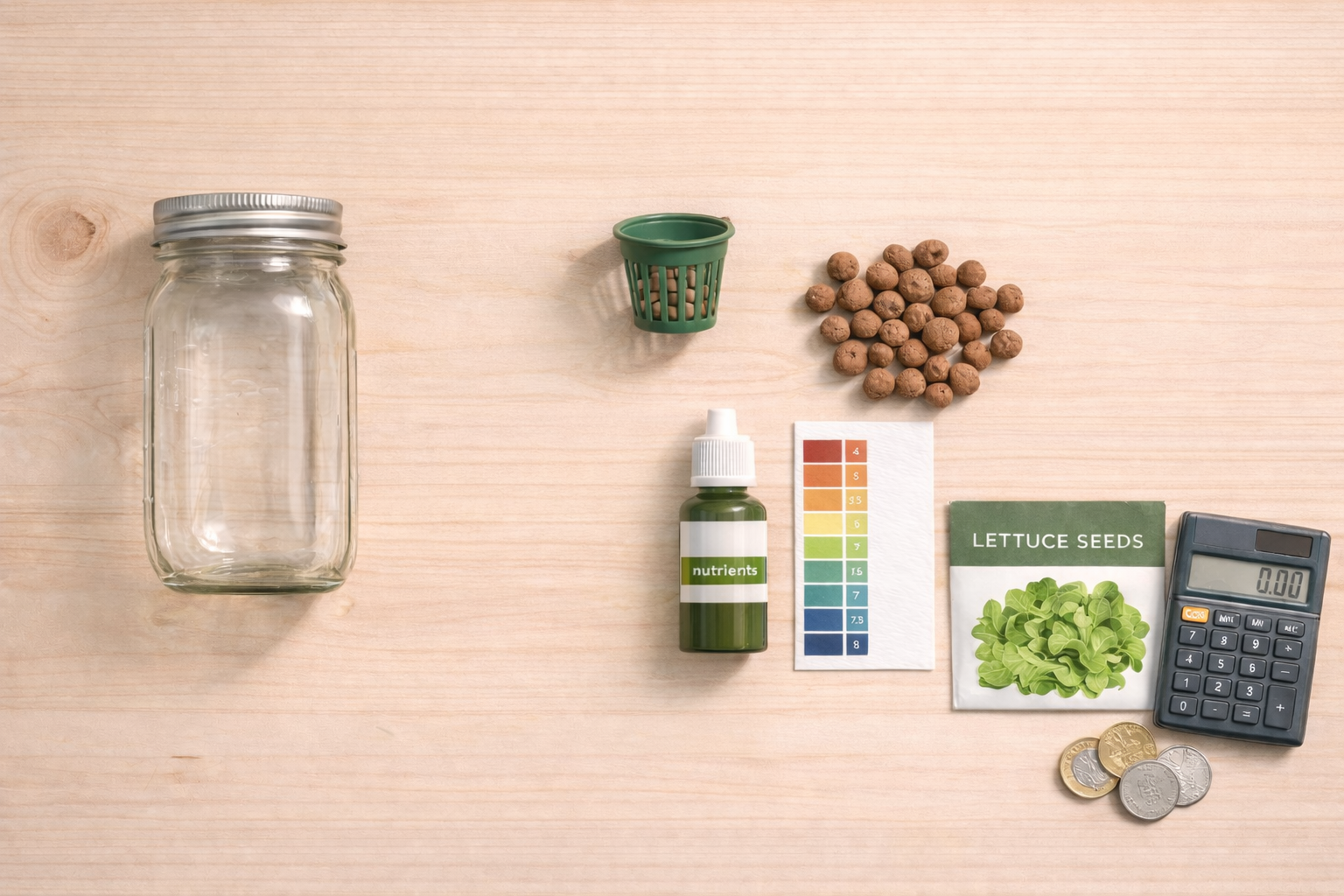
This is the absolute cheapest way to start. One jar, one plant, zero electricity. For the complete build, see our mason jar hydroponics guide.
| Item | Cost |
|---|---|
| Mason jar or food container (wrap in foil if clear) | £1-3 |
| Net pot (3-inch) | £0.50 (or £3-5 for pack of 10) |
| Clay pebbles (small bag) | £3-5 |
| Hydroponic nutrients (small bottle, lasts months) | £8-12 |
| pH test drops | £4-6 |
| pH Down solution | £3-5 |
| Lettuce or herb seeds | £1-2 |
| Total initial cost | £15-25 |
However, the nutrients, pH drops, and pH Down last for 6 to 12 months across dozens of grows. Your cost per subsequent grow drops to just £1-3 (seeds and a little growing medium).
#2The DWC bucket (£25-45) — Faster and more productive
A single 5-gallon DWC bucket grows one large plant or a cluster of herbs. It is faster than Kratky due to the air pump providing continuous oxygenation. For the complete step-by-step build, see our £30 hydroponic system guide.
| Item | Cost |
|---|---|
| 5-gallon bucket with lid (B&Q, Wilko, Screwfix) | £3-5 |
| Net pot (3 or 6-inch) | £0.50-2 |
| Air pump (small aquarium pump) | £5-12 |
| Air stone and airline tubing | £3-5 |
| Clay pebbles | £3-5 |
| Hydroponic nutrients | £8-12 |
| pH test kit and pH Down | £7-10 |
| Seeds | £1-2 |
| Total initial cost | £25-45 |
Electricity cost for the air pump is negligible (a few pence per month). The pump runs 24/7 but uses very little power.
#3The countertop smart garden (£60-200) — Zero learning curve
Pre-built systems like the Click and Grow Smart Garden 3 or LetPot include everything: container, LED grow light, water reservoir, and pre-seeded plant pods. You literally plug it in, add water, and wait. For detailed reviews, see our 7 best hydroponic starter kits guide.
| System | Price | Notes |
|---|---|---|
| Click and Grow Smart Garden 3 | £60-100 | 3 pods, gold standard |
| Click and Grow Smart Garden 9 Pro | £150-200 | 9 pods, app control |
| LetPot LPH-SE | £60-90 | 12 pods, WiFi |
| Replacement pods (3-pack) | £10-15 | Ongoing recurring cost |
These are the most expensive upfront but the most hands-off option. They are excellent for people who want fresh herbs without learning the science behind hydroponics. The downside is the ongoing cost of replacement pods, which are more expensive per plant than buying seeds and nutrients separately.
#4The full home setup (£100-300) — Maximum production
For growers who want maximum production, a shelf-based growing station with multiple systems and grow lights:
| Item | Cost |
|---|---|
| Metal shelving unit (3-5 shelves, B&Q or Argos) | £25-50 |
| LED grow lights (1 per shelf — see our best grow lights guide) | £40-80 total |
| Timer for lights | £5-10 |
| 6-12 Kratky jars or 2-3 DWC buckets | £10-30 |
| Net pots, clay pebbles, growing medium | £10-15 |
| Nutrients (larger bottle) | £10-18 |
| pH testing and adjustment | £7-12 |
| Seeds (multiple varieties) | £5-10 |
| Total initial cost | £100-300 |
This setup can produce a continuous supply of herbs and leafy greens year-round, potentially saving £20-50 per month on fresh produce compared to supermarket prices.
Ongoing monthly costs once set up
Once you have your initial setup, the ongoing costs are minimal:
| Cost Item | Monthly Cost | Notes |
|---|---|---|
| Seeds | £1-5 | Pennies per plant; packets last months |
| Nutrients | £2-5 | Dry Masterblend is significantly cheaper |
| Electricity (grow lights) | £2-5 | For small 1-2 light setup in UK |
| Growing medium replacement | £1-3 | Clay pebbles are reusable indefinitely |
| pH testing supplies | £1-2 | Drops last 200+ tests |
| Monthly total | £5-15 | vs £20-40 on supermarket produce |
The hidden savings: home hydroponic vs supermarket
The cost calculation often misses the savings. Fresh basil in a UK supermarket costs £1-1.50 for a small packet that wilts in 3 days. A single hydroponic basil plant produces more basil than you can use for 3-4 months, at a total cost of about £2.
| Crop | Supermarket Cost | Hydroponic Cost | Savings Factor |
|---|---|---|---|
| Basil (3-4 months supply) | £18-25 | ~£2 | 9-12x cheaper |
| Lettuce head | £0.80-1.50 | ~£0.50 | 2-3x cheaper |
| Coriander (packet) | £1.20 | ~£0.30 | 4x cheaper |
| Mint (monthly supply) | £4-6 | ~£0.40 | 10-15x cheaper |
| Strawberries (punnet) | £2.50-4 | ~£1 | 2-4x cheaper |
For a household that regularly buys fresh herbs and salad greens, a basic hydroponic setup pays for itself within 2-3 months and saves money every month thereafter.
Our recommendation for your first purchase
🎯 Quick Recommendation
Start with a Kratky jar (£15-25). It is the lowest-risk, lowest-cost entry point. If you enjoy the process and want to scale up, invest in a shelf with grow lights and multiple jars. The total cost for a productive home herb garden is £60-100, which pays for itself within a few months.
Do not buy a premium system before you have grown your first plant. The expensive systems do not teach you anything that a mason jar does not. Start simple, learn the basics, and upgrade when you know what you actually need.
Frequently asked questions about hydroponic costs
Is hydroponics actually cheaper than buying fresh produce?
Yes, significantly. A household that buys fresh herbs and lettuce weekly spends £20-40/month at UK supermarkets. A home hydroponic setup costs £5-15/month in consumables and produces equivalent or better quality. Break-even typically happens in 2-3 months for Kratky setups, 3-4 months for DWC, and 6-8 months for premium smart gardens.
What’s the cheapest possible way to start hydroponics?
A recycled plastic bottle + kitchen sponge + foil, combined with proper hydroponic nutrients. Total cost: £15-17 (essentially just the cost of the nutrients and pH supplies, since the bottle is free). See our plastic bottle hydroponics guide for the zero-cost container approach, or our 5 pound shop hydroponic systems for other ultra-cheap options.
Why are smart garden pods so expensive?
Pod-based smart gardens use a razor-and-blades business model — the hardware is cheap, but the recurring pod costs generate the manufacturer’s profit. A single pod costs pennies to manufacture but sells for £3-5. Over a year, pod costs often exceed the original garden price. Refilling pods with your own seeds saves 70-80% of ongoing costs.
Can I use regular houseplant fertiliser to save money?
No — this is the one place where saving money fails. Regular plant food lacks the specific calcium, magnesium, and trace element balance hydroponic plants need. A £10 bottle of proper hydroponic nutrients (Formulex, General Hydroponics) produces dramatically better results than £2 general plant food. This is genuinely the one item worth paying for.
How much does electricity cost for a home hydroponic setup?
In UK energy prices (approximately 27-30p/kWh), a typical setup with 1-2 grow lights and 1-2 air pumps running 14-24 hours/day costs £3-8/month. A larger setup with 3-4 grow lights costs £8-15/month. Compare this to the £20+ savings on produce — the electricity is easily offset.
Are there hidden costs I should budget for?
Minor ongoing costs: replacement air stones (£2-4 every 6 months), replacement seed packets as varieties rotate (£1-2 each), and eventual probe replacement for digital pH meters (£10-20 after 1-2 years). Nothing unexpected if you’ve budgeted for the initial consumables.
Does hydroponics save water compared to soil gardening?
Yes, significantly. Hydroponic systems use 80-90% less water than soil gardening because water recirculates rather than draining through soil. For a UK household on water meters, this can translate to £20-40/year savings versus outdoor gardening. It’s also why hydroponics is viable in apartments where watering plants regularly isn’t practical.
What’s the ROI timeline for different setups?
Rough payback periods assuming £20-40/month saved on produce: Kratky jar breaks even in 1-2 months. DWC bucket breaks even in 2-3 months. Smart garden (Click and Grow 3) breaks even in 4-6 months (longer due to ongoing pod costs). Full shelf setup breaks even in 5-10 months but saves the most long-term.
Related posts you might find useful
- How to Start Hydroponics with Mason Jars — The cheapest option explained
- The £30 Hydroponic System That Actually Works — Mid-tier DWC build
- 5 Pound Shop Hydroponic Systems — Ultra-budget alternatives
- DIY Hydroponics with Plastic Bottles — Zero-cost container
- Cheap vs Expensive Hydroponic Kits — Full comparison analysis
- 7 Best Hydroponic Starter Kits Tested — Premium tier reviews
- Hydroponic Nutrients for Beginners — The one item worth paying for
Build Your First System on a Budget
Our 22-page ebook Build Your First Hydroponic System on a Budget includes detailed shopping lists, cost comparisons, and step-by-step setup instructions for 5 systems from £10 to £50.
✓ 5 detailed builds with photos · ✓ UK shopping lists · ✓ Cost-saving strategies · ✓ Instant PDF download