
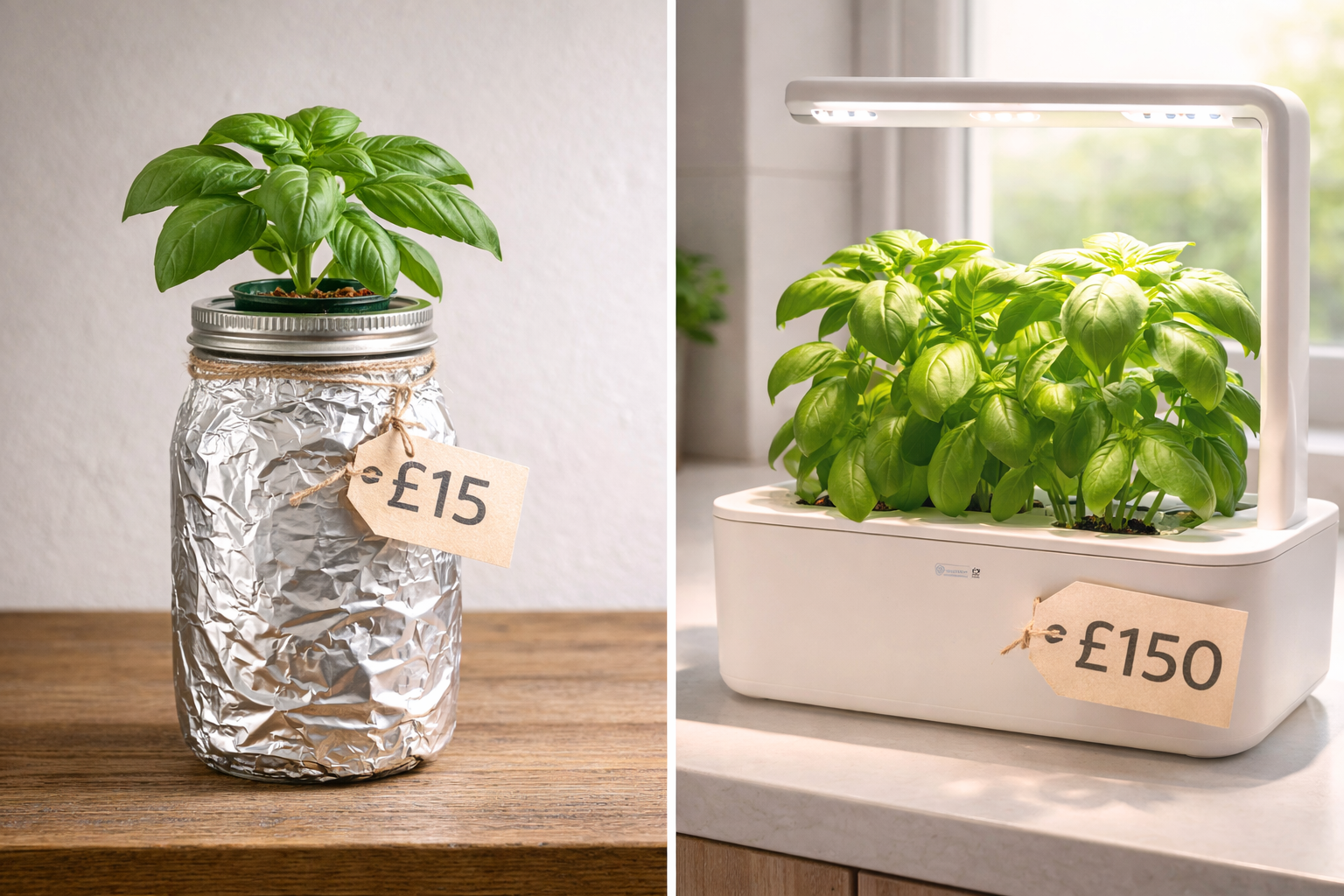
Walk into any hydroponics discussion online and you will find two camps giving completely opposite advice. Camp one insists you need to invest in quality equipment from the start. Camp two says a mason jar and some nutrients is all you will ever need. If you are looking for the best hydroponic starter kit comparison, the honest answer is that both camps are right, depending on what you want from the experience.
This post compares budget DIY setups against mid-range and premium pre-built kits across every factor that actually matters to a beginner: growth quality, ease of use, ongoing costs, durability, aesthetics, and learning value. By the end, you will know exactly which option makes sense for your situation.
💰 The Quick Verdict
Budget DIY wins on cost, learning value, and longevity. Premium systems win on convenience, aesthetics, and zero learning curve. The plants themselves grow equally well in both — it’s a values decision, not a quality decision.
The three tiers we are comparing
To make this comparison fair and practical, I have grouped the options into three price tiers that represent the real choices available to beginners in 2026:
Tier 1Budget DIY (£15-30)
Kratky mason jars, plastic bottle gardens, homemade DWC buckets. You source the components yourself and build the system from scratch. Skills learned apply to every future system you’ll ever build. See our kratky jar setup guide for the cheapest entry point.
Tier 2Mid-range pre-built (£60-100)
Click and Grow Smart Garden 3, LetPot 12-pod, Ahopegarden, iDOO systems. These are plug-and-play countertop units with built-in LED lights and pre-seeded pods. See our 7 best hydroponic starter kits guide for detailed reviews.
Tier 3Premium systems (£150-300)
Click and Grow Smart Garden 9 Pro, Plantaform Rejuvenate, Lettuce Grow Farmstand Nook, vertical tower systems. Larger capacity, app connectivity, and advanced features. See our 7 best smart hydroponic systems guide for the full premium tier overview.
At a glance: how the three tiers compare
| Factor | Budget DIY | Mid-range | Premium |
|---|---|---|---|
| Upfront cost | £15-30 | £60-100 | £150-300 |
| Annual running cost | £20-40 | £100-180 | £150-250 |
| Setup time | 15-30 mins | 5 mins | 10-20 mins |
| Learning curve | 1-2 grows | None | None |
| Plant capacity | Unlimited (scale jars) | 3-12 plants | 9-30 plants |
| Longevity | Indefinite | 3-5 years | 3-5 years |
| Growth quality | Equal ✓ | Equal ✓ | Equal ✓ |
Growth quality: does expensive equipment grow better plants?
This is the question every beginner wants answered, and the honest answer is uncomfortable for premium kit manufacturers: a £2 mason jar grows lettuce and basil just as well as a £200 smart garden. The plant does not know or care what container it is sitting in. It responds to three things: the nutrient solution, the pH of that solution, and the light it receives.
If your nutrient solution is correctly mixed, your pH is in the 5.5-6.5 range, and your plant gets adequate light, it will grow equally well in a recycled jam jar or a designer planter with WiFi connectivity. The chemistry is identical because the chemistry does not change based on the price of the container. For the complete nutrient basics, see our hydroponic nutrients for beginners guide.
Where premium systems have a slight edge is in consistency. Built-in LED lights provide reliable, calibrated light regardless of your window orientation, the season, or the weather. Automated timers ensure the light schedule never varies. Some systems monitor water levels and alert you via an app when topping up is needed. These features reduce the chance of human error, which is genuinely the primary cause of plant failure in hydroponics.
But consistency is not the same as growth quality. A mason jar on a south-facing windowsill with properly mixed nutrients and correct pH will match or outperform any smart garden in growth speed, plant size, and flavour. The plants themselves are biochemically identical regardless of the system they grow in.
Ease of use: where premium kits genuinely shine
This is the legitimate advantage of pre-built systems, and it should not be dismissed. A Click and Grow Smart Garden arrives at your door, you remove it from the box, plug it in, drop in a seed pod, add water to the reservoir, and walk away. The integrated LED light turns on and off automatically. The passive wicking system delivers water to the roots without any pump. The pod contains the growing medium, nutrients, and seeds in one convenient capsule. Zero knowledge is required.
A DIY mason jar, by contrast, requires you to source 6-8 separate components from different shops, mix nutrients according to product instructions, test and adjust pH, germinate seeds separately on a paper towel, and transplant the seedling once it develops true leaves. None of these individual tasks are difficult — each takes 2-5 minutes — but collectively they require you to learn something about how plants grow and what they need.
For people who want fresh herbs on their kitchen counter without engaging with any science whatsoever, a smart garden is the right product. It solves the problem of “I want basil but I don’t want to learn hydroponics.”
⚠️ The Hidden Trade-off
Premium kit ease comes with a significant downside rarely discussed: you learn nothing transferable. If something goes wrong, you cannot troubleshoot. You cannot adapt to growing crops not available as pods. You cannot scale up. The smart garden keeps you as a consumer rather than developing you as a grower.
Ongoing costs: where DIY wins decisively
This is where the economics shift dramatically and permanently in favour of DIY setups. The best hydroponic starter kit comparison must include long-term costs, not just the purchase price:
| Ongoing Cost | Budget DIY | Mid-range Smart Garden |
|---|---|---|
| Per grow cycle | £1-3 | £3-5 per pod |
| Seed packet | £1-2 (20-50 plants) | £10-15 (3-pack) |
| Nutrients (annual) | £8-12 (lasts months) | Included in pods |
| pH supplies (annual) | £7-10 (lasts months) | Not needed |
| Full-year total | £20-40 | £100-200+ |
Over a year of regular growing, the DIY approach costs approximately £20-40 in consumables for continuous production. A smart garden costs £100-200 or more in pod replacements. The smart garden is 3-5 times more expensive to operate than a DIY system growing identical plants.
Some smart garden brands do allow you to use your own seeds with refillable pods, which reduces the ongoing cost significantly. If you are considering a smart garden, check whether this option exists for your chosen brand before purchasing. It can be the difference between a reasonable ongoing cost and an expensive habit.
Durability and longevity
A mason jar lasts forever. Literally. There are no parts to wear out, no electronics to malfunction, no pumps to seize, and no LEDs to dim. Clay pebbles last indefinitely. A plastic bucket lasts years. The most complex component in a DIY setup is an air pump (only needed for DWC), which costs £5-12 to replace if it eventually fails after years of continuous use.
Smart gardens contain LED lights that gradually dim over time (typically 2-3 years before degradation becomes noticeable), small pumps that can fail, and electronic control boards that may malfunction. When a £100 smart garden stops working after 3 years, your options are limited to contacting customer support, buying replacement parts (if available), or purchasing a new unit.
The DIY approach has a clear longevity advantage because there is almost nothing that can break. And the individual components that could eventually need replacement (an air stone, £2; an air pump, £8; a net pot, £0.50) are cheap and universally available from Amazon UK.
Aesthetics: the honest case for premium
This is the one area where premium systems genuinely and unambiguously outperform DIY setups. A Click and Grow Smart Garden looks like a piece of modern Scandinavian kitchen furniture. It is sleek, minimal, and attractive on a countertop. Guests notice it and ask about it. It fits the aesthetic of a well-designed kitchen.
A foil-wrapped mason jar, by contrast, looks like a foil-wrapped mason jar. It is functional but it does not win design awards.
If appearance matters to you — and for a kitchen counter that you see every day, it is completely reasonable that it does — a pre-built system may be worth the premium. You are paying for industrial design and visual appeal as much as growing functionality. There is nothing wrong with valuing aesthetics in your living space.
🎨 Making DIY Look Great
DIY setups can look attractive with minimal effort:
- Paint mason jars with chalk paint or acrylic for attractive containers
- Use matching jars on a wooden tray with small labels for each herb
- Build a neat shelf with uniform jars and a strip light
- Intentional cottage-kitchen aesthetic is 15 minutes of craft time away
Learning value: the hidden cost of convenience
This factor is almost never discussed in product comparisons, but I believe it is the most important for long-term satisfaction with the hobby.
When you build a DIY system, you learn how hydroponic growing actually works. You understand why pH matters, what nutrients do, how light affects growth, and how to diagnose problems by looking at your plants. This knowledge compounds over time. Each grow makes you more capable. Within a few months, you can confidently grow any crop in any system because you understand the underlying principles.
When you use a smart garden exclusively, you learn how to add water and insert pods. If the system works, you credit the product. If it fails, you contact customer support. You remain dependent on the brand for your growing success.
The DIY grower who starts with a £15 mason jar and graduates to a multi-bucket DWC system producing tomatoes, peppers, and a dozen herbs has developed a genuine skill. The smart garden user who has maintained the same countertop unit for three years has developed a purchasing habit. Both produce fresh herbs, but only one has learned something lasting.
Our honest recommendation for every situation
Scenario 1You want to learn hydroponics and get the best long-term value
Start with a DIY Kratky mason jar (£15-25). The skills you learn transfer to every system. You will understand nutrients, pH, light, and plant biology from the ground up. This foundation is worth more than any smart garden. See our mason jar hydroponics guide for the complete step-by-step.
Scenario 2You want fresh herbs with zero effort and zero learning curve
Buy a Click and Grow Smart Garden 3 (£60-100). It is a genuinely excellent product for people who want basil on their counter without becoming hobby growers. Accept the higher ongoing pod costs as the price of convenience. See our 7 best hydroponic starter kits guide for alternatives at this price point.
Scenario 3You want maximum food production for your money
Build a shelf growing station with 6-12 DIY Kratky jars and LED strip lights (£60-100 total). This setup produces far more food than any comparably priced smart garden and costs nearly nothing to operate once built. Pair with our best grow lights under £100 guide for lighting.
⚠️ What You Should Never Do
Spend £200 or more on a premium system as your very first hydroponic experience. If you discover after a month that you do not enjoy growing (it happens — not everyone does), you have wasted a significant amount of money. A £15 mason jar lets you test whether hydroponics is for you with minimal financial risk. Start cheap, learn the basics, and invest more only when you know what you actually want.
Frequently asked questions about cheap vs expensive hydroponic kits
Will cheap hydroponic kits actually work or am I wasting my money?
Cheap DIY hydroponic kits work identically to expensive ones for growing plants. A £15-25 Kratky mason jar setup produces the same quality lettuce and herbs as a £200 smart garden. The difference is convenience and aesthetics, not plant performance. You are not wasting money — you are choosing function over form.
Are the Amazon budget smart gardens (iDOO, Ahopegarden) as good as the brand names?
Functionally very similar. Build quality is lower and customer support is minimal, but the core growing experience works. These budget smart gardens produce equivalent results to Click and Grow or AeroGarden at roughly half the price. The trade-off is reliability over 2-3 years — brand names are more likely to still work in year three.
Can I upgrade from DIY to premium later if I want to?
Absolutely — and the DIY skills you learn first make you a much smarter premium buyer. You’ll understand what features actually matter, what’s marketing fluff, and what plants thrive in which system. Starting cheap is literally the best preparation for eventually going premium if that’s what you want.
Why are smart garden pods so expensive?
Pods cost £3-5 each because they’re a razor-and-blades business model — the garden itself is priced at or near cost, and manufacturers make their profit on the recurring pod sales. A single pod costs pennies to manufacture but sells for £3-5. This is why refilling pods with your own seeds saves 70-80% of ongoing costs.
Is a £300+ premium system ever worth it for a home grower?
Rarely. Premium systems make sense for commercial growers, passionate hobbyists who’ve mastered the basics and want advanced features, or people with significant disposable income who value industrial design. For most home growers, £300+ buys aesthetics and marginally better convenience, not better plants.
Can I get tomatoes and peppers from a cheap DIY setup?
Yes, but you need to scale up from a mason jar to a DWC bucket (still under £30). Fruiting crops need more root space than leafy greens. See our £30 hydroponic system guide for the right DIY build for fruiting plants.
What happens if I outgrow a DIY setup?
You scale it up. Add more jars. Build a dedicated shelf. Upgrade to vertical towers. Every skill and consumable transfers. With a smart garden, “outgrowing” means replacing the entire unit with a larger model — potentially throwing away a £100 investment.
How do I know if hydroponics is even for me?
The £15 mason jar test. Build one DIY setup, grow lettuce or basil for 6 weeks, and see if the experience is satisfying. If yes, you can confidently scale up. If no, you’ve spent the price of a pub dinner to find out. Any larger financial commitment first is premature.
Related posts you might find useful
- How to Start Hydroponics with Mason Jars — The cheapest working DIY method
- The £30 Hydroponic System That Actually Works — Scale up from jars
- Hydroponic Cost Breakdown — Detailed 4-tier cost analysis
- 7 Best Hydroponic Starter Kits Tested — Full starter kit comparison
- AeroGarden vs DIY Hydroponics — Head-to-head cost comparison
- 7 Best Smart Hydroponic Systems — The premium tier explained
- Kratky Method Hydroponics — The #1 DIY approach explained
Build Your First System on a Budget
Our 22-page ebook Build Your First Hydroponic System on a Budget covers step-by-step DIY builds, complete shopping lists with UK prices, and cost-saving strategies for every system type.
✓ Step-by-step DIY builds · ✓ UK shopping lists · ✓ Cost-saving strategies · ✓ Instant PDF download