
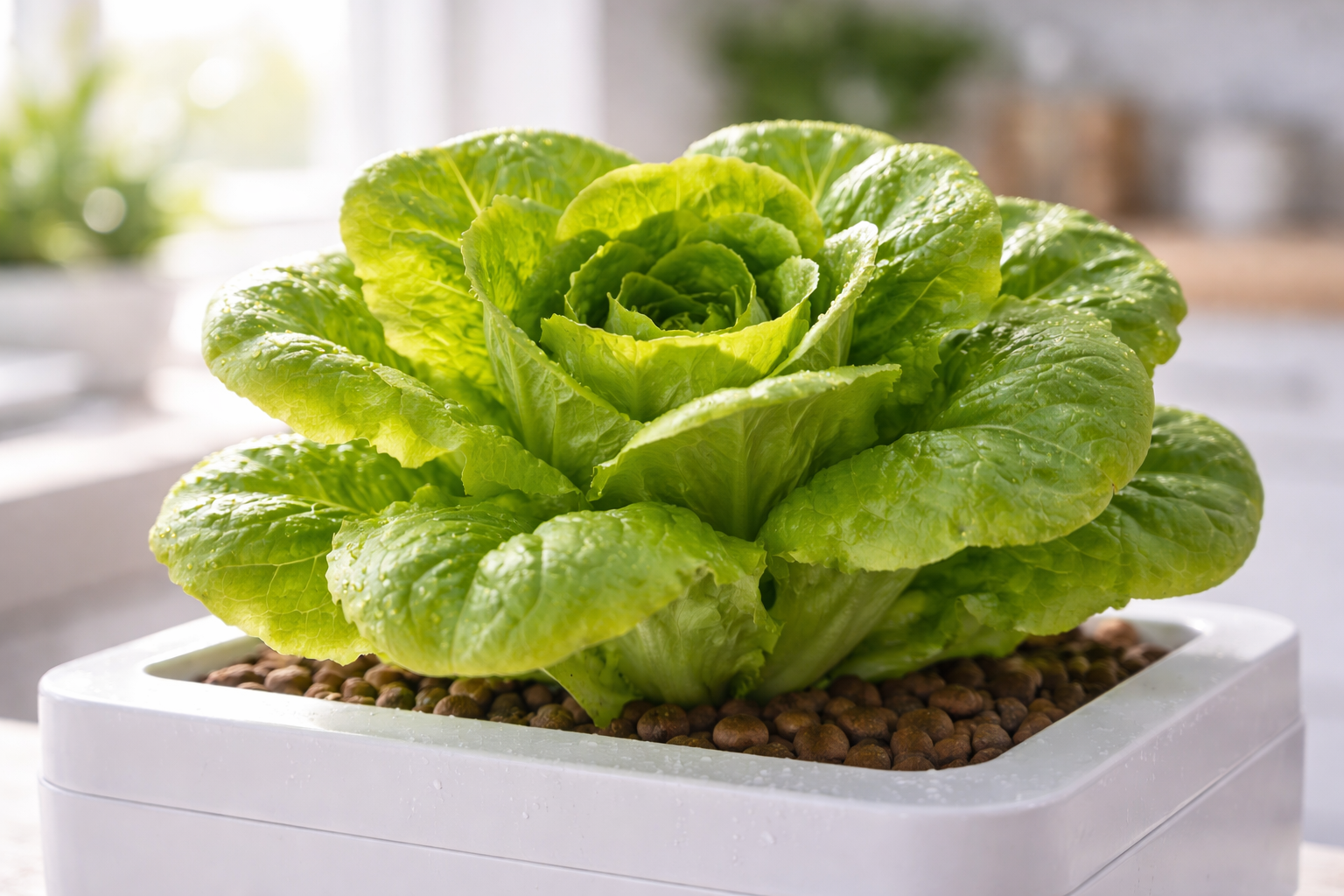
Hydroponic lettuce is the gateway crop for beginners, and for good reason. It grows fast (5-6 weeks from seed to harvest), thrives in small containers, tolerates beginner mistakes, and produces tender, sweet leaves that put supermarket lettuce to shame. If you grow nothing else hydroponically, grow hydroponic lettuce — it is the most satisfying introduction to soilless growing you can choose.
This complete week-by-week guide walks you through every stage of growing hydroponic lettuce from seed to harvest. By following this timeline, you will know exactly what to expect at each stage, what to do, and what problems to watch for.
🥬 What You Will Achieve
By following this guide, you will harvest a full head of fresh hydroponic lettuce in 35-42 days using approximately 20 minutes of total active time spread across 6 weeks.
What you need before starting
Gather these supplies before beginning your hydroponic lettuce grow. Total cost for first-time growers: approximately £15-25. Subsequent grows cost just £1-3 because you reuse the equipment.
🛒 Complete Shopping List
| 1L wide-mouth jar or container Wilko, IKEA, or recycled jam jar |
£1-3 |
| 3-inch net pot Amazon UK 10-pack |
£0.50 |
| Clay pebbles (small bag) Amazon UK or garden centre |
£3-5 |
| Hydroponic nutrients Formulex or similar UK brand |
£8-12 |
| pH test kit + pH Down Drop type preferred for beginners |
£7-10 |
| Lettuce seeds Suttons, Thompson & Morgan, or supermarket |
£1-2 |
| Total Cost | £20-32 |
Best lettuce varieties for hydroponic growing
Not all lettuce varieties perform equally well in hydroponic systems. The best choices for hydroponic lettuce are loose-leaf and butterhead types that grow quickly and stay compact. Avoid large iceberg or romaine varieties that need more space and time.
#1Buttercrunch — The easiest beginner choice
Sweet, tender, classic butterhead with dense compact heads. Buttercrunch is forgiving of beginner mistakes and produces one of the sweetest, most tender lettuces you’ll ever taste. Available from Suttons, Thompson & Morgan, and most UK supermarkets with seed sections.
#2Tom Thumb — Miniature butterhead
Tiny, individual-serving butterhead perfect for small containers and Kratky jars. Reaches harvestable size faster than standard varieties (28-35 days). Ideal if you want to fit multiple plants on a windowsill or if container space is tight.
#3Lollo Rosso — Beautiful and fast
Loose-leaf lettuce with frilly, deeply-curled red-tinged edges. As visually striking as it is fast-growing. Works brilliantly for cut-and-come-again harvesting. Adds colour and texture to salads that plain green varieties can’t match.
#4Salad Bowl — Very productive green loose-leaf
The classic British cut-and-come-again variety. Salad Bowl produces mild, crisp leaves continuously for weeks. One of the most productive hydroponic lettuce varieties per jar because you can harvest repeatedly from the same plant.
#5Oakleaf — Distinctive lobed leaves
Distinctive lobed leaves resembling oak tree leaves. Mild, sweet flavour. Reliable producer that tolerates slight variations in conditions better than some varieties. Good choice for less-than-ideal light situations.
The 6-week growing timeline
Week 1Germination
Your hydroponic lettuce journey begins not in the jar but on a damp paper towel. Germination happens before transplanting and takes 3-7 days depending on temperature and seed freshness.
What to do
- Dampen a paper towel until it is moist but not dripping
- Fold it in half and place on a small plate
- Place 3-5 lettuce seeds on the surface (do not cover them — lettuce needs light to germinate)
- Cover loosely with cling film to retain moisture
- Place in a warm spot (18-22°C), out of direct sunlight
- Check daily and mist with water if the surface dries
What to expect
Within 3-5 days, you will see tiny pale stems emerging from the seeds, followed by two small rounded leaves (these are called cotyledons or seed leaves). Wait until the seedling develops its first pair of true leaves (the second pair, which look more like miniature lettuce leaves) before transplanting. This typically happens 7-10 days after sowing.
Week 2Transplant and establishment
Once your hydroponic lettuce seedling has its first true leaves and a small root system visible, it is time to transplant into your prepared jar.
Setting up the jar
- Wrap the jar completely in aluminium foil to block light (prevents algae — see our algae prevention guide)
- Fill with room-temperature water to 1cm below where the net pot sits
- Add hydroponic nutrients at half strength (half the recommended dosage)
- Stir thoroughly to dissolve
- Test pH and adjust to 5.5-6.5 using pH Down
Transplanting
Fill the net pot one-third full with rinsed clay pebbles. Gently lift your seedling (with the paper towel still attached) and place it in the centre of the net pot. Add more clay pebbles around and over the roots, leaving the stem and leaves exposed above. Place the loaded net pot into the jar opening so it touches the nutrient solution.
Week 3Active root development
By week 3, your hydroponic lettuce is establishing its root system. Above-surface growth may seem slow, but below the surface, roots are extending rapidly into the nutrient solution. This is the foundation for the explosive growth that follows.
What to do
- Check the water level — it should still be near the bottom of the net pot
- Test pH and adjust if it has drifted above 6.5
- Look for new leaf growth — you should see 2-4 small new leaves appearing
- Resist the urge to interfere — the plant is doing exactly what it should
What to watch for
Yellow leaves at this stage usually indicate pH problems (most common) or insufficient light. Check pH first. If pH is correct, move the jar to a brighter location or add a clip-on grow light positioned 15-20cm above the plant. For full diagnostic help, see our plants turning yellow guide.
Week 4Visible growth acceleration
Week 4 is when hydroponic lettuce becomes genuinely impressive. Growth accelerates dramatically. New leaves appear every few days. The plant takes on its mature shape and starts to look like the lettuce you recognise from the supermarket — except larger and more vibrant.
| Stage | What’s Happening | Your Job |
|---|---|---|
| Day 22-24 | Leaf size doubles | Check pH, observe |
| Day 25-28 | Air gap forms below net pot | Do NOT refill water |
⚠️ Critical Warning
Do not refill the water level when it drops. The dropping water level is intentional — it creates an air gap that provides oxygen to the developing roots. Refilling submerges these roots and causes root rot.
Week 5Approaching harvest
Your hydroponic lettuce is now nearly ready for harvest. The plant has developed a full rosette of leaves. The water level has dropped significantly, leaving a substantial air gap. The roots are visible through the clay pebbles in the net pot.
How to know when to harvest
- The plant has 8-12 fully developed leaves
- The outermost leaves are large enough to use in a salad
- The centre of the plant is dense and well-formed
- The plant has reached its expected size for the variety
Week 6Harvest and reset
Harvest day is the reward for 5-6 weeks of patient growing. You have two harvesting options for hydroponic lettuce, and the right choice depends on what you want next.
Option 1: Cut and come again
Use scissors to cut the outer leaves from the plant, leaving the central growing point intact. The plant continues producing new leaves for another 2-3 weeks, giving you a continuous supply rather than one large harvest. This method works particularly well with loose-leaf varieties like Salad Bowl and Oakleaf.
Option 2: Whole head harvest
Cut the entire plant at the stem base, just above the net pot. This gives you a complete lettuce head ready for use. Some plants will regrow a smaller second head from the cut stem if you leave it in the system, though this regrowth is typically smaller and less vigorous than the first.
Resetting for the next grow
After harvest, remove the old root mass from the net pot, rinse the clay pebbles, clean the jar, mix fresh nutrient solution, and start a new seedling. You can start the next round of germination during week 5 of your current grow so a new seedling is ready as soon as you harvest, creating a continuous cycle of hydroponic lettuce production.
🔄 The Continuous Harvest Strategy
Run 3 jars staggered 2 weeks apart. When jar 1 is harvested, jar 2 is at week 4, jar 3 is at week 2, and a new seedling is germinating for jar 1’s next grow. This gives you a fresh hydroponic lettuce harvest every 2 weeks indefinitely.
Common hydroponic lettuce problems and quick fixes
Even the easiest crops occasionally have issues. Here are the most common hydroponic lettuce problems and their fixes:
| Symptom | Likely Cause | Fix |
|---|---|---|
| Yellow leaves | pH problems (most common) | Test and adjust to 5.5-6.5 — see our pH drift guide |
| Bitter taste | Bolted from heat or stress | Harvest immediately and start fresh in a cooler location |
| Slow growth | Insufficient light | Move to a brighter window or add a clip-on grow light |
| Wilting despite water | Root rot (check for brown slimy roots) | See our root rot rescue guide |
| Leggy seedling | Not enough light during germination | Move to a brighter spot or add a grow light |
| Brown crispy leaf tips | Nutrient burn from over-concentration | Dilute with plain water — see our nutrient burn guide |
Frequently asked questions about hydroponic lettuce
How long does hydroponic lettuce take from seed to harvest?
Total time is 35-42 days: 7-10 days for germination on a paper towel, then 28-32 days growing in the jar. Some varieties like Tom Thumb finish faster (28-35 days total). Loose-leaf varieties can be partially harvested as early as 25 days using cut-and-come-again.
Can I grow hydroponic lettuce from supermarket lettuce?
Sometimes — if you buy “living lettuce” with roots still attached (Tesco and M&S sell these in the salad section). Trim off any damaged roots, rinse under lukewarm water, and transplant into your prepared hydroponic jar. Cut lettuce without roots can’t be regrown. For seeds, you can also save seeds from lettuce you’ve grown if you let one plant bolt — but sowing fresh packet seeds is usually easier.
Why does hydroponic lettuce taste better than supermarket?
Three reasons: (1) harvested minutes before eating versus 5-10 days old in supermarkets, (2) grown to peak flavour rather than peak shelf-life, (3) not sprayed with anything to extend storage. The difference is immediately noticeable — home-grown butter lettuce is sweeter and more tender than anything you can buy.
Can I grow hydroponic lettuce year-round in the UK?
Yes, with supplemental lighting in winter. From November to February, UK daylight is too limited without a grow light. A £10-15 clip-on LED grow light on a 14-hour timer solves this. From March to October, south-facing windowsills provide adequate light for lettuce. Lettuce actually prefers slightly cooler conditions, making UK spring and autumn ideal.
How many hydroponic lettuce plants can I grow in my kitchen?
On a standard 1-metre windowsill, you can fit 5-6 one-litre Kratky jars, giving you 5-6 lettuce heads per staggered rotation. That’s approximately one head per week if you stagger properly — enough to supply fresh salad greens for a family of two with nothing from the supermarket.
Why did my lettuce bolt (start flowering)?
Bolting is triggered by heat stress, day length, or plant age. In the UK, summer heat near south-facing windows is the most common cause. Once lettuce bolts, the leaves turn bitter and inedible — harvest everything immediately and start fresh in a cooler spot. Heat-resistant varieties like Buttercrunch and Lollo Rosso bolt less readily than others.
Can I use a larger container to grow multiple lettuce plants together?
Yes. A 10-litre plastic tub with holes for 4-6 net pots makes an excellent shared lettuce system. All plants share the same nutrient solution and pH. This is actually more efficient than individual jars for dedicated salad production because you manage one reservoir instead of six.
Do I need a grow light or is windowsill enough?
A south-facing windowsill with 6+ hours of sun works well for lettuce from March to October. For winter months or dimmer windows, a £10-15 clip-on LED grow light dramatically improves results. Lettuce needs less light than most crops, so even modest grow lights produce good heads.
Related posts you might find useful
- 10 Easy Hydroponic Plants Almost Impossible to Kill — Lettuce is #1, see the others
- Fastest Hydroponic Crops — Baby leaf lettuce is ready in just 21-25 days
- Hydroponic Herbs: Basil, Mint & Coriander — Perfect companion crops
- Hydroponic Strawberries Indoors — Next challenge after mastering lettuce
- Kratky Jar Setup in Under 10 Minutes — The system used in this guide
- Kratky Method Hydroponics: Complete Guide — Why this passive technique works so well for lettuce
- Apartment Hydroponics Complete Guide — Space-efficient setups for multiple lettuce jars
Master Every Hydroponic Crop
Our 27-page ebook Best Plants to Grow Hydroponically includes detailed week-by-week growing guides for 40+ crops, with nutrient schedules, harvest techniques, and crop-specific troubleshooting for each.
✓ 40+ week-by-week guides · ✓ Nutrient schedules · ✓ Harvest techniques · ✓ Instant PDF download