
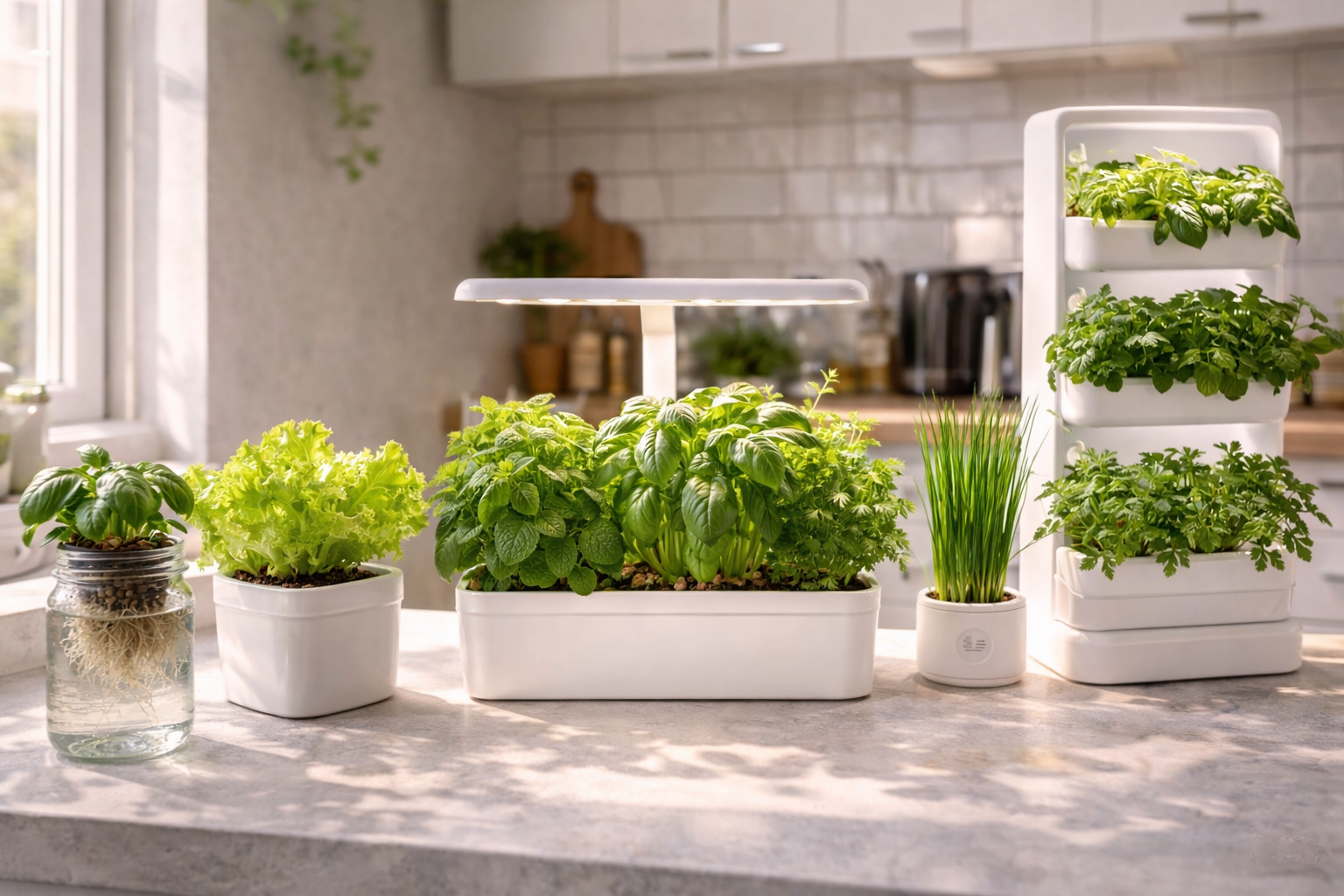
Smart hydroponic systems represent the cutting edge of home indoor growing, combining automated watering, integrated LED lighting, smartphone app control, and intelligent reminders into single packages that practically grow plants for you. For busy households, frequent travellers, and tech-loving beginners, these systems eliminate nearly every reason hydroponic gardens fail. The question is which smart hydroponic systems actually deliver on their promises and which are overpriced gadgets.
This guide ranks the 7 best smart hydroponic systems available in 2026, tested for app reliability, growing performance, build quality, and long-term value. Each review covers what the system does well, where it falls short, and who should consider buying it.
🤖 The Quick Pick
For most buyers, the best of the smart hydroponic systems is the LetPot LPH-SE 12-Pod at £80-110. It offers genuine app control, 12 plant capacity, integrated grow lights, and reliable automation at a price that does not break the bank.
What makes a hydroponic system truly “smart”?
The “smart” label gets thrown around loosely in marketing, so it helps to define what features actually distinguish smart hydroponic systems from regular countertop gardens. A genuinely smart system includes at least three of the following capabilities:
| Smart Feature | What It Does |
|---|---|
| App control | Monitor and adjust your garden from a smartphone |
| Automated lighting | LEDs turn on and off automatically on a schedule |
| Water monitoring | Sensors detect water level and alert when low |
| Nutrient reminders | Automatic notifications for feeding schedules |
| Growth tracking | App logs plant progress and harvest dates |
| Voice assistant integration | Works with Alexa or Google Home (premium models) |
The 7 best smart hydroponic systems ranked
#1LetPot LPH-SE 12-Pod (£80-110) — Best Overall Value
The LetPot LPH-SE wins the smart hydroponic systems category for 2026 because it delivers genuine smart features at a price most beginners can justify. The companion app monitors water levels, controls the LED grow light schedule, sends nutrient reminders, and tracks growth stages for each pod. Build quality is solid, the 12-pod capacity is generous, and the integrated grow light produces reliable results.
| Specification | Detail |
|---|---|
| Price | £80-110 |
| Plant capacity | 12 pods |
| App control | iOS and Android |
| Light power | 24W full spectrum LED |
Pros: Affordable smart features, 12-pod capacity, integrated LED, reliable app.
Cons: No voice assistant, basic build plastic, proprietary pods.
#2Gardyn Home Kit 3.0 (£500-700) — Best Premium
The Gardyn Home Kit 3.0 is the most advanced of the smart hydroponic systems available in 2026. It uses computer vision to monitor each individual plant, provides personalised care recommendations through its app, and grows 30 plants in a vertical tower design. At £500-700, it is firmly in the premium category, but it represents the future of automated home growing.
Pros: Computer vision monitoring, 30-plant capacity, vertical tower design, AI recommendations.
Cons: Very expensive, complex setup, subscription required for full features.
#3AeroGarden Bounty Wi-Fi (£250-350) — Best Established Brand
The AeroGarden Bounty Wi-Fi is the smart upgrade of the popular AeroGarden line. It adds smartphone connectivity to the proven 9-pod countertop design, allowing remote monitoring and automatic seasonal adjustments. AeroGarden’s brand reputation and customer support make this a safe choice for buyers who value reliability over cutting-edge features.
See our AeroGarden vs DIY comparison if you’re deciding between smart AeroGarden and a DIY approach.
Pros: Established brand, reliable customer support, 9-pod capacity, proven design.
Cons: Proprietary pods expensive, basic app features, not as feature-rich as newer brands.
#4iDOO 12-Pod Smart Garden (£70-100) — Best Budget Smart
The iDOO 12-pod system delivers the basic smart hydroponic systems experience at a budget price. It includes app control, automated lighting, and water level alerts at roughly half the cost of premium alternatives. Build quality and app polish are lower than premium options, but the core functionality works reliably.
Pros: Cheapest smart option, 12-pod capacity, basic automation works, widely available on Amazon UK.
Cons: Generic brand, lower build quality, basic app, limited customer support.
#5Plantaform Smart Garden (£300-450) — Best Aeroponic
The Plantaform takes a different approach to smart hydroponic systems by using aeroponic misting rather than traditional water immersion. Plants grow inside a sphere where roots are misted with nutrient solution. The companion app controls misting cycles, lighting, and provides personalised care recommendations. Aeroponic growing is faster than traditional hydroponics but requires more reliable equipment.
Pros: Unique aeroponic approach, fastest growth rates, eye-catching sphere design, app-driven cycles.
Cons: Expensive, moving parts (misters) can fail, smaller capacity than panel systems.
#6Click and Grow Smart Garden 27 (£300-400) — Best for Family Production
The Click and Grow Smart Garden 27 scales the popular Click and Grow design to 27 plants in a freestanding cabinet design. While the app features are basic compared to other smart hydroponic systems, the build quality and consistent results make it ideal for families wanting serious indoor production with minimal effort.
Pros: 27-plant capacity, furniture-like design, proven Click and Grow reliability, excellent for families.
Cons: Expensive pods, basic app features, large floor footprint required.
#7Rise Gardens Personal Rise Garden (£250-350) — Best for Customisation
The Rise Garden Personal model offers more customisation than typical smart hydroponic systems. The companion app lets you select from dozens of plant varieties, provides specific care instructions for each, and tracks individual plant progress over time. The wooden cabinet design also looks more like furniture than traditional plastic growing systems.
Pros: Extensive plant library, wooden furniture-like cabinet, per-plant tracking, attractive design.
Cons: Mid-range price, smaller capacity than cabinet systems, proprietary seed ecosystem.
Which best smart hydroponic system should you actually buy?
🎯 Quick Recommendation Guide
| Best value overall | LetPot LPH-SE (£80-110) |
| Cutting-edge premium | Gardyn Home Kit 3.0 (£500-700) |
| Tightest budget | iDOO 12-Pod (£70-100) |
| Family production | Click and Grow 27 (£300-400) |
| Most attractive design | Rise Garden Personal (£250-350) |
What are the genuine advantages of smart hydroponic systems?
Beyond the obvious convenience, smart hydroponic systems offer several less obvious benefits that justify their higher price for the right buyers:
✅ Real Benefits of Smart Systems
- Travel-friendly: Plants survive 1-2 weeks unattended with automated systems
- Failure prevention: Sensors catch problems before they kill plants
- Learning by doing: Apps teach growing principles through real-time feedback
- Family engagement: Children love checking the app and watching progress
- Year-round consistency: Automated lighting eliminates seasonal variation
What are the genuine disadvantages of smart hydroponic systems?
Smart hydroponic systems are not perfect. Understanding the downsides helps you decide if the trade-offs are acceptable for your situation.
Con 1Higher upfront cost
Smart systems cost 3-10 times more than equivalent DIY setups. A £100 LetPot does not produce 5 times more food than a £20 mason jar setup — you are paying for convenience, not productivity. See our smart vs DIY cost comparison for exact numbers.
Con 2Proprietary pod ecosystems
Many smart hydroponic systems lock you into buying expensive replacement pods. Pod costs over 2-3 years often exceed the original system price, making the long-term economics worse than they initially appear. Reusable pod baskets help but void warranties.
Con 3App and electronics dependency
When the app stops working, the WiFi disconnects, or the electronics fail, your smart garden becomes a dumb planter. DIY systems have no electronic failure points and last indefinitely without firmware updates or manufacturer support.
Con 4Limited crop flexibility
Pre-set growing programmes optimise for common crops like lettuce, basil, and herbs. Growing unusual varieties or fruiting crops often falls outside the system’s automated capabilities, requiring manual override that defeats the purpose.
Intermediate level: getting the most from smart hydroponic systems
Once you have purchased one of the smart hydroponic systems on this list, several techniques help you get maximum value:
Use the data the app provides
Most smart systems track water consumption, growth rates, and harvest timing. This data helps you understand how plants behave in your specific conditions, even if you eventually move to DIY systems. Treat the app as a learning tool, not just a reminder system.
Override the defaults when needed
Pre-programmed schedules optimise for average conditions. If your home is unusually warm, cool, dry, or humid, manual adjustments produce better results than blind reliance on defaults. Most apps allow custom schedules for advanced users.
Refill pods with your own seeds
Reusable seed pod baskets are available from third-party sellers on Amazon UK for £10-20. Combined with regular hydroponic seeds from Suttons or Thompson & Morgan (£1-2 per packet), this dramatically reduces ongoing pod costs while maintaining the smart system’s automation features.
What next? Beyond smart hydroponic systems
After mastering one of the smart hydroponic systems, here are the natural next steps for committed indoor growers:
- Add a second system for crop variety and continuous harvests
- Build a DIY system alongside to learn underlying hydroponic principles — see our kratky jar setup guide
- Try fruiting crops that smart systems handle (like cherry tomatoes in larger units) — see our hydroponic strawberries guide
- Connect with other smart garden owners through manufacturer apps and communities
- Eventually explore advanced setups like vertical towers for serious production
- Add proper grow lights if scaling beyond a single system — see our best grow lights guide
Frequently asked questions about smart hydroponic systems
Are smart hydroponic systems worth the extra cost?
Smart hydroponic systems are worth the cost for specific buyer types: busy professionals who travel frequently, tech enthusiasts who enjoy gadget integration, families with children who benefit from gamified learning, and anyone who has previously failed with manual systems. For everyone else, simpler DIY systems offer better value.
Do smart gardens really save time compared to manual systems?
Yes, but less than marketing suggests. Smart hydroponic systems reduce weekly maintenance from 5-10 minutes to 2-3 minutes. The bigger time savings come from preventing failures that would otherwise require restarting from scratch. Total time savings: approximately 1-2 hours per month for typical home growers.
What happens if the manufacturer discontinues the app?
This is a real concern with smart hydroponic systems. If the app stops working, you lose the smart features and the system becomes a regular countertop garden you operate manually. Established brands like AeroGarden and Click and Grow are safer choices than newer startups for this reason.
Can I use smart hydroponic systems without WiFi?
Most smart systems work in basic mode without WiFi — automatic lighting and basic alerts still function. However, you lose the smartphone monitoring, growth tracking, and personalised recommendations that justify the smart price premium. WiFi is essentially required for the full experience.
Which smart hydroponic systems work with Alexa or Google Home?
Premium models from Gardyn, AeroGarden Bounty Wi-Fi, and some Rise Gardens models offer voice assistant integration. Budget smart systems typically lack this feature. If voice control matters to you, verify this specific feature before purchasing.
How long do smart hydroponic systems last?
The mechanical components (pumps, LEDs) typically last 3-5 years before needing replacement or repair. The electronic components and WiFi modules may become obsolete sooner if manufacturers stop supporting the app. Compare this to DIY systems which have no electronic components and last indefinitely.
Are there UK-specific smart hydroponic systems?
Most smart systems are international brands available on Amazon UK and major retailers. LetPot, iDOO, AeroGarden, and Click and Grow all have strong UK distribution. Gardyn ships from the US with longer delivery times. For UK-based customer support, AeroGarden and Click and Grow have the most established UK presence.
Can smart hydroponic systems run on UK plug voltage?
All smart systems sold on Amazon UK or through UK retailers come with UK three-pin plugs and the correct 240V power supply. If buying internationally (directly from a US manufacturer, for example), always check the voltage compatibility — some US-only systems may not work at all on UK electricity without a transformer.
Related posts you might find useful
- 7 Best Hydroponic Starter Kits Tested — Compare smart vs basic starter options
- AeroGarden vs DIY Hydroponics — Smart vs DIY cost comparison
- 5 Best Grow Lights Under £100 — Build your own smart system with separate components
- Best pH Meters for Home Hydroponics — Essential accessory for any system
- Apartment Hydroponics Complete Guide — Where smart systems fit best
- Best Kid-Friendly Hydroponic Kits — Smart systems for families
- Hydroponic Herbs Guide — What to grow in your smart system
Master Hydroponic Equipment
Our 21-page ebook Hydroponic Equipment Guide includes detailed reviews of every smart system, comparison charts, app feature breakdowns, and recommendations for every budget and experience level.
✓ Smart system reviews · ✓ App feature comparisons · ✓ Budget guides · ✓ Instant PDF download